
It was during the first COVID-induced lockdown that, with a substantial dollop of wanderlust, I began to map out the idea of visiting every football stadium in London from the Premier League and Football League. Having started by looking at the nearest Tube/train station to each one, it was then a matter of joining up the dots to determine the most efficient way of getting from one to the other. Sutton United’s promotion to League Two earlier this year added another venue to my list, while the plans became more formalised once I had my accommodation and travel dates booked.
The final count came out at 14 venues to visit (including Wembley) in the space of three days, Ryanair’s flight schedule facilitating ample time on both the date of arrival and departure to complete the mission. Despite months of rigorous planning and rejigging, I set off knowing that there were still factors outside my control which could scupper the whole enterprise (e.g. transport disruptions, inclement weather), but I either took a chance on those or the damn thing wouldn’t happen at all.
The pandemic hasn’t receded fully by any means, but with the safety net of full vaccination, the time felt right to follow through on my London groundhopping tour in the first week of October. Having set foot on a plane for the first time in 21 months a few days ago, here is how the three-day escapade unfolded.
Day 1: Tuesday 5 October
Venue 1: The Valley (Charlton)
I began with a venue I had visited as a 16-year-old in 2005 as part of a London trip with the underage football team I represented at the time. That was back when Charlton and Bolton, both of whom now play in League One, were Premier League clubs, the latter emerging 2-1 winners as El Hadji Diouf scored the decisive goal for Sam Allardyce’s team. Suffice to say I didn’t enjoy that.
A quick 15-minute train ride from London Bridge took me to Charlton station, where I was immediately met with a wall mural reading ‘This way to The Valley’ and an arrow fulfilling its purpose. Even with the security of Maps on the phone, this was appreciated!
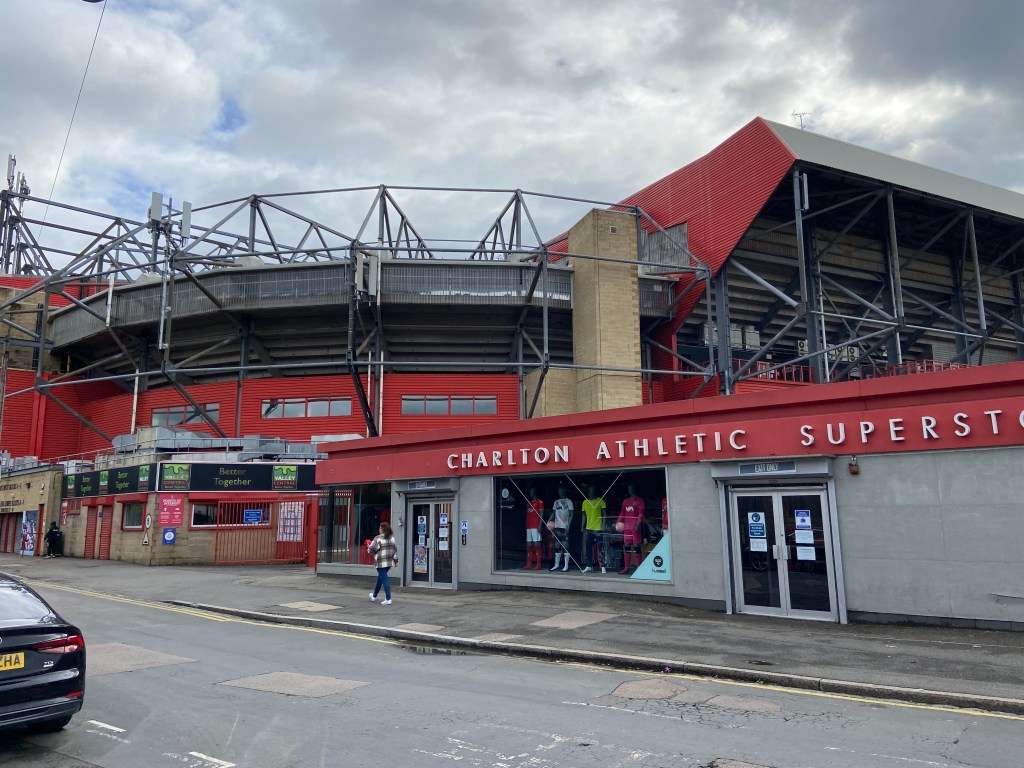
A five-minute stroll later, I found myself on a residential street as the red-topped back of one stand came into view, soon followed by Charlton Athletic’s Superstore. It was an unspectacular yet inoffensive sight, with The Valley’s ability to drum up an atmosphere reflected by The Who breaking a performance decibels record during a 1976 gig at the stadium.
The presence of ‘Addicks’ on a postbox at a nearby residence and the hard-to-miss Valley Cafe on the corner of the street where you’d turn off when walking to and from the train station were indicators of the football club’s presence in the area. Satisfied that I had begun the trip with an easily accessible stadium, I was up and running. It was back to London Bridge for the next ground.
Venue 2: Selhurst Park (Crystal Palace)
From east to south, the next train took me towards Norwood Junction, the station situated closest to Selhurst Park, home of the first Premier League club on my list. Travel tip for any prospective future visitors – there is another station called Crystal Palace but that is not as close to the stadium.
I was glad to get to this one early as Selhurst always seemed to be rocking whenever I watched Palace games on TV, with added intrigue due to having some Eagles-supporting relations (whom I visited that night) living nearby.
The directions to Selhurst from Norwood Junction seemed quite simple – come out of the station, walk past Aldi, take the next left and keep going until you see the stadium. Alas I ended up going one turn-off too far, instead coming at the ground from the top-left corner as you’d watch it on TV (the tunnel area from which the players emerge).
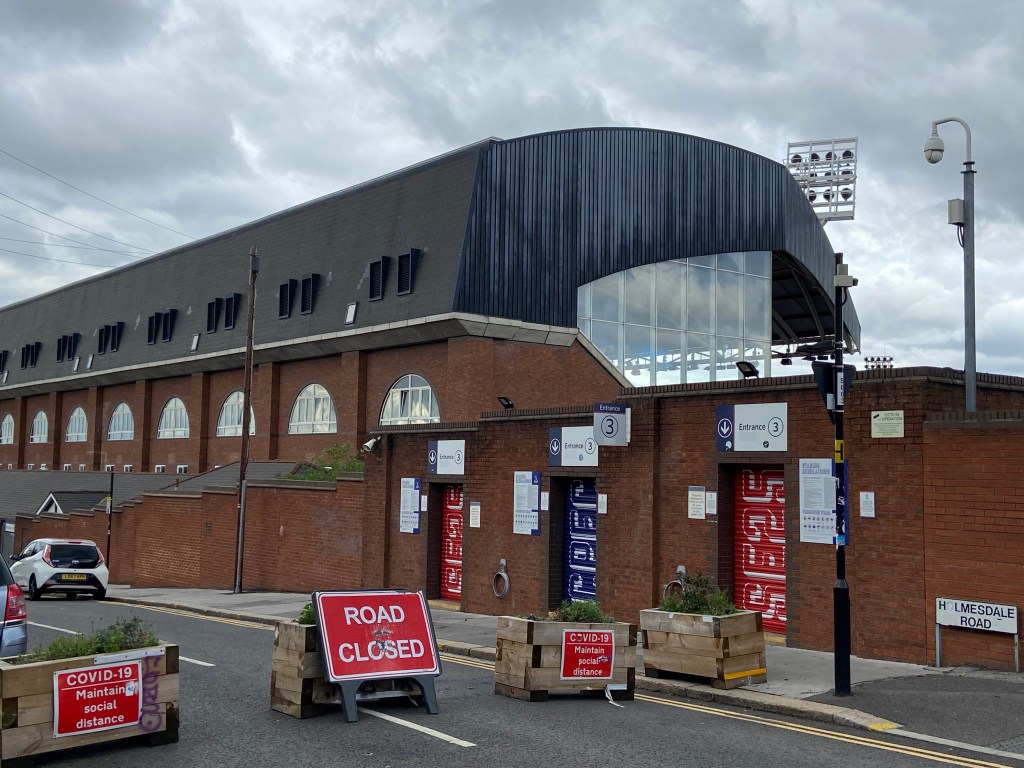
A lone security man took up station at a half-opened gate when I arrived on the scene, perhaps wondering why some randomer with an Alice band was stopping to take photos of the stadium perimeter. Once I had my share of images, I continued along the back of the distinctive stand on the Holmesdale Road and hopped on a city centre-bound train just as it was about to pull off. Now that I know for sure how to find it, I very much plan to return to Selhurst Park for what seems a frenetic matchday experience.
Venue 3: Plough Lane (AFC Wimbledon)
Had I done this in the 1990s, I would’ve killed two birds with one stone at Selhurst Park, where Crystal Palace ground-shared with Wimbledon. Alas, the latter mutated into MK Dons in 2004, with fan-founded breakaway club AFC Wimbledon climbing the pyramid in subsequent years and making their way onto my must-visit list.
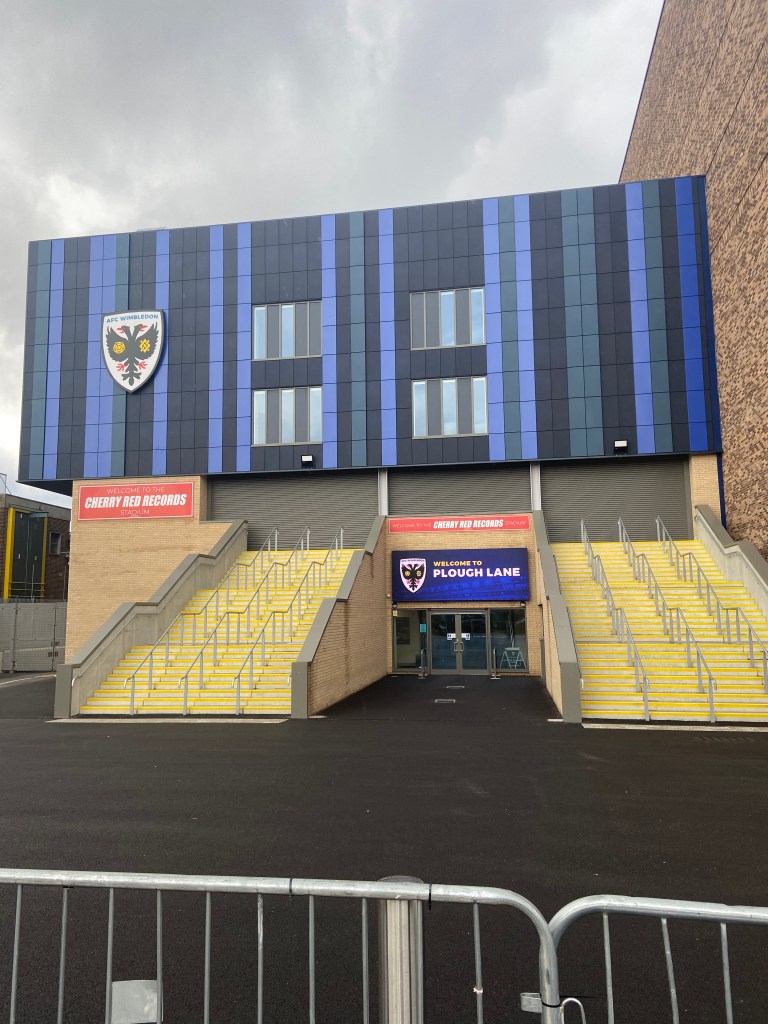
In 2020 they returned to Plough Lane, where the former Wimbledon had left an indelible mark on English football in the 1980s. The current venue is a new carnation, and it also necessitated one of the longer station-to-stadium walks on the trip from Earlsfield station.
The 15-minute walk was at least a mostly straight one, but even at the juncture where Maps was telling me I would find Plough Lane, the eye was met only by modern apartment blocks. Eventually I found the entrance across from a retail park, with the stadium neatly condensed into a compact residential area.
It was on the walk back to the train station that I was met with my first rain shower of the trip. Thankfully, it would also be the last – the weather gods played a blinder!
Venue 4: Brentford Community Stadium (Brentford)
The last stadium visit of Day 1 took me to another ground which opened as recently as last year, with a short train trip to Clapham Junction to catch the service to Kew Bridge.
I certainly didn’t need Maps to help me find Brentford’s new home – upon disembarking at Kew Bridge and doing a 180-degree turn, part of the ground overlooked the platform, the Bees’ crest instantly identifying it as their stadium. Reaching it was as simple as going up the steps from platform to street, taking an instant left turn and walking along the back of one of the stands.

Brentford’s former home Griffin Park famously had a pub on each corner, but while beer enthusiasts don’t have such a pleasure with their new ground, the Premier League’s newest venue looks very smart indeed. It is also in the shadow of a large-scale construction project next to the ground – certainly not the last time I’d see that over the course of the trip to England’s capital city.
Day 2: Wednesday 6 October
Venue 5: Gander Green Lane (Sutton United)
Here’s the bit where even I questioned whether my enthusiasm had gone too far. Having been up at 6:15am the previous morning for the flight to London and not arrived back at my hotel until after 11pm that night, I had another pre-6:30am start to make sure I gave myself ample time for the longest leg of the tour.
Having first needed to get a train from London Bridge to Tulse Hill, I then had to get a connecting service to Sutton and another to West Sutton…only for me to miss the latter, thus prompting me to walk 25 minutes to the ground rather than wait half an hour for a three-minute train journey.
Time logic aside, it was well worth strolling from Sutton station, as the walk took me through a nice southwest London suburb until I reached Gander Green Lane, home to the Football League’s newest member Sutton United.
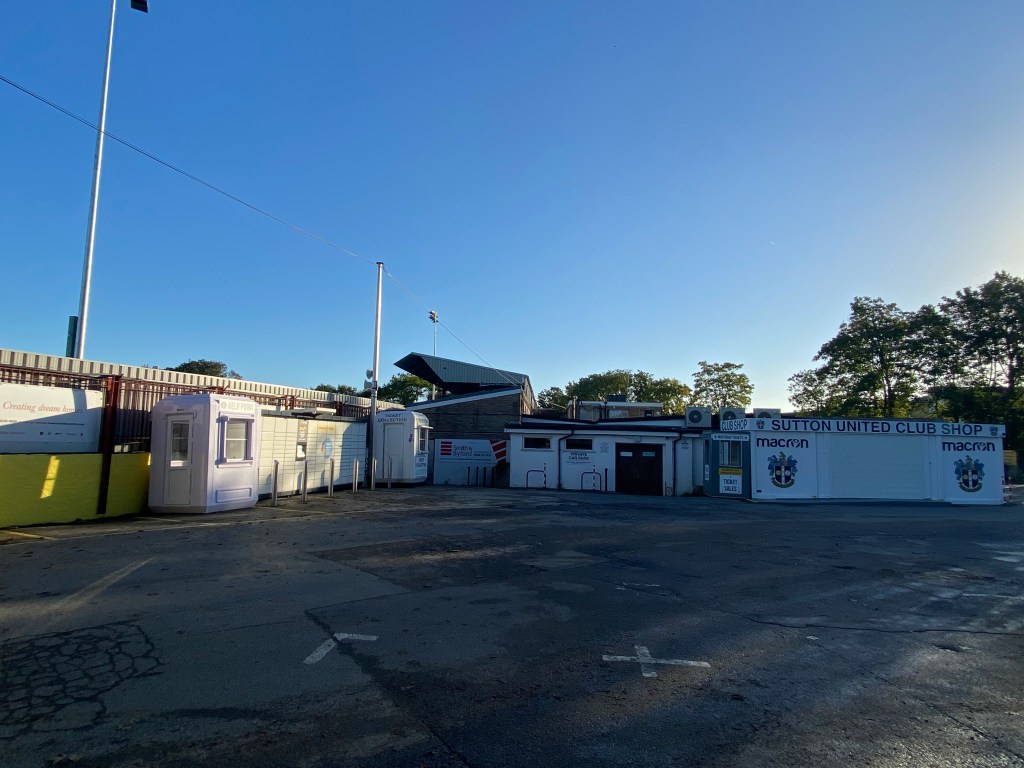
There were no delusions of grandeur here – the ‘Next Match’ bulletin board in front of someone’s house still used physical Countdown-esque letter-by-letter inserts, the club shop was a white-painted hut and the only sign of life was some lad in a truck who could have been very bemused by the sight of someone wandering into a League Two club’s stadium at 8:45 in the morning to take a few photographs. As you do.
Venue 6: Craven Cottage (Fulham)
By accident more than design, I found myself at my next stop on the tour almost an hour earlier than I had originally planned. The train from West Sutton stopped at Wimbledon, from where I hopped on a District Line tube to Putney Bridge.
The directions I had noted for Craven Cottage told me to walk through an underpass but, having been unable to spot it, I instead took a much longer route to get me to the entrance to Bishops Park, a riverside greenery which on this sunny Wednesday morning was awash with joggers and dog walkers. Already this was making its way to the top of my list in terms of the most enjoyable ground to visit thus far.
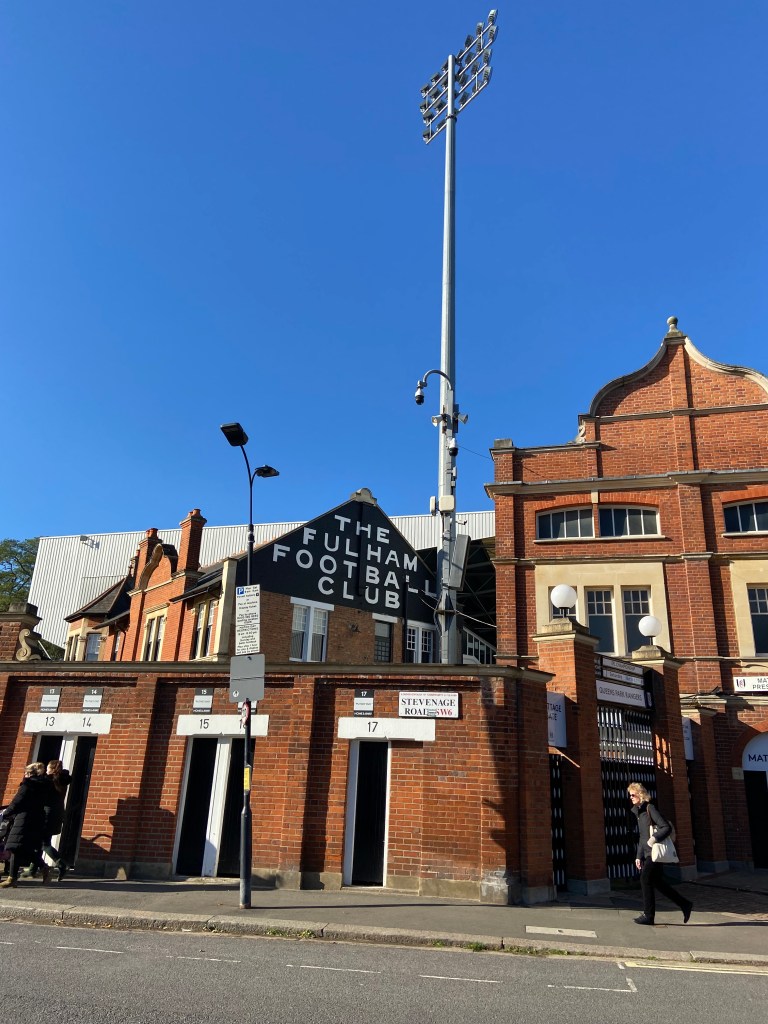
Fulham’s home is often cited as an away day favourite for football fans in England and I quickly understood why. The picturesque walk through Bishops Park takes you to Craven Cottage, which is resplendent with a redbrick exterior and a statue paying homage to club legend Johnny Haynes, the first footballer to earn £100 per week back in the simpler time that was 1961.
With time on my side, a grouchy stomach and the placidity of a riverside view to enjoy, I took the chance to sit in Bishops Park for a bit and munch on what turned out to be breakfast before proceeding to the midway point of the 14-stadium tour.
Venue 7: Stamford Bridge (Chelsea)
It was now time for what was the handiest leg of the tour. Upon returning to Putney Bridge, I only had two stops on the District line before reaching Fulham Broadway, the nearest Tube station to Stamford Bridge. Upon exiting the station, there can’t have been much more than 100 metres to the entrance to Chelsea’s home ground.
Indeed, as soon as you turn onto Fulham Road, the crest of the current Champions League holders is visible outside their stadium, with no recourse to Maps or any such directional aid needed here.
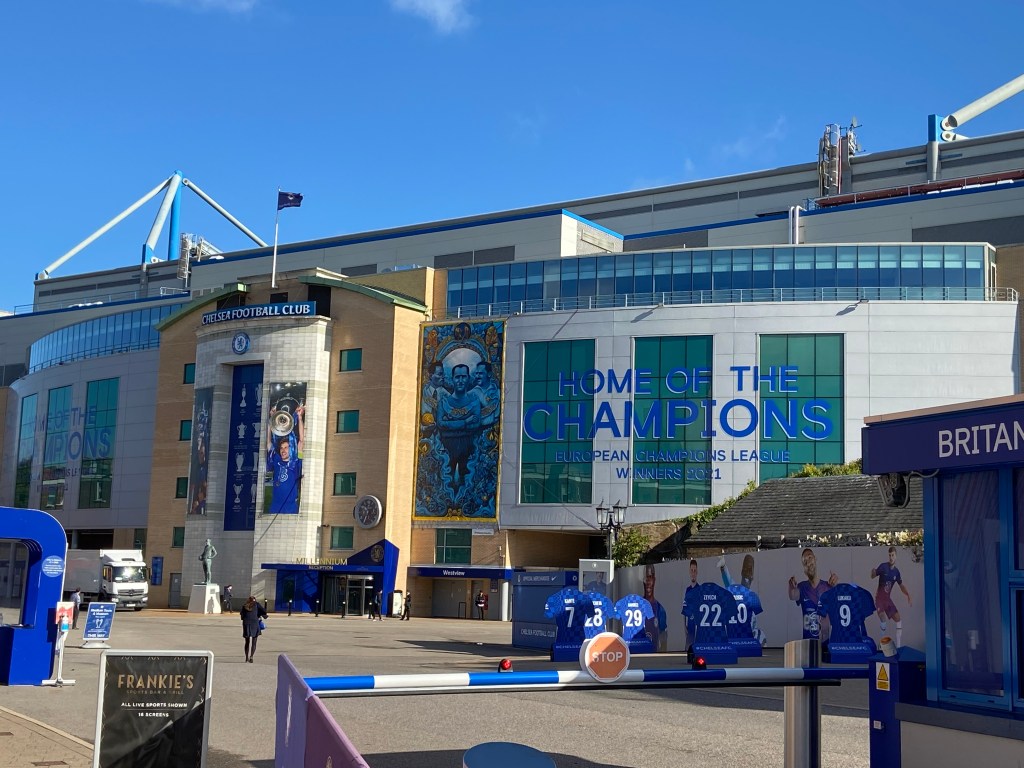
Whilst I didn’t enter the ground itself, there was plenty to catch the eye outside of it. The words ‘Home of the Champions’ are unmistakably emblazoned across the stadium wall, the Blues understandably taking pride in their status as holders of the European Cup. There were also several replica shirt boards as you walk towards the ground, with the names and numbers of N’Golo Kante, Hakim Ziyech and Romelu Lukaku particularly noticeable.
Just like that, I had ticked off 50% of my stadium list within 24 hours of getting to London, and I still had the bulk of Wednesday as well as Thursday morning to complete the set. Time was very much on my side as I continued on to the next whistle stop.
Venue 8: Kiyan Prince Foundation Stadium (QPR)
The venue is known as Loftus Road for shorthand, but it merits being cited with its full name given the commendable cause which it honours. The Kiyan Prince Foundation was established in memory of a former QPR youth player who, at the age of just 15, was stabbed to death in 2006, with the not-for-profit organisation committed to using Kiyan’s legacy to combat knife crime and other forms of youth violence
From Fulham Broadway, I took the District line to Notting Hill Gate, changing for the Central line to White City, where I had actually disembarked on a previous visit to the nearby Westfield shopping centre. On this occasion, I was turning right out of the station rather than left, with a quick left turn along a straight road (and past more construction work) until reaching the stadium.
While the ground is identifiable from a distance, the presence of The Queen’s Tavern, whose coat of arms is near-reminiscent of a one-time QPR crest, offers a sure sign that the Hoops’ home is nearby. Only for the sign displaying the stadium name, casual onlookers may be forgiven for mistaking it as a nondescript block of offices, although a walk to the far end of the ground eliminates any ambiguity with a giant QPR crest and the accompanying slogan of ‘Come on you R’s’.
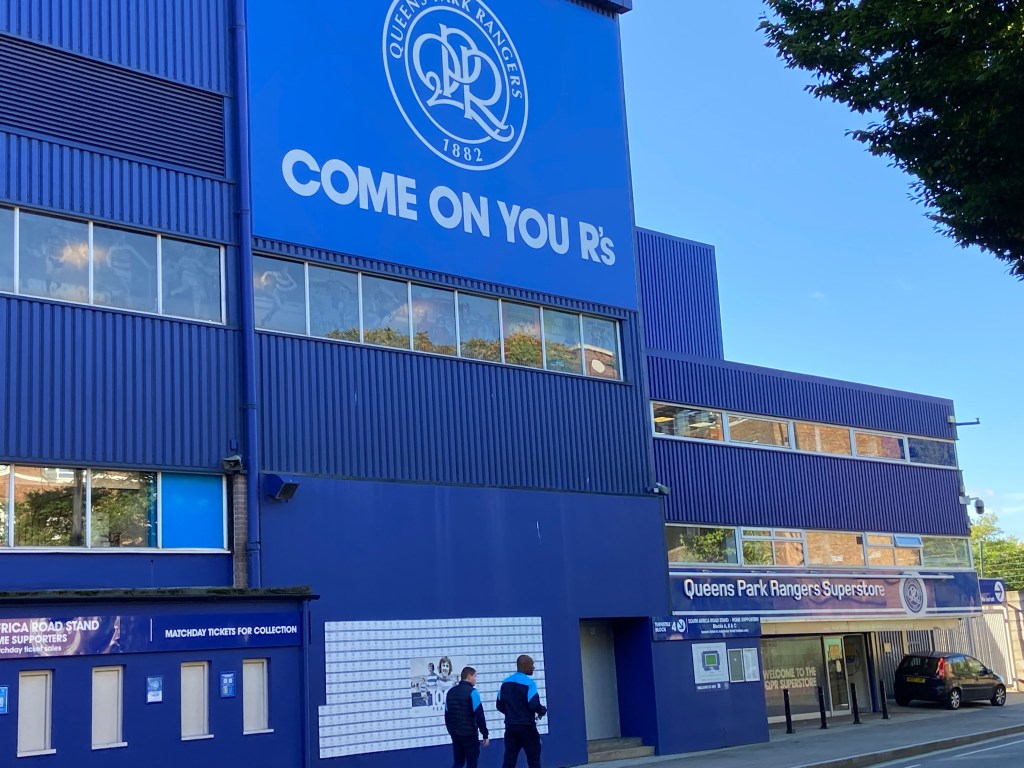
As I walked towards that feature, I noticed two men in club tracksuits coming out of a door to the stadium. They looked for all the world like two of their current players given their attire and muscular physique, but any hopes of identifying them were scuppered by not wanting to stare too long and my general ignorance of the current QPR playing roster, with no disrespect intended to supporters of the club.
Venue 9: Tottenham Hotspur Stadium (Tottenham)
Some of the bonus time I had picked up from the morning was lost near midday as I tried to be too clever in altering my transport plans, but I made amends by getting to Liverpool Street just as the 12:45 train to White Hart Lane was about to pull off.
Upon getting off in north London, I noticed a group of four Americans who were speaking with considerable excitement at visiting Tottenham’s stunning new home, which similar to Stamford Bridge could not be missed from its nearest public transport stop.
A five-minute walk brought me to the gleaming exterior of the stadium, which opened two-and-a-half years ago and instantly answers any queries as to why it cost £1bn. LED screen displays advertised upcoming events at the venue, including the recently-played NFL fixtures and Spurs’ home clash against Manchester United at the end of October. I thought back to the modest billboard outside Sutton United’s ground which served the same purpose but did so in a rather more understated fashion.

Tottenham’s towering new stadium might seem a tad out of place directly across the road from some unassuming high-street takeaway restaurants, but it certainly struck me as a venue where I would love to attend a match of some description. With that, it was back to Liverpool Street for some overdue lunch!
Venue 10: Emirates Stadium (Arsenal)
From Liverpool Street I took the short Central line route to Holborn, changing for the Piccadilly line northbound to Arsenal. Unlike Crystal Palace station, this was a stop which was closest to the football club bearing its name.
Upon turning right coming out of the station, it is barely a five-minute stroll to the Emirates Stadium, with an exterior ticket desk at the bottom of a flight of steps signifying the presence of the Gunners in this particular part of Holloway.
After ascending the steps, I crossed a bridge to the stadium itself where Arsenal’s storied history was evident, with flags bearing the names and images of some iconic former players, among them Ireland’s greatest in Liam Brady.
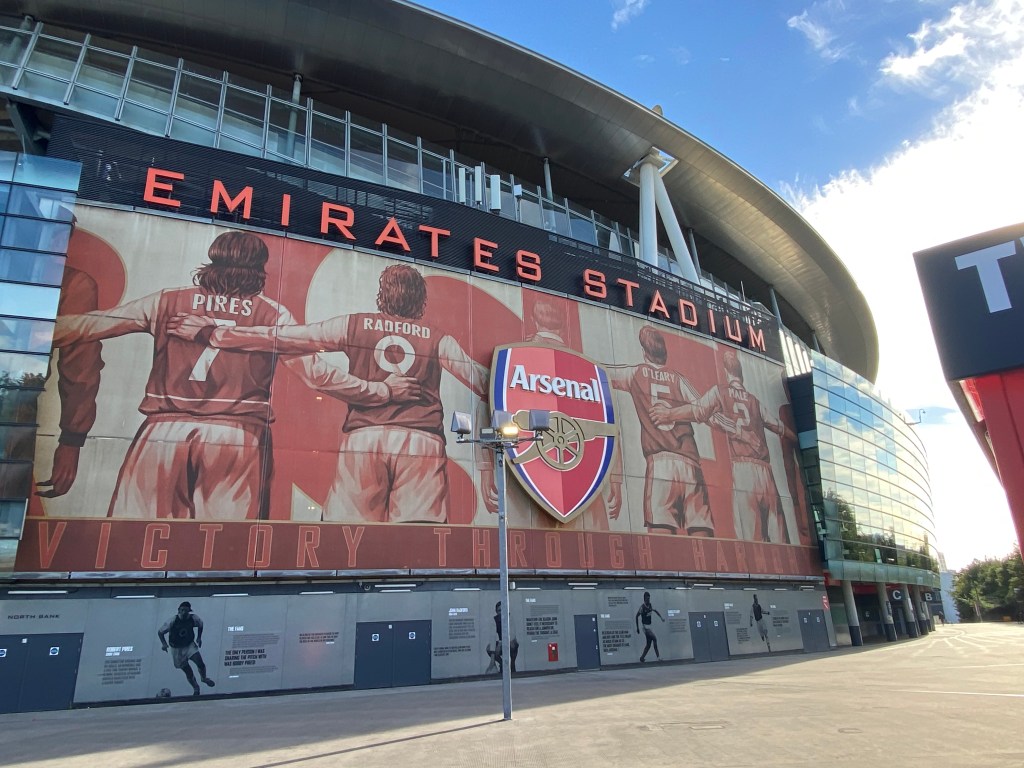
That ode to the club’s past is also illustrated excellently around the stadium perimeter, with eight giant murals each depicting four Arsenal legends stood in a huddle. Among the statues I came across was one of Tony Adams, who even non-Gunners fans like me would rightly acknowledge as one of the greatest defenders of his era.
It certainly seemed like there was more to see had I walked around the entirety of the Emirates Stadium (all that was missing was the AFTV crew shooting a video), but with plans to meet a work colleague and then attend a West End musical, I wrapped up Wednesday’s sextet of stadia with Arsenal’s home ground, capping off a busy venue-hopping day which began in the humble surroundings of Sutton.
Day 3: Thursday 7 October
Venue 11: The Den (Millwall)
Another pre-7am start for the final day of the trip, but it wouldn’t take me long to get the ball rolling. Millwall’s home ground is the closest to London city centre of any of the 14 I was visiting, requiring just a five-minute train ride from London Bridge to South Bermondsey.
Although the club and many of its fans do fantastic work in its community, I was conscious of Millwall’s unwanted reputation for hooliganism based on the regrettable actions of a moronic minority on previous occasions. I had also seen that the walk to The Den contains a brief passage underneath the archway of a concrete bridge, almost like the setting for a tense movie scene where confrontation seems imminent.
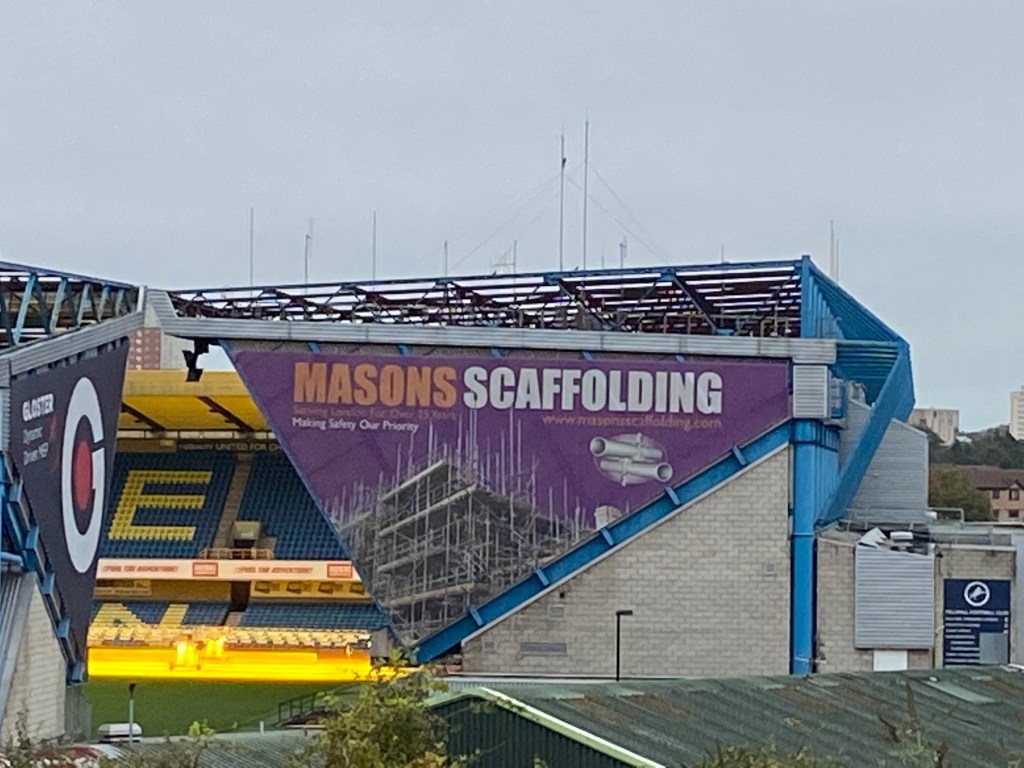
I didn’t quite get as close to The Den as I would have liked for pictorial posterity, owing to me fearing I had gone off the beaten track and the presence of somebody who, while probably not dangerous, still carried the gait of ‘do not cross’. The best photos I managed to get were from the platform of South Bermondsey station, where I thought it best not to stand around for half an hour on a chilly October morning to wait for the next train when I still had three more venues to tick off and a flight to catch that evening. It was quickly on to the next destination.
Venue 12: Brisbane Road (Leyton Orient)
Sponsorship decrees that the most easterly ground I visited on my expedition is called The Breyer Group Stadium, but the time-honoured Brisbane Road will do.
Upon returning to London Bridge, I crossed the bridge itself to Bank station, from where I got the Central line to Leyton. After a right turn and nearly 10 minutes of walking, I reached the Coronation Gardens park where Maps told me to go left, at the end of which a right turn (and yet another construction project) took me towards the home of Leyton Orient, who are back in the Football League since 2019.
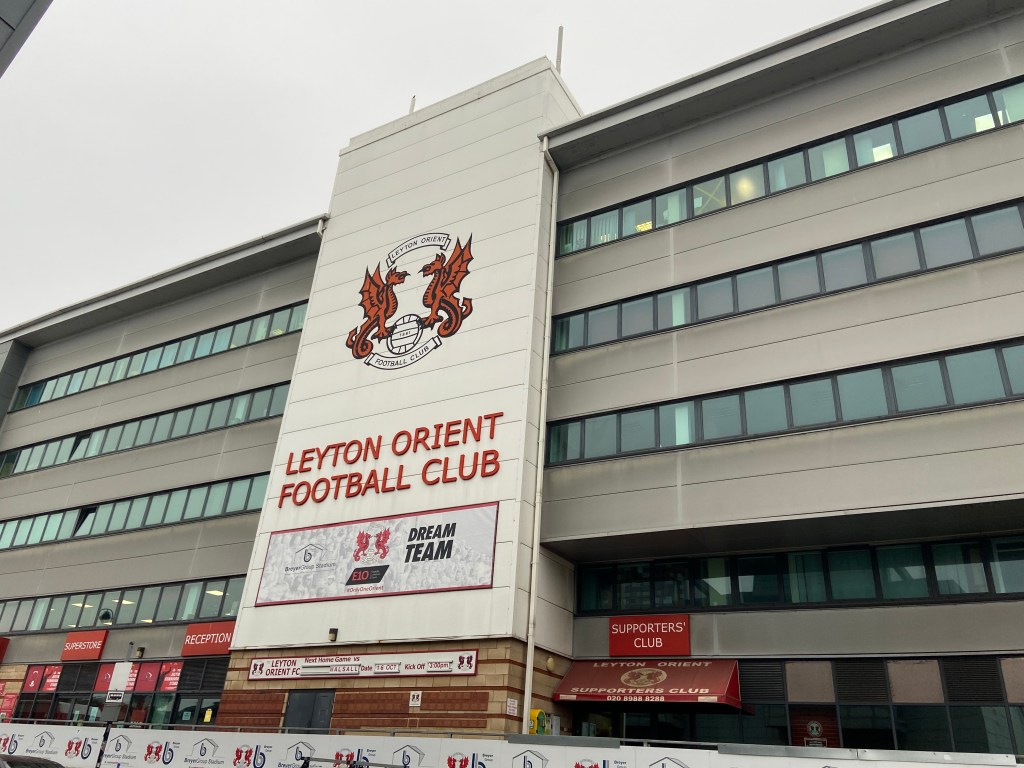
Similar to QPR’s home ground on the other side of the city, the exterior of Brisbane Road almost looks like a series of office blocks, aside from one broad concrete pillar which dispels any doubts with the signage of ‘Leyton Orient Football Club’ and the club crest.
On the walk back to the Tube station, I stopped quickly for some breakfast at a nice Italian cafe named Figo (you’d think it should be Portuguese with that name, but there you go). An apple juice and two crossiants later, it was back to the Tube to head towards the final club on my list.
Venue 13: London Stadium (West Ham)
Four years after London staged the Olympics in 2012, West Ham won the auction to take over the stadium where the Games were primarily staged. It meant goodbye to their Boleyn Ground home in Upton Park after 112 years, its last match documented brilliantly by Danny Lewis in the highly-recommended book ‘The Boleyn’s Farewell‘.
I had never been to that ground but various anecdotes as well as the film Green Street led me to believe that the approach to it was rather different to what you get on your way to the Irons’ current home. After getting off the Tube at Stratford, you pass through the modern, gigantic Westfield shopping centre, with abundant directions for Queen Elizabeth Olympic Park signalling the route to the stadium.
It’s not long before the ‘West Ham United’ lettering and the venue’s curved cantilever roof comes into sight, at which point it’s just a matter of walking straight down until you come to a set of vertically-arranged rail barriers. A large mural to legendary club captain Mark Noble and the lyrics to Hammers anthem ‘I’m Forever Blowing Bubbles’ appearing in instalments around the ground are nice touches.

West Ham fans of a certain vintage will understandably continue to pine for the atmospheric Boleyn Ground, but their new home is an aesthetic joy to behind, even if the passage through a shopping centre to get there feels a tad strange.
That was all 13 of London’s Premier League and Football League clubs ticked off, but I couldn’t do a stadium tour of the city without finishing up at one venue in particular…
Venue 14: Wembley
Forget about it being the sight of brainless hooliganism prior to the Euro 2020 final – Wembley merits its reputation as one of football’s finest temples. Even for someone outside of England, there is something captivating about seeing its legendary walkway and that now-iconic arch in front of you once you pass through Wembley Park station.
I had been at the ground twice before, most notably for a 4-0 Liverpool win over Barcelona in a pre-season match in 2016 in the company of 90,000 Reds fans, and while I was deprived of the opportunity to do the stadium tour this time, it’s still an awe-inspiring place to visit. There is something about ascending the steps at the end of the walkway which gives you the big-game feels, even on a day when the only football being played in the area was on local parks by resident schoolboy and schoolgirl teams. A selfie outside the stadium and a few minutes to savour its splendour first-hand were obligatory.
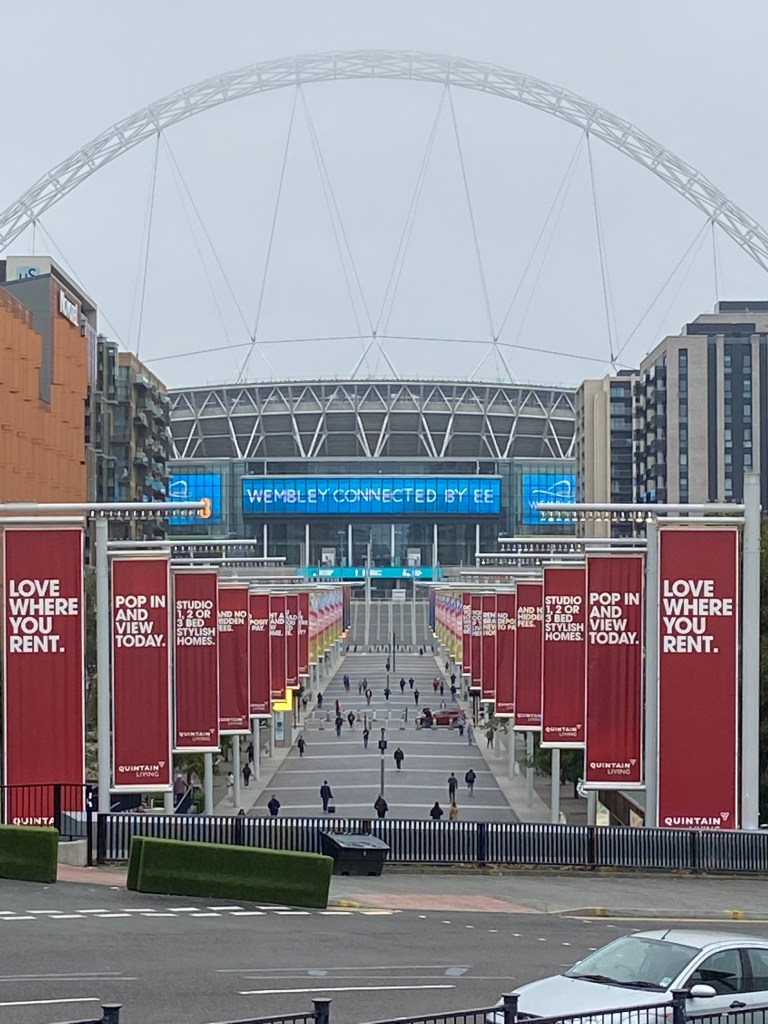
There were mixed emotions as I got back on the Tube to return to the city centre – awe at seeing Wembley in all its glory, exhaustion as the three days of travelling caught up with me, a tinge of disappointment as the realisation dawned that the trip was essentially over. Most of all, though, there was a sense of accomplishment that, in less than 48 hours, I had made my way throughout London to tick off a long-standing bucket list item, namely visiting each of its top-flight and Football League stadia for the 2021/22 season.
Would I do it again? Probably not in its entirety, but there are certainly a few venues that I’d love to visit for a match. Was the weariness of a bustling Stansted Airport that evening worth it in light of the three days which had preceded it? Undoubtedly.
Travel tips for anyone planning a similar tour:
- Plan, plan, plan beforehand. Know the order in which you’re going from ground to ground, find out which train or Tube services you need to get and ascertain how long it will likely take from point A to B. If you arrive over in London with no idea of which stations are nearest the stadia, or what connecting Tubes/trains you need to take to get there, a lot of your day will be wasted in trying to figure it out as you go.
- Remember to factor in the time it will take to get from one point to another, not just the walk from station to stadium. While Tube services are fairly instant, the trains to Charlton, Crystal Palace, Sutton and Millwall will require some research of a Southern Rail timetable. It’s also worth learning not just your stop-off for each route, but also the terminus for that train, as that’s what you’ll need to look out for on the giant departure screens at London Bridge, for instance.
- Purchase an Oyster card before you travel and make sure it’s loaded with at least £50. This will cover you for every single journey without needing to purchase individual tickets or determine if a different ticket is needed for various transport lines. The Oyster is all-compassing and, thanks to Transport for London being sound, is capped at around £13 for daily usage, so no matter how many trips you take and how far you travel, you won’t pay more than that…provided you remember to touch on and touch off at the yellow card readers at each station (that bit is very important!)
- Download the Tube Map app for your phone, as this can offer guidance on how to get from point A to B if your plans do change. Also, make sure you have a digital map (e.g. Google Maps) on your phone, as even if you’ve done your research, you may still find yourself needing to consult a map to verify that you haven’t gone off track.
- Unless the weather is very hot or cold, bring a light raincoat. You will warm up from doing so much walking so you don’t want anything too heavy, yet it is liable to rain all year around so you don’t want to be left drenched in just a T-shirt either…I got lucky with the weather for my visit.
- Learn from one of my mistakes…remember to factor in mealtimes! I was so determined to get venues ticked off early that I sometimes neglected breakfast or lunch to the point where my stomach was ready for open warfare.
- Pace yourself. I only had three days in which to fit it all in, so I was a little leg-weary by the last of those. If you don’t have more time than that, you can expect to feel the effects of it by the time you get to the final two or three grounds.
- Most importantly, enjoy it! Yes it will take it out of you, but it is a hugely enjoyable venture if you’re into football. The contrast between the biggest and smallest venues on the tour was fascinating, as was doing the walks while imagining what it would be like to be surrounded by thousands of others on a matchday. This was one time when I’m so glad that I put a brainwave of mine into practice.
 Man, Ball and All
Brilliant. Well done.
LikeLike