As summers without a World Cup or European Championship go, 2025 was an especially eventful one, with the football literally not stopping since the most recent Premier League campaign reached its conclusion on the final Sunday in May.
The Champions League final blended straight into the UEFA Nations League finals and World Cup qualifiers, before the European Under-21 Championship saw England retain their title. The tickertape had barely been cleared from the pitch in Bratislava by the time the Women’s Euro 2025 got underway, which saw England retain their title. Transcending those two tournaments was the inaugural FIFA Club World Cup, which was won by Donald Trump…oh sorry, I meant Chelsea, the team that the U.S. President comically joined on stage for the presentation of the most garish trophy you’ll ever witness.
All of those on-field events, though, seemed trivial in the context of the horrific news of 3 July, when Diogo Jota and Andre Silva were killed in a car crash in northern Spain. The world of football and the entire community of their hometown of Gondomar – as well as Liverpool and Wolverhampton – went into mourning as the shock of their tragic and all too premature deaths was felt acutely. The scale and warmth of the tributes will, in time, be of comfort to their heartbroken family and close friends.
We’ve barely had a chance to draw breath, yet here we are on the cusp of a new Premier League season, one which’ll do remarkably well to throw up as many surprises and subplots as 2024/25, which was anything but boring despite the title winner and the three relegated clubs all being confirmed before the end of April.
It’s that time of year when optimism burns bright among every fan base, irrespective of how good, bad or indifferent the previous 12 months have been. It’s time to once again climb aboard the rollercoaster and strap in for the inevitable peaks and troughs, thrills and tantrums, the black-or-white sense of flipping between exhilarating glee and deity-questioning frustration.
As usual at this time of year, I (along with many others) put my professional reputation on the line by documenting the predicted fortunes of all 20 top-flight teams for your amusement, so that you can all come back and tell me how wrong I got it in May!
The relegation scrap
After two seasons of the three promoted clubs all going straight back down – embarrassingly so in the cases of Southampton and Leicester (34 points combined) last time out – can that alarming cycle be broken in 2025/26.
Fans of Leeds, Burnley and Sunderland will certainly hope so, or at the very least that they’ll put up a better fight than last year’s promoted trio. To be fair to the three top-flight returnees, they’ve all shown some ambition in the transfer market to try and bridge the ever-increasing gap between Premier League and Championship.
Leeds manager Daniel Farke is a dab hand at getting teams promoted to the top tier; less so at keeping them there, as his time at Norwich showed. The Whites stormed to 100 points in winning the Championship title in the spring and would gladly settle for 40% of that total this time around. Their forward line of Joel Piroe, Wilfried Gnonto and Dan James could plunder enough goals to keep them in the mix for top-flight survival at the business end of the campaign.
Burnley boss Scott Parker also has three Premier League promotions on his CV, although his most recent match in the division was a 9-0 thumping at Liverpool which saw him given his P45 by Bournemouth three years ago. The Clarets conceded only seven more goals than that in their entire 2024/25 league campaign, an extraordinary solidity which might give them a fighting chance if they can carry it over to the top flight. However, up against elite attackers and without the now-Manchester City goalkeeper James Trafford, the step up could be a vertiginous one.
Sunderland are back in the Premier League after an eight-year absence, half of which was spent as a League One club. Regis Le Bris’ side have gambled in the hope of avoiding an immediate return to the second tier, bringing in the experienced Granit Xhaka alongside a host of young and unfamiliar names hoping to prove their worth at the highest level in England. Whether that canny mix will be enough to keep them afloat is another matter.
If one or more of the promoted sides manage to stay up, who could then make the drop to the Championship? West Ham had three consecutive European campaigns earlier this decade, but they’ve been drifting ever since their Conference League triumph in 2023. Graham Potter has yet to inspire much of a spark among an Irons squad with some big names but not the performance levels to go with it. The London Stadium could be a toxic place for much of the coming 12 months, and summer recruitment has thus far been uninspiring.
Vitor Pereira earned hero status among Wolves fans for instigating a turnaround in form last season and joining supporters for a pint after victories. However, that feel-good factor has since evaporated over a testing summer which has seen precious little recruitment and the exits of Rayan Ait-Nouri and Matheus Cunha to Manchester clubs. It could be another uncomfortable campaign at Molineux in 2025/26.
Brentford have been a breath of fresh air since acceding to the Premier League four years ago, but they face into an uncertain future after the exit of Thomas Frank, the architect of their maturity into an established top-flight club. Keith Andrews has gone from set-piece coach to the main man in charge, and he has one hell of a hard act to follow. He’ll have to do it without Bryan Mbeumo (now at Manchester United), Mark Flekken and possibly the wantaway Yoane Wissa, although Caoimhin Kelleher should be a magnificent acquisition at just £18m. The Irishman could be in for a busy season as he finally gets the chance to prove himself as an undisputed number 1 at club level.
Ultimately I can’t look past the promoted trio going straight back down for the third season in a row, but hopefully Leeds, Burnley and Sunderland will at least make a more valiant attempt at survival than Southampton, Leicester and (to a lesser extent) Ipswich.
West Ham, Wolves and Brentford should stay up, but they appear to be the established top-flight teams most at risk of dropping to the Championship.
Lower mid-table
Nottingham Forest did brilliantly to secure European qualification earlier this year, although balancing domestic and continental commitments will be a novelty for Nuno Espirito Santo’s squad. They’d duly be doing well to finish in the top half this time around, never mind replicating or bettering last term’s seventh place. Swiss striker Dan Ndoye could be an astute addition from Bologna, though.
Bournemouth might also find the going a little trickier after losing Dean Huijsen, Milos Kerkez, Illya Zabarnyi and Kepa Arrizabalaga this summer, although they have at least managed to keep hold of Antoine Semenyo for now. Another top-half finish would be mightly impressive for Andoni Iraola’s side, but they should be well clear of any relegation worries.
Fulham have consolidated in mid-table ever since returning to the top flight in 2022, and despite some fears of a quiet transfer window leaving them at risk of falling into the relegation scrap, Marco Silva’s collection of elite club cast-offs ought to be nicely stowed away in the 9th-14th bracket once again. They’ve proven adept at taking some big-name scalps, having earned four points against Liverpool last season and drawn against Arsenal.
That trio – who were promoted together in 2022 and have been in the Premier League ever since – shouldn’t have any major worries about going down, but would be doing well to finish in the top half this term.
Shooting for Europe/top half
Crystal Palace won’t forget the summer of 2025 in a hurry, not just for their momentous FA Cup and Community Shield triumphs but also the incredibly harsh banishment from the Europa League to the Conference League because of John Textor’s involvement with Lyon, who were reinstated to the former competition (and Ligue 1) on appeal. Oliver Glasner’s side will also have to manage a regular Thursday-Sunday routine for the first time, although the Austrian has habitually extracted more than the sum of the parts of any team he’s managed. The Eagles have finished between 10th and 15th in each of the past 12 Premier League seasons, a sequence I reckon they’ll extend, although I wouldn’t rule out a cheeky push for the lower European places through league position.
Everton have had a tough decade so far, but with David Moyes instigating a revival in the second half of last season, Farhad Moshiri’s much-derided ownership terminating and a move into their new Hill Dickinson Stadium, there hasn’t been so much optimism among Toffees supporters for quite some time. Only once since 2019 have the Merseysiders finished in the top half, but they could be in with a good shout of doing so in 2025/26 and possibly even pushing for Europe, particularly if eighth is sufficient for a Conference League place. It’ll be compelling to see if Jack Grealish can rebuild his reputation in his loan spell at Everton this term.
While I think European football will elude that duo, it wouldn’t be totally outlandish to suggest that they might sneak into the Conference League for 2026/27. They won’t have to worry about being anywhere near a relegation dogfight, that’s for sure.
Eyes on the Champions League prize
There’s no doubt as to which two teams were the biggest flops of the 2024/25 Premier League season – Manchester United and Tottenham Hotspur, both regarded among the so-called ‘big 6’ clubs in the division, finished in the bottom six last time around. It’d constitute an even bigger shock if either of those were to do so again this term.
Spurs managed to save face by beating the Red Devils in a turgid Europa League final, thus earning new manager Thomas Frank a crack at the Champions League in his first year in charge. The goal will be to qualify for that tournament via domestic position, although that could be hard to achieve in 2025/26, especially with Son Heung-min leaving for LAFC and James Maddison ruled out injured for most of the campaign. A top-five finish seems a tall order, but their finishing position should certainly consist of a single digit.
Have Man United bottomed out after a wretched 2024/25? Positive pre-season results and the astute additons of Matheus Cunha, Bryan Mbeumo and particularly Benjamin Sesko suggest that the Red Devils will be nowhere near as chaotic this time around. A lack of European football will hurt the club financially, but it could also give Ruben Amorim additional time between games to implement his philosophy, something with which he struggled last term. United will be much better in this campaign, and with some of the other Champions League chasers either stagnating or regressing, they could be a good shout to finish in the top five and duly return to Europe’s premier club competition.
It was a controversial defeat at Old Trafford in May which denied Aston Villa another campaign in the Champions League, and PSR worries have prevented the Midlands outfit from significantly strengthening over the summer. However, they have become a settled top-six side with Unai Emery in charge, and no manager has a better track record when it comes to winning the Europa League. The top five might elude them, but if they keep hold of Ollie Watkins, Youri Tielemans and Emiliano Martinez and add some quality in the transfer market this month, they’ll almost certainly be in the fight for Champions League qualification once more.
Villa’s summer has certainly been far more settled than Newcastle‘s, with the Magpies missing out on numerous transfer targets and facing an almighty battle to keep hold of Alexander Isak. They will have Champions League football this season, but when they were last in the competition two years ago, their domestic form suffered as a result. There could be a repeat of the ‘one step forward, one step back’ pattern for Eddie Howe and co, particularly with the likes of Man United getting notably stronger. Could they even miss out on European qualification altogether?
From the northeast to the south coast, Brighton are entering their ninth successive top-flight campaign with realistic hopes of qualifying for Europe, and they might even take inspiration from Nottingham Forest in launching a sustained bid to earn a place in the Champions League. The Seagulls slayed Liverpool, Man City and Chelsea last season, and although Joao Pedro will be missed, their remarkably successful recruitment model appears to have unearthed even more hidden gems who come of age at the Amex Stadium (Maxim de Cuyper from Club Brugge looks like a cracking addition). It’s probably asking a lot to finish in the top five, but a Europa League berth is well within the capabilities of Fabian Hurzeler’s side.
The genuine title contenders
That leaves us with four teams who’ll have genuine aspirations of being crowned champions of England in 2026. Liverpool currently hold that honour and have cast off the shackles of previous transfer windows to splurge on Florian Wirtz, Hugo Ekitike and Jeremie Frimpong, among others. With those names added to the world-class quality of Mo Salah, Virgil van Dijk, Alisson Becker, Alexis Mac Allister et al, it’s no wonder that the Reds are being widely tipped to retain their title. However, Arne Slot’s squad will have to cope with heavily heightened expectation this time around, and they appear to be worryingly light in some positions. How they cope with the tragic loss of Diogo Jota is also a major factor of uncertainty. They’re definitely good enough to make it back-to-back crowns, but could also be just a couple of injuries away from falling way off the pace, just like when they were last defending champions five years ago.
After three consecutive runners-up finishes, is this finally Arsenal‘s time to take that biggest of steps and win a first league title since 2004? If so, they’ll need to become much more ruthless against teams outside the top four – they didn’t lose to Liverpool, Man City or Chelsea last term but were beaten at home by West Ham and also dropped points at the Emirates to Bournemouth, Crystal Palace and Brentford. The marquee addition of Viktor Gyokeres (97 goals in the last two seasons) should make them a lot more dangerous in the final third, as would keeping Bukayo Saka fit for the entire campaign. They had the stingiest defence in the league in 2024/25 and a quality midfield, and if their attackers click, Mikel Arteta could well add his name to the Premier League roll of honour next May.
His former boss Pep Guardiola won’t have taken kindly to being so far off the pace last season and seeing his Manchester City side surrender their title so tamely, although things would surely have been different with a fully fit Rodri. The current Ballon d’Or holder has picked up another injury which rules him out of the first few weeks of this season, and they can no longer call upon the iconic Kevin de Bruyne. Their summer break has also been shortened by their participation in the Club World Cup, but they appear to have bought well in Tijjani Reijnders and Rayan Cherki. Oh, and there’s also a certain Erling Haaland to terrorise defences. At the very least, they’ll want go into May with a genuine chance of reclaiming their title.
Chelsea had a bumpy ride towards clinching a Champions League berth last season, but having since won the Conference League and Club World Cup in emphatic fashion, could Enzo Maresca’s side now be in with a chance of being crowned English champions for the first time since 2017? They’ve been typically busy in the transfer market, adding the likes of Jamie Bynoe-Gittens, Liam Delap, Joao Pedro and Jorrel Hato to their ranks, and Cole Palmer seems to be back in the groove after his excellent displays in the U.S. over the summer. Concerns over a top-class centre-forward and a reliable goalkeeper could cost them in the final reckoning in the title race, but the Blues seem to have the quality and the trophy-winning mentality to be in with a chance of dethroning Liverpool in 2025/26.
I’m going for Arsenal to be champions next May, with Man City as their closest challengers and Chelsea to finish above a Liverpool side with too many question marks hanging over them.
Predicted final table
First manager to be sacked: Graham Potter hasn’t done much to endear himself to the West Ham faithful, either in terms of results or playing style. If the Irons start badly, it’s plausible that he gets the boot in the autumn. Ruben Amorim could also do with a fast start to win over some of his doubters after Man United’s dreadful 2024/25 campaign.
Top scorer: The boring contenders will be up there again – Mo Salah, Erling Haaland and possibly Alexander Isak, depending on when his future gets sorted out. Viktor Gyokeres is an obvious contender too, given his exploits at Sporting Lisbon, and Cole Palmer could be a good shout behind the usual favourites. If you’re looking for a good potential outlier (à la Chris Wood and Bryan Mbeumo last season), let me point you in the direction of Jean-Philippe Mateta.
Breakthrough boys: Max Dowman (Arsenal), Charalampos Kostoulas (Brighton), Estevao (Chelsea), Rio Ngumoha (Liverpool), Harry Amass (Manchester United), Chris Rigg (Sunderland)
Making a good first impression: Viktor Gyokeres (Arsenal), Maxim de Cuyper (Brighton), Borna Sosa (Crystal Palace), Anton Stach (Leeds), Florian Wirtz (Liverpool), Rayan Cherki (Manchester City), Benjamin Sesko (Manchester United), Dan Ndoye (Nottingham Forest), Jhon Arias (Wolves)
After the last European Championship was played across 11 countries in front of limited capacities in an odd-numbered year, and the subsequent World Cup was held in a miniscule nation in the lead-up to Christmas, Euro 2024 in a German summer felt like a welcome restoration of the needle to normality.
The tournament began with a bang as the host nation demolished sorry Scotland in a raucous Munich. There was history made by Albania as Nedim Bajrami scored the fastest-ever goal in the tournament, shocking Italy after just 19 seconds. The Azzurri were among several big names to secure unconvincing wins in their opening game, with Germany and Spain making the biggest early impression, while Slovakia delivered the first upset with a deserved win over Belgium.
The first week of Euro 2024 produced a mixture of heavyweight showdowns which disappointed (Spain v Italy, Netherlands v France) and hard sells for the neutral which turned out to be thrillers (Turkey v Georgia, Croatia v Albania). England arrived at the finals with enormous expectation but looked nothing like potential winners as they bumbled through the group stage.
The final round of group games delivered its usual dose of drama. There was Kevin Csoboth’s 100th-minute winner which gave Hungary a stay of execution that was taken from them three days later, with their third-place finish not enough to take them through. There was Mattia Zaccagni’s 98th-minute equaliser which spared Italy from elimination and knocked out Croatia instead. Austria edged a five-goal classic against Netherlands to top Group D. In Group E, all four teams finished level on points, with Ukraine finishing bottom when all they needed was one goal to win the group. The last of the group games saw Georgia produce a memorable performance to beat Portugal and advance to the last 16, while a stoppage time winner for Cenk Tosun knocked out Czechia on a night which ended with chaotic scenes.
The 24-team format has come in for criticism, some of it deserved, but no team at Euro 2024 went home without at least getting a draw. Scotland and Poland were the biggest disappointments, with Croatia’s exit the most surprising. Albania and Ukraine were unfortunate to finish bottom of their groups, while Czechia and Serbia tried hard but didn’t have the quality to go any further.
After the drama of the group stage, the round of 16 was anti-climactic. Switzerland produced the big story with a wholly deserved win over Italy, who became the third successive holders to bow out at this point in the competition. A malfunctioning England were on the brink of bring dumped out by Slovakia before Jude Bellingham’s stunning last-gasp equaliser turned the tide and saved face for an underperforming team. Slovenia gallantly took Portugal all the way to a penalty shooutout on a night when Cristiano Ronaldo made an utter pillock of himself, while Austria’s excellent group campaign counted for nothing as they were sent packing by Turkey. Spain produced the performance of the round in beating Georgia 4-1, but not before the Euro 2024 debutants scored first to briefly threaten one of the biggest shocks in the tournament’s history.
Two of the quarter-finals were thrillers and two were…not. Spain ended Germany’s hopes of a home triumph with a controversial extra time win which, surprise surprise, saw a cracking game spoiled by English officials. Turkey led against Netherlands for a good 35 minutes before the Oranje’s pressure eventually told, although the outcome was on a knife edge right up to the final whistle. England once again reached into their seemingly bottomless barrel of luck to prevail on penalties against Switzerland. As for Portugal and France, they should both have been kicked out of the tournament for making us suffer through mind-numbing tedium which sullied the name of football. Les Bleus got through on penalties and put us all out of our misery after enduring what was, let’s call a spade a spade, a horrendous shitshow.
The French came into the tournament as favourites but somehow made it to the semi-finals despite scoring only once from open play across their six matches. They were deservedly trumped by Spain in a semi-final immortalised by a show-stopping goal from Lamine Yamal four days shy of his 17th birthday – a genuine fairytale moment in a sport which has become weighed down by cynicism. The following night, Lady Luck not so much smiled on England but frankly had an orgy with them – that penalty decision against Denzel Dumfries was one of the most unfathomable in European Championship history. To give the Three Lions some credit, though, the stoppage time winner from Ollie Watkins was a delightful goal.
The final was the archetypal game of two halves, with a dismally tepid opening 45 minutes giving way to unmissable post-interval fare. England saved one of their best performances for the tournament until last, but it wasn’t enough to match a Spain side who made it a perfect seven wins from start to finish thanks to an unlikely hero in Mikel Oyarzabal. Luis de la Fuente made the transition from under-21 coach to senior boss look seamless, shunning the limelight which was instead hogged by thrilling young duo Yamal and Nico Williams. In midfield and attack, La Roja were streets ahead of every other team at Euro 2024, and they had enough nous in defence to help get them over the line.
Overall the tournament was a bit of a letdown after the rollercoaster of Euro 2020. Spain and Germany were the only two nations to show consistent top quality, although Netherlands impressed in some of their matches. France and England went deep into the tournament despite their performances rather than because of them. Belgium, Croatia and Italy were the big-name disappointments.
It was a tournament where, for the most part, the best teams to watch were those who nobody had down as potential winners before a ball was kicked. Turkey played in some of the most exciting matches at the finals, while Switzerland wouldn’t have looked out of place in the semis had they ousted England. Austria were magnificent in the group stage before falling flat in the last 16. Romania and Slovenia both amounted to more than the sum of their parts. Perhaps the biggest breath of fresh air, though, were Georgia. They were a joy to watch and they earned a couple of memorable results in their first-ever major tournament before bowing out with dignity against Spain. Hopefully they’ll be back for the 2026 World Cup and the next Euros.
The lack of quality from many of the big-name teams and players was understandable, though, with Euro 2024 bookending a marathon season and preceded by a short breather before the relentless rat race swings into gear again. Like the plant in Little Shop of Horrors, the game’s powerbrokers keep screaming to be fed and duly tack on more and more matches, to the point where elite footballers are simply drained by the end of the campaign. This summer’s tournament in Germany should represent a tipping point as to the workload which is placed on the sport’s leading figures. Instead, we’re heading into an expanded Champions League and the farce of the Club World Cup next June, which’ll further drain the mental and physical resources of players who are already being flogged to the brink of exhaustion.
There were other aspects of the tournament on which we won’t look back on with fondness. Security became a recurring concern amid multiple pitch invasions (sometimes with several during the same match), while the violence in the streets of some host cities was abhorrent. A few games were overshadowed by atrocious refereeing decisions (Marc Cucurella’s unseen handball against Germany was a particular WTF moment), and the frightening few minutes when Barnabas Varga needed urgent medical attention (which was shockingly slow in arriving) threatened to render Hungary’s 1-0 win over Scotland irrelevant. Thankfully, the forward was stable before long.
All in all, Euro 2024 was a downgrade on the previous edition of the tournament, although Germany unsurprisingly proved to be excellent hosts by and large. The postmortem on this summer’s finals should give UEFA plenty of reason to hold some frank discussions in their offices, but at least the trophy had a deserving winner. Spain played the best football and won all seven matches on their way to a record-breaking fourth European crown. Judging by the talent at their disposal, another golden era similar to 2008-2012 isn’t out of the question.
GIORGI MARMARDASHVILI (Georgia): The Valencia goalkeeper was already one of the hottest properties in his position in Europe prior to the tournament, and his performances in Germany will surely have sent demand for him into overdrive. His tour de force against Czechia (11 saves) was one of the best individual displays of the finals.
MANUEL AKANJI (Switzerland): I’m taking liberties by putting Akanji at right-back when he played centrally in the tournament, but the versatile Swiss defender merits inclusion anywhere in the best XI of Euro 2024. He’s taken his game up several levels since joining Manchester City and was his country’s best performer as they verged on the brink of a first-ever semi-final.
MARC GUEHI (England): The Crystal Palace man was the one England player who performed consistently well throughout the tournament, whereas many of his teammates merely came good in moments. It’s remarkable to think that, had Harry Maguire been fit, the 24-year-old would probably have been a reserve in Gareth Southgate’s squad. Those days are well and truly gone now.
WILLIAM SALIBA (France): Similar to Guehi, the Arsenal defender was a beacon of consistency in an enigmatic France team whose progression to the last four belief how ineffective they were at the finals. He brilliantly combined mastery of a football with an unrelenting adherence to his core defensive duties.
MARC CUCURELLA (Spain): For so long an expensive misfit at Chelsea, the 25-year-old ended the club season in fine form and carried that into the tournament. He probably wouldn’t have started if Jose Gaya wasn’t injured, but he was excellent in Germany and his place in Spanish footballing folklore was secured by his assist for Mikel Oyarzabal’s late winner in the final.
FABIAN RUIZ (Spain): The midfielder’s majestic solo goal against Croatia in Spain’s opening match set the tone for the tournament that he and his nation would go on to have. Another goal followed in a scintillating display against Georgia in the last 16, and alongside Rodri he formed a midfield axis which has echoes of Xavi and Andres Iniesta.
RODRI (Spain): Manchester City’s 2023 Champions League final hero was arguably the best player at Euro 2024, effortlessly keeping Spain ticking over with his indefatigable nature and near-flawless use of the ball. Make no mistake about it; he’s a prime Ballon D’Or contender this year.
DANI OLMO (Spain): The 26-year-old has had a gradual ascent to the top but he came alive for Spain in the knockout rounds, scoring in three consecutive matches prior to the final. He had a ridiculously cheap release clause at RB Leipzig until this weekend; now you can bet your bottom dollar that they’ll be seeking top dollar for him.
LAMINE YAMAL (Spain): It’s a long, long time since a teenager came of age in a major international tournament quite like this boy (yes, still a boy as he only turned 17 last week). Already rated massively for his Barcelona exploits, his jaw-dropping goal against France elevated him into the football stratosphere. This kid is worthy of every bit of praise which has been bestowed upon him.
CODY GAKPO (Netherlands): The 25-year-old has been steady but unspectacular for Liverpool, often failing to ignite at centre-forward. Playing from the left flank at Euro 2024, his return of three goals (making him joint-top scorer in Germany) suggested that Ronald Koeman is using him in his best position. That assist for Donyell Malen against Romania was a piece of magic, too.
NICO WILLIAMS (Spain): The Athletic Bilbao dynamo has had long-time residence in the transfer rumour mill ever before Euro 2024, but his performances at the finals have given him top billing. His solo goal against Georgia was breathtaking, and he combined electric pace with penalty box prowess throughout the tournament.
SUBS: Diogo Costa (Portugal), Bart Verbruggen (Netherlands), David Hanck0 (Slovakia), Merih Demiral (Turkey), Fabian Schar (Switzerland), Nathan Ake (Netherlands), Pepe (Portugal), Riccardo Calafiori (Italy), N’Golo Kante (France), Marcel Sabitzer (Austria), Arda Guler (Turkey), Bukayo Saka (England), Xavi Simons (Netherlands), Georges Mikautadze (Georgia), Jamal Musiala (Germany)
“It’s men against boys. It’s a polar bear against a rabbit.” – Mark Goldbridge of YouTube fame after Germany went 2-0 up against Scotland inside 20 minutes. You’ll be seeing a lot more of him in this section of the review.
“That’s Mick Hucknall. That’s simply red…he’s off the ground. He’s sponsored by Ryanair.” – There he is again, in fact, with his unique description of Ryan Porteous’ reckless red card against Germany.
“Swapping Grant Hanley for Ryan Porteous is like changing your shirt when you’ve shat your trousers.” – HEPennypacker01 on Twitter with one of the cruder analogies of the tournament.
“We spoke before the game about them creating a history. They’re creating history alright, by playing as badly as that.” – Never backwards about coming forwards, Roy Keane was typically blunt in his assessment of Scotland’s opening night performance in losing 5-1 to the hosts.
“Never has a man looked more like he’d block every toilet in your house.” – Twitter user Matthew Stanger on lumbering Hungary striker Martin Adam, whose robust physique turned him into a cult hero for Euro 2024 viewers.
“He had to leave Tottenham to win some trophies!” – Shay Given trolls Spurs fan Tony O’Donoghue about Luka Modric, a serial Champions League winner with Real Madrid.
“That second half was a half of death.” – We can safely assume that Didi Hamann wasn’t impressed with the post-interval 45 minutes between Italy and Albania.
“Cesc Fabregas in the middle of Ferdinand and Richards is like putting Paul McCartney in between Jedward.” – @Dan23_92 on Twitter on the Spaniard’s inclusion on the BBC panel for the Serbia-England match.
“Gareth Southgate would take the minus offer on The Chase.” – SportsJOE writer Callum Boyle after England’s unconvincing win over Serbia.
“We have got the tools to win this tournament, but we’ve got a tool in charge of the team.” – I told you Goldbridge would be back! Here he is with a withering assessment of Southgate.
“He was a bit lumpy.” – Kenny Cunningham on Ukraine striker Artem Dovbyk before he was La Liga’s top scorer in 2023/24 with Girona.
“They can get the tent pegs out, the stove going and the fire lit.” – John Kenny on Romania towards the end of their resounding 3-0 win over Ukraine.
“They think it’s all Wober. It is now.” – Yorkshire Evening Post journalist Graham Smyth after the Austria defender was substituted against France following a less than cerebral night on which he scored an own goal and was shown a yellow card.
“They were acting the maggot a little bit,” – Richie Sadlier on the gamesmanship from some French players during the win over Austria.
“Turkey are looking desperate.” – The words of Jermaine Jenas a minute before Arda Guler unleashed a screamer to restore the Turks’ lead against Georgia.
“I’m off for a lie down, Cathal!” – Alan Cawley at the end of the breathless Turkey-Georgia game.
“Cop yourself on, that’s ridiculous.” – Stuey Byrne wasn’t too impressed with some Albanian playacting against Croatia.
“He looks like he was drunk the last day!” – Kevin Doyle with quite the review of Attila Szalai’s performance in Hungary’s defeat to Switzerland.
“Lee Dixon confusing Bosnia and Serbia, it’s a good thing they’re not sensitive about that kind of thing.” – Tom Whittaker on Twitter during Slovenia v Serbia.
“It has come to life and thank f… thank goodness for that!” – Stephen Warnock on BBC 5 Live during Slovenia v Serbia, pulling himself back from the brink of an instant sacking.
“For a country that’s won one World Cup & have never won the Euros they’re very expectant & very arrogant about their chances.” – Professional wind-up merchant James McClean doing what he does best – boiling English urine.
“England v Denmark looks an intriguing one. Anyone know what time it kicks off?” – Liverpool Echo journalist Ian Doyle at the full-time whistle of the tepid 1-1 draw between the two nations.
“Gareth Southgate wears a helmet on his Peloton.” – @Im_RobM on Twitter with a scathing assessment of the then-England manager’s conservative approach.
“Putting Foden on the wing and Trent at holding midfield is like inviting Gordon Ramsey round to cook for a special occasion then getting him to do the ironing while Olly Murs makes a Pot Noodle.” – Mark Goldbridge after the Denmark-England game.
“Yamal literally exploded onto the scene this season.” – According to Kenny Cunningham, the Spain winger went off like a bomb in LaLiga!
“I thought he’d get out of the way when he saw that articulated truck coming in the Spanish jersey.” – Cunningham on Italy’s Nicolo Barella being flattened by Spain defender Robin Le Normand.
“It’s a bit like those Juicy tracksuits you see the young kids wearing.” – Cunningham on the jacket worn by Italy coach Luciano Spalletti, which had ‘ITALIA’ unmistakably splashed across the back.
“That’s why Didi’s not a manager and he’s sitting next to me on the sofa!” – Shay Given slags Hamann over Kylian Mbappe not starting for France against Netherlands.
“Have you ever done parachute training when someone’s holding you down before they let go?” – Stephen Kelly on Poland’s Nicola Zalewski blatantly pulling Mbappe’s shirt to prevent a French breakaway.
“Lewandowski does a hop, skip, jump and a dance.” – Shay Given on Robert Lewandowski’s stutter penalty against France.
“It’s not a skill to stop your run. Even I can do that.” – Hamann on Lewandowski’s stutter penalty
“England are playing like an Xbox gamer having a go of their mate’s PlayStation for the first time.” – Journalist Caoimhe O’Neill during England v Slovenia.
“If you thought before the game that Conor Gallagher was the answer, you have the answer now.” – Hamann on the Chelsea midfielder’s performance for England against Slovenia, having been taken off at half-time.
“It’s like giving him a garage full of Ferraris and he’s driving a nice cosy banger.” – Kevin Doyle joins the ‘Southgate is too conservative’ club.
“It’s like getting all the world’s best artists in a room, giving them a blank canvas and asking them to paint a vase. They’re all doing it in their own vision and Gareth Southgate then comes along and shits all over the canvas.” – Goldbridge with a rather more vivid evisceration of the then England manager’s safety-first approach.
“After seven hours of travelling and one goal in my last three games, I’m beginning to feel like Charlie Bucket looking in at the sweet shop and wondering when I’m going to get my golden ticket.” – BBC commentator Steve Wilson during the dire Ukraine v Belgium match.
“I have a sneaking suspicion a game of football is about to start!” – Wilson after 75 minutes of that same match.
“If you aren’t English or Slovenian but you watched this match in full, you need to see a doctor.” – Ahmed Walid power ranking each group game for The Athletic, in which he put their 0-0 draw at rock bottom. I best make an appointment, then…
“Clever substitution by Denmark bringing on Thor.” – Patrick Haughey, Irish ambassador to Poland, on the thunderstorm which temporarily halted the Germany-Denmark match in Dortmund.
“I’d rather watch Mrs Brown’s Boys than this rubbish.” – Hockey player Sam Quek on England v Slovakia, before the dramatic twist that Jude Bellingham provided.
“The degree to which they’ve made an absolute pig’s arse of this, even in Irish football terms, is noteworthy,” – Richie Sadlier on the FAI’s long-winded process in apponting a new Ireland manager, with Georgia boss Willy Sagnol having been linked with the job before it was eventually given to Heimir Hallgrimsson.
“When you see white smoke at a Portugal game, it means they’ve elected a new Pepe.” – Gene McGurk on Twitter during the smoky backdrop to Portugal v Slovenia.
“Ronaldo picked the same team…” – Hamann subtly alleging that CR7 and not Roberto Martinez wears the trousers where Portugal are concerned.
“France found another gear today, the reverse gear!” – Hamann was far from impressed with Didier Deschamps’ side against Portugal. Let’s face it, both teams were rubbish that night.
“I’m not doing that build-up again!” – Darragh Maloney after a Ronaldo free kick hit the French defensive wall, following the commentator’s lengthy prose of anticipation before the ball was struck.
“An abomination. France abysmal. Ronaldo out there wandering about the pitch purely because of Who He Is, like Salt Bae after the World Cup final.” – Journalist Gavin Cooney at the end of normal time in Portugal v France.
“Griezmann went off, it seems, like three days ago!” – Darragh Maloney on the long-winded Portugal v France game before it sleepwalked to penalties.
“It’s all become a bit stop-start, mainly stop.” – BBC’s Guy Mowbray during the disjointed second half of England v Switzerland.
“This is the worst international tournament of all time.” – RTE rugby commentator Hugh Cahill doesn’t mince his words about the fare on offer in Germany.
“Yes, this game is exciting, but is it as exciting as wondering if Gary and the panel will crash through the glass into the church below?” – Dara O’Briain at half-time in Spain v France, commenting on the BBC’s picturesque studio setup.
“Lamine Yamal will hardly do Transition Year now I’d say. Straight into 5th year and drop down to Pass Everything.” – Colm O’Regan on the then 16-year-old affter his showstopping goal against France.
“Have you got the receipt?” – Shay Given on Mbappe, whose transfer to Real Madrid became official during Euro 2024.
“They’re lost like Joey Essex in a library!” – Goldbridge on Kyle Walker and Luke Shaw being caught out of position for Nico Williams’ goal in the final.
“Out of the ten worst games in the tournament, England were responsible for seven of them!” – Hamann’s withering assessment of the eventual runners-up.
“Southgate’s brain is like a web browser. 19 tabs are open, 17 are frozen, and he has no idea where the music is coming from.” – Melonlord_0990 on YouTube after the final.
Euro 2024 dislikes
Scotland blowing their load at a major tournament yet again
The dreary second half of Italy 2-1 Albania
Belgium’s general listlessness
Romelu Lukaku’s complete absence of luck in having THREE goals chalked off at the finals
England being painful to watch yet, until the final, still getting by
The vendetta against Trent Alexander-Arnold
Samet Akaydin’s cringeworthy own goal against Portugal
Diogo Jota constantly being inexplicably overlooked by Roberto Martinez
Barnabas Varga’s worrying injury in Hungary’s win over Scotland
The two utterly woeful goalless draws on the final night of Group C
The similarly woeful goalless draw between Belgium and Ukraine depriving us of any real drama in what could’ve been an epic finish to Group E
Istvan Kovacs losing the run of himself in the Turkey-Czechia game
Italy’s meek surrender to Switzerland
Jordan Pickford’s never-ending amateur dramatics and sneers
Cristiano Ronaldo making a show of himself with his whingefest against Slovenia
Anthony Taylor somehow failing to award a penalty for a clear handball by Marc Cucurella against Germany
Portugal v France – a desecration to the sport of football
An off-colour Kylian Mbappe playing more like Cillian Murphy
The penalty given to England for a nonexistent foul by Denzel Dumfries on Harry Kane
The multitude of unwanted pitch invasions and fighting in the streets
The inexplicable habit of spectators throwing plastic cups at players taking corner kicks
Euro 2024 likes
Germany’s devastating performance on opening night against Scotland
Fabian Ruiz’s deft finish against Croatia
Nicolae Stanciu’s wonderstrike against Ukraine
Everything about Turkey v Georgia – incredible atmosphere, stunning goals, late drama
Albania’s last-ditch equaliser in a thrilling draw against Croatia
Xherdan Shaqiri casually bending the ball into the top corner against Scotland for his customary major tournament ‘wow’ moment
Giorgi Mamardashvili’s exceptional performance against Czechia
Group E being poised on the ultimate knife edge with each team having three points going into the final matchday
Mattia Zaccagni’s dramatic last-gasp intervention against Croatia
Austria’s absorbing 3-2 win over Netherlands
Georgia beating Portugal to qualify for the last 16
Darragh Maloney’s wry humour during the lightning-enforced stoppage to the Germany-Denmark game
Jude Bellingham’s overhead kick (even if England didn’t deserve to go through against Slovakia)
Nico Williams’ brilliant solo goal against Georgia
Cody Gakpo’s assist for Donyell Malen against Romania
The pulsating Austria-Turkey clash (and Mert Gunok’s incredible save)
Trent Alexander-Arnold being the man to score England’s winning penalty against Switzerland
Netherlands 2-1 Turkey
Lamine Yamal’s Louvre-worthy goal against France
Xavi Simons’ thunderbolt against England
Ollie Watkins’ masterfully crafted winner against Netherlands
After a European Championship held in front of sparse attendances due to COVID restrictions in 2021, and a World Cup 18 months later held in tandem with the hanging of Christmas decorations, the football calendar is finally back in sync as UEFA’s showpiece event descends on Germany over the next month.
The nation staged a memorable World Cup 18 years ago, and with glittering stadia, an exceptional transport network and a long-established genuine football culture to call upon, it should prove to be a very popular host.
The home team will hope for a similar renaissance to the one they enjoyed in 2006, when they came into the tournament with more questions than answers but inspired a country with an array of dazzling performances as they swept to the semi-finals. They haven’t been in the last eight of a major competition since Euro 2016, so that is the bare minimum that Julian Nagelsmann must achieve.
Holders Italy won’t be among the favourites to retain the trophy but will be out to prove a point after missing the last two World Cups. After a lean decade, Spain’s Nations League triumph a year ago has revived hopes that they could be there or thereabouts, while Portugal have a group of outstanding players, many of whom are in their peak footballing years.
Having come within a penalty shootout of winning back-to-back World Cups, France go into Euro 2024 as favourites, but that was also the case three years ago when they exited in the last 16. England are also shooting for the stars, having had to settle for silver at Euro 2020 but able to call upon several key players who are in the form of their life.
Belgium are out for redemption after their group stage exit at Qatar 2022, while Netherlands will hope to build upon their quarter-final appearance at that tournament and Croatia may be targeting a first European semi-final. Elsewhere, the likes of Hungary, Austria and perhaps even Scotland may emerge as surprise teams to go far.
Ukraine’s players will be striving to do their best for their people back home amid the ongoing war, while another ex-Soviet nation in Georgia are out to spring a shock or two on their first-ever major tournament appearance.
With a small pool of likely contenders (but no clear favourite), a handful of nations who may fancy their chances of going deep into the tournament, and a few outsiders eyeing an upset for the ages, Euro 2024 promises to be enthralling. The last edition three years ago started slowly but caught fire towards the end of the group stage and threw up thrills aplenty.
Let’s analyse the 24 competing teams in further detail and assess their chances in Germany over the coming month.
GROUP A
GERMANY
Similar to when they hosted the World Cup in 2006, Germany go into this summer’s Euros with a reputation to restore after several drab tournaments. For so long a beacon of consistency on the big stage, Die Nationalmannschaft are overdue even a quarter-final appearance, so anything less would be a calamity, especially on home soil.
After a miserable 2023 which saw Hansi Flick given the chop, Julian Nagelsmann has instigated some improvement, with wins over France and Netherlands in March offering hope that a corner may have been turned just in time for opening night against Scotland on Friday.
In another parallel to 18 years ago, Germany are seeing some truly gifted youngsters starting to come of age. Florian Wirtz was immense in Bayer Leverkusen’s historic Bundesliga triumph, whle Jamal Musiala on the right flank is a joy to watch. Kai Havertz takes up the false 9 role off the back of an impressive finish to the season with Arsenal, while the experienced Ilkay Gundogan is a master of his craft. Expect the Germans to retain possession expertly and press relentlessly.
I’ve been left with egg on my face with my predictions for the three-time European champions in the last two World Cups, but surely this group of players on home soil goes deep into the tournament? I’d be surprised if they don’t get to the semis at least, although they might fall narrowly short of adding a fourth continental crown.
Euros history: Joint-record winners with three titles (1972, 1980, 1996), Germany have also been losing finalists on three other occasions (1976, 1992, 2008).
Verdict: Germany to breeze through until the quarter-finals and then beat Spain and Portugal, but come up short at the final hurdle.
HUNGARY
Hungary are appearing at their third consecutive European finals, having given a good account of themselves on their previous two appearances. They topped a group featuring eventual winners Portugal in 2016 and were unfortunate to come bottom of a foursome with the Portuguese, France and Germany three years ago.
They’ve taken some big scalps since then, too, including a 4-0 away drubbing of England in the UEFA Nations League and a win over the hosts of this tournament. They were unbeaten in qualifying, too, and have an affable yet shrewd tactician in Marco Rossi at the helm, with the Italian having also led them to Euro 2020.
Liverpool playmaker Dominik Szoboszlai is the undoubted star of the team, and he’ll be out to prove a point after missing the previous Euros through injury. Hungary tend to use their wing-backs very effectively, with Loic Nego and Milos Kerkez given licence to bomb forward at will. In midfield, Adam Nagy is the beating heart of the team, keeping things ticking over between the thirds.
With a much kinder group draw this time than at Euro 2020, the Magyars should have enough to progress to the knockout stage, and a quarter-final isn’t out of the question, but a difficult tie in the last 16 awaits. Anything beyond that would be an excellent showing.
Probable XI: Dibusz – Lang, Orban, A Szalai – Nego, A Nagy, Schafer, Kerkez – Sallai, Szoboszlai – Varga
Euros history: Twice semi-finalists, but that was back in 1964 and 1972. Reached the second round in 2016 and were unlucky to fall at the group stage three years ago.
Verdict: Second in the group before shipping a dignified defeat to Croatia in the round of 16.
SCOTLAND
Normally cutting it fine when it comes to qualification for major tournaments, Scotland breezed through a tricky group this time around to reach Euro 2024 in style, but now comes the hard part – kicking the habit of a lifetime.
They’ve never made it out of the group stage at either a World Cup or European Championship, and that is the monkey that Steve Clarke’s side are trying to get off their backs. Had this tournament been held a year ago, the Scots would 100% have fancied themselves to break through the glass ceiling, but results have taken a turn for the worse in the meantime, including a 4-0 thrashing by Netherlands in March.
Although Scotland have two prolific midfielders in John McGinn and Scott McTominay, and one of the world’s best left-backs in Andy Robertson, the lack of a true top-quality centre-forward could prove their undoing. Che Adams and Lawrence Shankland bring their own attributes to the table, and combined they’d make for an outstanding number 9, but both also has a crucial shortcoming. Clarke’s options are also hindered by the absence of Lyndon Dykes through injury.
The Tartan Army will play a blinder in the support stakes, but whether the team can rediscover the form which saw them beat Spain and secure a dramatic late win in Norway is the burning question. Will the weight of history burden them once again this summer?
Euros history: Qualified for three previous editions (1992, 1996, 2020), exiting at the group stage each time.
Verdict: The classic hard luck tale of being one of the two third-place group finishers not to go any further.
SWITZERLAND
Switzerland are usually steady operators at major tournaments and were a penalty shootout away from being semi-finalists at Euro 2020, but they’ve yet to recover from the debacle of losing 6-1 to Portugal at the 2022 World Cup.
They came through qualification for this year’s finals but made heavy weather of a group they’d have expected to stroll through, making an unhappy habit of dropping points late in matches. It’s led to the previously deified coach Murat Yakin becoming a lightning rod for criticism back home, and it’ll take more than an affable personality for him to recover the support of the Swiss public.
The 49-year-old has tried a variety of formations to get a tune out of his squad, but none has been an unqualified success. The play will invariably go through inspirational captain Granit Xhaka, who’s been excellent for Bayer Leverkusen, and they have a solid centre-back partnership in Manuel Akanji and Nico Elvedi. Similar to Scotland, though, none of their forwards are truly convincing. Zeki Amdouni hasn’t pulled up any trees at Burnley, while Breel Embolo is gifted but alarmingly injury-prone.
A repeat of their quarter-final showing from three years ago looks most unlikely, and even getting out of the group could be a tall order for a team who’ve yet to get over their bruising exit from the World Cup 18 months ago.
Euros history: Their quarter-final placing three years ago was their best performance in the Euros. Qualified for six of the last eight editions including 2024.
Verdict: A first group exit at a major tournament since the 2010 World Cup.
GROUP B
ALBANIA
Reaching a second European Championship out of three is a tremendous achievement for a nation of Albania’s size, and they didn’t sneak in the back door either, having topped what was admittedly a weak qualification group.
Unfortunately for them, they’ve landed three behemoths in their group, although they could view that as a positive in that expectations at home and abroad will be minimal – even getting a point would constitute an honourable showing. Their coaching ticket poses a couple of names who are well known to football followers in the UK and Ireland – they are led by ex-Arsenal defender Sylvinho, with Pablo Zabaleta as his assistant.
The players don’t quite have as ubiquitous a profile, although several have experience at big clubs in Europe. Centre-back Berat Djimsiti was in Atalanta’s victorious Europa League side, while striker Armando Broja can count Chelsea on his CV. Midfielder Kristjan Asllani plays with Inter Milan and right-back Elseid Hysaj had a good few years at Napoli. One less familiar name worth looking out for is Ernest Muci, who’ll be pushing for a start in attack.
Albania will go to the Euros without any fear, and with plenty of know-how at a high level of club football, but their group stage draw has been nastier than Dolores Umbridge in the fifth Harry Potter book. They’ll eye a scalp and might take one memorable result, but shouldn’t expect too much beyond that.
Euros history: Their one previous appearance was in 2016, when they were one of the two third-placed sides to exit at the group stage, but they went home with credibility gained.
Verdict: Finishing ahead of even one of Spain, Italy and Croatia looks to be beyond this Albania side, but they’ll seek to thrive on the element of surprise.
CROATIA
Considering how excellent they’ve been at a few World Cups over the years, it seems an anomaly that Croatia have never won a knockout match at the European Championship since their debut appearance in 1996.
Since their bronze medal showing in Qatar 18 months ago, they’ve come agonisingly close to winning their first silverware, only to be denied by Spain on penalties in the UEFA Nations League final last year. Those are remarkable feats for a country of just four million people and a team who always seem to win the hearts of neutral football fans.
Croatia boast an imperious midfield featuring the experienced Marcelo Brozovic and Mateo Kovacic and, of course, the grand old master Luka Modric, still pulling the strings at 38. The defence is marshalled by Manchester City’s Josko Gvardiol, while goalkeeper Dominik Livakovic excels in penalty shootouts, the means by which Zlatko Dalic’s team have won four matches across the last two World Cups.
Despite facing teams who’ve won three of the last four European Championships, the Croatians will fancy their chances of getting through and – guess what – might even win a knockout match this time. What we know for sure is they won’t bow submissively to any team on the continent.
Euros history: This is their seventh appearance out of the last eight, and their sixth in a row. Quarter-finals showings in 1996 and 2008 have been their best so far.
Verdict: Croatia to finish second in the group and progress to the quarter-finals, where England avenge their 2018 World Cup semi-final defeat.
ITALY
Surprise winners of Euro 2020, Italy have leaned heavily upon UEFA’s flagship tournament for reasons to cheer in recent years, having sensationally missed out on the last two World Cups either side of that Wembley triumph over England.
The Azzurri looked like anything but potential back-to-back champions in qualifying, losing twice to Gareth Southgate’s team and somehow avoiding the concession of what looked a certain penalty in their draw against Ukraine in their final qualifier, when defeat would’ve consigned them to the play-off route which did for their World Cup aspirations for 2018 and 2022. The holders’ cause wasn’t helped by the abrupt departure of Roberto Mancini for Saudi Arabia, either, but they could hardly have hired a better replacement in Luciano Spalletti, the man who led Napoli to their runaway Serie A triumph last year.
Defensively they don’t look as secure as three years ago, with the powerhouse duo of Giorgio Chiellini and Leonardo Bonucci now both retired and Francesco Acerbi a huge loss through injury, although they have an excellent central midfield in the composed Jorginho and the livewire Nicolo Barella. Up front, the naturalised Mateo Regeui will lead the line, with Federico Chiesa also a danger man – if he can stay fit.
Most of Italy’s tournament triumphs stem from adversity and upsetting the odds, but it’d be a big surprise if this current crop were to successfully defend their title. The last two defending champions have both exited in the round of 16, a sequence which could be extended at Euro 2024.
Probable XI: Donnarumma – Di Lorenzo, Mancini, Bastoni – Cambiaso, Barella, Jorginho, Dimarco – Pellegrini, Chiesa – Retegui
Euros history: Euro 2020 was their second triumph in the competition, having also won in 1968. Only qualified three times prior to 1996 but have been ever-presents since then, losing the final in 2000 and 2012.
Verdict: Italy will do enough to get out of the group, something they didn’t manage as defending champions at the 2010 World Cup, but may be bested by Portugal in the round of 16.
SPAIN
Aside from a semi-final appearance at Euro 2020, Spain have reverted to being big-name flops at major tournaments over the past decade, following on from their all-conquering peak of 2008-2012. However, winning the UEFA Nations League 12 months ago has at least helped to shed the weight of history which has crippled them in recent years.
La Roja have a love-hate relationship with penalty shootouts. They won one against Switzerland at the last Euros and defeated Croatia by that method in the Nations League final, but have seen their last three major tournaments ended by spot kicks (Russia 2018, Italy 2021, Morocco 2022). At least they go to Germany in strong fettle, overcoming defeat to Scotland early in the qualifiers to sail smoothly into the finals under Luis de la Fuente.
Although the cast of characters has changed entirely from the 2008-2012 heyday, many of the traits of that legendary team are evident in this Spain side. Possession is king, although that can sometimes be to the detriment of a cutting edge. It’s up to the front three of the enigmatic Alvaro Morata, cultured Dani Olmo and teenage star Lamine Yamal to provide that. Rodri patrols the midfield, with the stardust provided by Pedri, if the Barcelona gem isn’t held back by persistent injury problems.
If the Spaniards can come through the group stage in a favourable position, the knockout rounds might then open up for them. They’ll want to reach at least a quarter-final to show that they can get back to being a genuine force in European football.
Probable XI: Simon – Carvajal, Le Normand, Laporte, Grimaldo – Merino, Rodri, Pedri – Yamal, Morata, Olmo
Euros history: Tied with Germany for the most wins (three in 1964, 2008 and 2012). Also reached the final in 1984 and the semis three years ago.
Verdict: Spain are good enough to win the group, which’d bring with it a favourable round of 16 tie. I don’t see them going any further than the last eight, though.
GROUP C
DENMARK
The neutrals’ favourites at Euro 2020 have redemption on their minds this summer after a disastrous World Cup in Qatar when they failed to progress from a group which should’ve been negotiable. That setback has led to Danish supporters revising their expectations for this year’s trip to Germany.
Kasper Hjulmand’s side appeared to have a hangover from their 2022 disappointment in the qualifiers for this tournament, throwing away a 2-0 lead to suffer a shock defeat to Kazakhstan and also being beaten by an average Northern Ireland team. Such results don’t offer much hope that they can suddenly flick a switch and land a killer blow on Europe’s leading lights, like they did when beating France in the UEFA Nations League two years ago.
However, Denmark boast a tactical flexibility which sees their line-up frequently adapted to best suit the individual challenge that awaits them. Christian Eriksen may have had a below-par season with Manchester United, but he remains the creative hub of his national team. If he and his teammates can supply quality service to Rasmus Hojlund, they stand a chance of winning any game. Much could also depend on wing-back duo Joakim Maehle and Victor Kristiansen, with the former having starred as one of the best players at Euro 2020.
Nobody is expecting a repeat of their heroic run to the semi-finals three years ago, but another group stage exit like in Qatar is unacceptable. Getting to the last 16 is the minimum requirement; going any further would represent a successful showing.
Euros history: Shock winners in 1992 after they were a late replacement for war-torn Yugoslavia, they’ve fallen at the semi-finals three times, an impressive return for a nation of their size.
Verdict: Denmark have sufficient quality to make it out of their group, but probably not enough to progress beyond a likely meeting against Belgium in the round of 16.
ENGLAND
Long gone are the days that reaching the semi-finals at the 2018 World Cup was greeted with euphoria in England. That was Gareth Southgate’s first major tournament in charge of the Three Lions; going into his fourth this summer, the remit is simple – bring the trophy home.
It felt as if they may have missed their big chance when surrendering a lead in the Euro 2020 final to lose on penalties, but few nations in world football can boast a crop of players as talented as this current English squad. They have previously been weighed down by the notorious ‘Golden Generation’ tag , most notably under Sven-Goran Eriksson in the mid-2000s, but Southgate’s side appear much more harmonious than the team of Beckham, Owen, Lampard, Rooney et al.
From midfield onwards, the England team is stacked with world-class quality. Harry Kane has been as prolific as ever despite Bayern Munich’s troubled season. Jude Bellingham is a genuine Ballon D’Or contender. Phil Foden has been in the form of his life, while Bukayo Saka and Declan Rice both excelled in Arsenal’s Premier League title challenge. Breakthrough starlet Kobbie Mainoo could even be pushing for a start. However, it’s the defence and goalkeeper which may prove the team’s undoing once they get to the business end of the tournament, especially with injuries plaguing the backline.
The goal is to win it, but as the Three Lions know all too well, there’s a very fine line between being in contention to lift the trophy and actually doing so. Despite some worrying results in 2024 so far, the path to the semi-finals seems very manageable, but they could find France too tough a nut to crack. Once again, they’ll go close but fall short of the winners’ podium.
Euros history: Regular qualifiers but didn’t reach the final until Euro 2020. Semi-finalists on two other occasions (1968 and 1996).
Verdict: Similar to the last World Cup, they’ll breeze through to the quarter-finals before meeting their first serious test. England should be in the final four, but that may be where the story ends. Again.
SERBIA
Although Serbia have reached four of the last five World Cups (counting 2006 when they participated as Serbia & Montenegro), this is their first European Championship in their current guise, with the nation last represented on the continental stage as Yugoslavia 24 years ago.
Having gone to Qatar 2022 with high hopes before crashing out at the group stage, confidence has yet to be restored, with the qualification campaign for Germany throwing up more questions than answers about Dragan Stojkovic’s side. The only team of any tournament-level quality that they faced (Hungary) beat them twice, while a Russia outfit starved of competitive football since the start of the war on Ukraine two years ago thrashed them 4-0 in March. That doesn’t augur well for Serbian hopes at the finals, with supporters desperately left praying that things just might turn out alright on the night this summer.
Debate rages back home as to whether they should start with two or three central defenders, with that dilemma likely to be determined by player availability and the nature of the opposition for each game. Their main sliver of hope is the riches they have in attack, with the prolific Aleksandar Mitrovic leading the line, the classy Dusan Tadic playing in behind him, and Juventus centre-forward Dusan Vlahovic a potentially game-changing substitute if needed. The front men will be heavily relied upon to produce moments of magic which might just help Serbia through.
If they’re blunt in attack, it’s difficult to see how a team with defensive issues will be able to cope with some of the forwards they’ll be facing in Group C. The likes of Kane, Hojlund and Sesko could have a field day against a far from awe-inspiring Serbian defence.
Probable XI: V Milinkovic-Savic – Milenkovic, Veljkovic, Pavlovic – Zivkovic, Gudelj, Lukic, Kostic – S Milinkovic-Savic, Tadic – A Mitrovic
Euros history: This is their first time qualifying as Serbia. The former Yugoslavia lost two of the first three finals of this competition in the 1960s, and were semi-finalists when they hosted in 1976.
Verdict: England and Denmark could punish them heavily if they’re in the mood, while Slovenia might also fancy their chances of beating their Balkan rivals. It could be a short and miserable stay in Germany for Stankovic and co.
SLOVENIA
Slovenia are back at the European Championship for the first time since 2000, having been to two World Cups since then, with the most recent being South Africa 2010 when they almost eliminated England in the group stage.
They famously drew 3-3 against Yugoslavia in their tournament opener 24 years ago, having led 3-0 at one point, and will be out to get one over on their fellow Balkan outfit this summer. They’ll also have another crack at the Three Lions after their World Cup elimination in 2010, although that was a far less cohesive English side than Gareth Southgate’s current crop. They’ll hope to emulate neighbours Croatia by belying their comparatively meagre population to compete with aplomb on the big stage.
In another link to their last World Cup appearance 14 years ago, Slovenia are led by Matjaz Kek, who was also the coach at that tournament in South Africa. He can call upon elite operators at both ends of the pitch – Jan Oblak in goal and Benjamin Sesko up top. The Slovenians could be a threat at set pieces, with each of their forwards well over 6 feet tall, and they pose a threat from out wide with Jan Mlakar on the left. The chink in their armour could be the apparent lack of a plan B if the livewire Adam Cerin is kept quiet in the middle of the park – almost all of their attacks flow through him to some degree.
Many might consider Slovenia to be the outsiders in this group but theirs is a talented line-up which also functions well as a unit. They’re good enough to beat Serbia, which’d likely see them edge into the knockout rounds. That would duly be seen as mission accomplished.
Euros history: Their only other appearance was in 2000, when they drew twice as rank outsiders but didn’t manage to get out of their group.
Verdict: Slovenia to make it out of the group stage before respectably bowing out to Germany in the round of 16.
GROUP D
AUSTRIA
Austria were in the doldrums when Ralf Rangnick took charge two years ago, but the ex-Manchester United boss has instigated a significant turnaround in the central European side, who qualified convincingly for their third successive continental finals and their fourth out of the last five since their debut as co-hosts in 2008.
Austrian fans won’t make the same mistake as eight years ago, when the comprehensive manner of their qualification saw them arrive in France as potential dark horses for the trophy but leave with their noses bloodied by meekly finishing bottom of their group. Expectations are being kept in check this time, even with the vast improvement they’ve shown in the past 24 months – a big part of that may also be the absence of key duo David Alaba and Sasa Kalajdzic through serious injuries.
Rangnick still has some quality players to call upon, though, most notably the midfield duo of Marcel Sabitzer and Konrad Laimer. In general, the team is more than the sum of its parts, with the coach’s imprint of a high-pressing game evident within minutes of watching them in action. It’s the 65-year-old who’s held up as the man from whom Jurgen Klopp, Thomas Tuchel and Julian Nagelsmann each derived the ‘gegenpressing’ template and tweaked it to make it their own.
A repeat of their showing from three years ago, when they got out of the group and took eventual champions Italy to extra time in the round of 16, would be considered a decent return, especially in a group containing two of the eight World Cup quarter-finalists from Qatar 2022.
Euros history: Group stage fallers in 2008 and 2016, they made it to the last 16 at Euro 2020.
Verdict: Third in the group and advancing to the last 16, where England should get the better of them.
FRANCE
Their shock round of 16 exit at Euro 2020 has proven to be an aberration, with France reaching the final of three of their last four major tournaments. The 2018 World Cup winners came within a penalty shootout of defending their title in Qatar 18 months ago and, with an abundace of world-class quality to call upon, go to Germany as favourites for a third European triumph, despite a disappointing draw to Canada in a recent friendly.
Similar to Gareth Southgate with England, Didier Deschamps still faces criticism back home for his perceived negative tactics, when in fact his pragmatism and ability to blend a gifted group of players into an effective, high-performing unit has made Les Bleus a genuine force over the past decade. Perhaps it’s not until his reign ends and the French fall back into the pack that the ex-Monaco coach will be viewed through a more glowing prism by his country’s populace.
France have top-class operators in every line of the pitch, from Mike Maignan in goal to Dayot Upamecano at centre-back, the indefatigable Aurelien Tchouameni in midfield, the evergreen Antoine Griezmann and a frightening front three of Ousmane Dembele, Olivier Giroud and Kylian Mbappe. It speaks volumes for the quality at Deschamps’ disposal that the likes of William Saliba, Benjamin Pavard, Eduardo Camavinga, Kingsley Coman and Randal Kolo Muani seem more unlikely than likely to start at Euro 2024, at least initially.
The French blew it at the last two European Championships, somehow failing to beat a pragmatic Portugal on home soil in the final eight years ago and exiting on penalties to Switzerland in a madcap round-of-16 tie at Euro 2020. I tipped them to win the tournament on both occasions, but unperturbed by those results, I’m backing them again this summer. They have the best squad and, in all probability, the best team in Europe right now.
Euros history: Winners in 1984 and 2000, they finished as runners-up in 2016 and have lost twice in the semi-finals.
Verdict: Les Bleus will atone for losing major finals in 2016 and 2022, with Deschamps’ legacy secured once and for all by becoming the first man to win both the Euros and the World Cup as both a player and a coach.
NETHERLANDS
Ronald Koeman is back to finish what he started. Having led Netherlands to Euro 2020, only to quit on the eve of the tournament to take the Barcelona job, Martin O’Neill’s adversary has guided his nation to the European Championship once more. With the recent vacancy at Camp Nou now filled by Hansi Flick, the 61-year-old won’t be defecting from the national team this summer.
His second spell in charge of the Oranje began inauspiciously with a 4-0 hammering by France, but the curve has travelled steadily upwards since then, and a draw with Les Bleus in the reverse fixture last autumn suggested that the 1988 winners can mix it with the continent’s best. A pair of convincing 4-0 wins in pre-tournament friendlies have also injected fresh confidence.
It’s not the most star-studded Dutch team of all time but they can call upon a generational centre-back in Virgil van Dijk, an outstanding wing-back in Denzel Dumfries and a potentially explosive forward in Memphis Depay, if he’s in the mood. However, they lack a top-level number 9 in the mould of Ruud van Nistelrooy and a playmaker of Wesley Sneijder’s genius, and none of their goalkeeping options seems truly convincing. They’ve also been struck by injuries to Frenkie de Jong and Teun Koopmeiners in recent days, depriving them of two of their most creative midfielders.
Netherlands will show enough to get out of the group but, similar to when Czech Republic knocked them out of Euro 2020, I can see them being the victims of a surprise elimination in the round of 16.
Probable XI: Verbruggen – De Vrij, Van Dijk, Ake – Dumfries, Reijnders, Wijnaldum, Blind – Simons, Depay, Gakpo
Euros history: Winners in 1988 and semi-finalists on four other occasions, but haven’t progressed beyond the quarters since 2004.
Verdict: Second in the group but eliminated by a more cohesive and motivated Ukraine in the round of 16
POLAND
Reaching the last 16 at the 2022 World Cup was a good return by Poland, but in truth they only impressed in one of their four matches in Qatar. They underwent two coaching changes in the subsequent nine months as they bumbled their way through qualifying for a fifth successive European Championship, beating Wales on penalties in the play-offs at the end of a drab encounter.
That Michal Probierz’s team even had to go through the indirect route to reach the finals was a bone of contention back home, as they contrived to finish third in their group behind Albania and Czech Republic. The 3-2 defeat to Moldova in which they blew a two-goal lead was indicative of the struggles they faced, and many Polish supporters are setting their sights low this summer.
This seems likely to be a major tournament swansong for Robert Lewandowski, who for all his devastating impact at club level and in qualifying matches has rarely been at his best on the big stage for Poland. He remains the team’s talisman and the one outstanding figure in a workmanlike line-up, although young winger/wing-back Nicola Zalewski looks like he could emerge as his nation’s next star.
Aside from reaching the quarter-finals of Euro 2016 and the second round at the last World Cup, Poland typically exit meekly through the back door in the group stage of major tournaments. That seems their likeliest fate again this year.
Euros history: Had to wait until 2008 for their first appearance but have been at every finals since then. Quarter-finalists in 2016 but eliminated in the group on every other occasion.
Verdict: An unhappy group stage exit with the potential for a thrashing thrown in.
GROUP E
BELGIUM
The ‘golden generation’ of the mid to late 2010s has largely been and gone, and the next crop of potential superstars is only just beginning to blossom, so Belgium go into Euro 2024 without the same sense of ‘this could be our year’ which characterised their recent tournament appearances.
In hindsight, Qatar 2022 was a tournament too far for a much-celebrated group of players whose collective brilliance ought to have at least made it to a final, but they peaked with their third-place showing at the 2018 World Cup. Domenico Tedesco has overseen a gentle transition from that collection of superstars towards a younger group with plenty of promise, and their form since the start of last year has suggested that they’ve put their travails in the Middle East behind them.
Kevin De Bruyne was once again immense for Manchester City during the club season but has looked a pale shadow of his best self at Belgium’s last two tournaments. He turns 33 during Euro 2024, so this could be his last chance to excel on the big stage for his country. The same goes for Romelu Lukaku, who despite being a proven goalscorer throughout his career has always seemed one step short of meriting inclusion in the elite bracket. Of the younger crop, Jeremy Doku and Johan Bakayoko will be fun to watch, while Amadou Onana is an excellent midfield anchor.
Belgium look good to coast through a relatively weak group with maximum points and progress to the quarter-finals, but once they come up against a true European superpower, that’s where the jump in quality could prove too tall a hurdle to clear.
Euros history: Their best performance in six previous editions was reaching the final in 1980, and they were semi-finalists on home soil eight years earlier.
Verdict: Tedesco’s side will cruise through the group stage and beat Denmark in the round of 16, but another quarter-final exit beckons as France are their likeliest opponents at that juncture.
ROMANIA
Romania haven’t been to any of the six World Cups during the 21st century so far but their record of reaching the European Championship is decent, with this their fourth appearance out of the last seven, continually altering between qualifying and missing out since 2000.
They’re still some way short of their 1990s heyday, although a couple of famous names from that period are part of the current setup. Edward Iordanescu is their coach, and his dad Anghel managed the iconic team which had Gheorghe Hagi as its talisman, with the latter’s son Ianis part of the 2024 squad. He characterises this contemporary Romanian side – talented in his own right, but seemingly always operating in the shadow of the golden age of 25-30 years ago.
Romania won’t be the neutrals’ favourites to watch in Germany, with their 4-1-4-1 formation screaming pragmatism and a counterattacking setup with the intention of a blanket defence against top-quality opposition. It’s an approach which is justified by Iordanescu utilising the qualities of his players, with speedy wingers in Dennis Man and Denis Dragus the perfect outlets to try and catch teams on the break. Also crucial to their success is experienced playmaker Nicolae Stanciu, a clever footballer who both creates and finishes attacks.
The target will be to creep into the last 16, and a modest level of competition in Group E gives them every chance of doing so, but at the same time the Romanians won’t strike fear into any of their opponents (certainly not after drawing against Liechtenstein in recent days). They might come up just short in terms of making it into the knockout rounds.
Euros history: Have qualified five times previously, with four group stage exits and the outlier of a quarter-final appearance in 2000.
Verdict: Romania could be among the two unlucky third-placed teams to miss out on the last 16
SLOVAKIA
Slovakia are making their third successive appearance at the European Championship, proving to be one of the main beneficiaries of the tournament’s expansion from 16 nations to 24 from 2016 onwards.
When Francesco Calzona took over a team at a very low ebb two years ago, getting to this summer’s showpiece in Germany seemed a tall order, but they made the most of a weak qualifying group to finish second behind Portugal and stamp their ticket to the finals. That came before their coach was hired as Napoli’s manager in February, with the Italian performing both jobs simultaneously since then, a curious arrangement which seems almost impossible to pull off in this unforgiving modern era of football.
Marek Hamsik – for so long Slovakia’s undisputed on-pitch leader – has now retired, and none of the current crop are at that same game-changing level. They retain a few veterans from Euro 2016 in Peter Pekarik, Juraj Kucka and Martin Dubravka, while Lukas Haraslin has enjoyed a fine season at club level and poses their primary goal threat. At the back, captain Milan Skriniar will be expected to take up the leadership mantle vacated by Hamsik.
Slovakia can prove thorny opponents in major tournaments, as the likes of England, Poland, Italy and Russia will testify from previous years, but even in a far from world-beating Group E, I don’t seem them making much headway at Euro 2024.
Euros history: Formed part of the victorious Czechoslovakia side of 1976. Qualified twice before in their current guise, reaching the second round in 2016 and exiting in the group stage five years later.
Verdict: Slovakia look the weakest team in what’s probably the tournament’s weakest group. Going home early.
UKRAINE
It’s impossible to discuss Ukraine’s football team without placing it in the context of the horrific war which has raged in the country for more than two years now. By qualifying for Euro 2024, this group of players has given a much-needed semblance of escapism to the people of their homeland, and for that reason they cannot be praised highly enough.
They fell at the final hurdle in qualification for the last World Cup but this time they successfully negotiated the play-off route, pulling off dramatic comeback victories over Bosnia & Herzegovina and Iceland to reach a fourth successive European Championship. Sergei Rebrov’s team were actually a bit unlucky to even have to take the long way around to qualification, having been edged out by Italy for the second automatic berth in their group, which also contained England.
While Ukraine’s class of 2024 mightn’t have a world-class figure like prime Andriy Shevchenko, there’s quality right throughout the team. Bournemouth centre-back Illia Zabarnyi is mature beyond his 21 years, Arsenal’s Oleksandr Zinchenko leads by example on and off the pitch, Georgiy Sudakov is a brilliant young talent just waiting to explode, and striker Artem Dovbyk was LaLiga’s top scorer in 2023/24 as he spearheaded Girona’s shock third-place finish.
Rebrov’s team are well capable of performing on the big stage, and they’ll obviously have an added motivation to bring some joy to a nation which has been brutally decimated over the past two years. They could provide the feel-good story of this tournament.
Euros history: First appeared in 2012 and have been at every edition since. After a couple of group stage exits, they were surprise quarter-finalists three years ago.
Verdict: Second in the group and well placed to send the Dutch home in the round of 16, although Portugal might have too much for them in the quarter-finals
GROUP F
CZECH REPUBLIC
Czech Republic have maintained their record of qualifying for every European Championship since 1996, although the current crop are well short of the team of 20-25 years ago which twice went close to winning the entire thing, and the pathway to Euro 2024 was far from smooth.
Previous coach Jaroslav Silhavy resigned in November after falling out with several players, with the more amiable Ivan Hasek stepping in to take the reins after a qualifying campaign which saw a draw in Moldova and a 3-0 hammering by Albania, although they nonetheless managed to secure a direct route to Germany rather than having to rely on the play-offs.
There are no stars in the Czech team in the mould of a Pavel Nedved, Tomas Rosicky or Karel Poborsky of the 1990s and 2000s, but they have a potent front two in Adam Hlozek and Patrik Schick, and a Jan Koller clone in reserve in the two-metre tall Tomas Chory. Pavel Sulc is a gifted young playmaker, while West Ham’s Tomas Soucek leads by example from midfield. Clubmate Vladimir Coufal is back in the fold after falling foul of Silhavy, and his experience at right-back could be pivotal.
As in qualifying, the Czechs may be relieved to have one of the easier groups, which gives them a more than realistic chance of reaching the knockout rounds. With France their likely opponents in the round of 16, though, a repeat of their quarter-final showing of Euro 2020 would be a stretch.
Euros history: Won it as Czechoslovakia in 1976 and were runners-up in 1996 after the split. They’ve appeared at every edition since then, reaching the semis in 2004 and the quarters of Euro 2020.
Verdict: Second in the group, but outclassed by France in the last 16.
GEORGIA
The only debutants at Euro 2024 narrowly missed out on qualifying three years ago, so the penalty shootout win over Greece which sparked an outpouring of euphoria in the form of a Tbilisi pitch invasion was as cathartic as it was surprising.
Former France defender Willy Sagnol has the honour of leading Georgia into their first ever major tournament, and naturally they’ll begin as rank outsiders, but competitions such as these habitually throw up one team who defies all prior expectations to win matches and hearts. Could the Georgians be the side to do just that at Euro 2024?
They will be heavily reliant on their talisman Khvicha Kvaratskhelia if they’re to pull off an upset or two in Germany. The Napoli forward carries the team, and his pace and potency could be crucial to a side who’ll likely be reliant on counterattacking effectively at the finals. Expect to see them play with three centre-backs and two wing-backs who’ll need to divide their time evenly between offering an attacking threat and providing additional defensive cover. Goalkeeper Giorgi Mamardashvili is one of the most highly regarded young players in his position in Europe; he too could be pivotal to his team’s hopes at the tournament.
I’m going to make a bold prediction here – Georgia will beat Turkey in their opening match, and provided they don’t lose heavily to Portugal or Czech Republic, that might just be enough to see them sneak into the knockout rounds, which’d be a monumental achievement for Sagnol and co.
Euros history: This is Georgia’s first-ever appearance in a major tournament, although they were beaten in the play-offs for Euro 2020.
Verdict: Goorgia could scrape into the round of 16, where the fairytale will come to an end against Spain.
PORTUGAL
There’s a strong case to be made that Portugal actually have a better team now than the one which triumphed against the odds at Euro 2016, so optimism abounds in the Iberian country ahead of their eighth successive European Championship appearance.
A gifted group of players often played with the handbrake on under Fernando Santos, but incumbent coach Roberto Martinez has allowed them to cast off the shackles and let their talent do the talking. A 100% record in qualifying is no guarantee of going far at the finals, but it certainly helps in terms of them travelling to Germany full of confidence. A recent defeat to Croatia checked their momentum, but they shook that off by demolishing Ireland on Tuesday night.
The evergreen Cristiano Ronaldo will set a new tournament record when he plays in his sixth finals, and he’s scored in each of the previous five. Along with Diogo Jota and Rafael Leao, he forms part of a lethal attack, ably assisted by the genius of Bernardo Silva and Bruno Fernandes just behind them. Unlike previous club sides that Martinez has managed, Portugal are also strong defensively, with Ruben Dias and the prodigious Antonio Silva offering an outstanding centre-back partnership – and they still have 41-year-old Pepe around if they need a wily old head to rattle a few cages.
The Portuguese have every right to fancy their chances of going far in Germany and possibly even replicating their 2016 triumph. They might come a cropper at the business end of the tournament, but this group of players should be good enough to reach at least a semi-final.
Probable XI: Costa – Cancelo, A Silva, Dias, Mendes – Palhinha, B Silva, Fernandes – Jota, Ronaldo, Leao
Euros history: All eight of Portugal’s previous appearances have seen them clear the group stage. Won it in 2016, runners-up as hosts 12 years earlier and have reached two other semi-finals (1984 and 2000).
Verdict: Portugal should breeze through this group and come through some sterner tests in the knockout rounds, but they might stumble at the penultimate hurdle once the air gets thin.
TURKEY
My apologies to anyone of a Turkish persuasion who may be reading – I tipped them as potential semi-finalists at Euro 2020 and jinxed them sufficiently to lose all three games and exit as statistically the worst team in the tournament. Suffice to say a lesson has been learned,
While Turkey went into that tournament with high hopes before crumbling like a snowman in a sauna, the mood going into Euro 2024 is far more sedate. Results have been flaky under Vincenzo Montella – since the start of last year, they’ve beaten Croatia and Germany and drawn with Italy, but were also thumped 6-1 by Austria. Nor have they been helped by a spate of injuries on the eve of the finals, with Caglar Soyuncu, Enes Unal and Ozan Kabak all having to withdraw from the squad over the past fortnight.
Of those who are still fighting fit, a few star names could offer glimpses of hope. Teenage striker Kenan Yildiz is supremely confident and in form, playmaker Arda Guler is a potential gamechanger, and experienced midfield general Hakan Calhanoglu conducts the orchestra and offers a set-piece threat. The rest of the probable starting XI is rather more limited and will likely be looking to that trio to secure enough points to at least get out of the group.
Even a draw would represent improvement on Euro 2020, and they might be helped by having far from the most taxing group at the tournament, but questions remain about Turkey’s overall ability and temperament. It could be a third successive first-round exit for the Crescent Stars.
Last 16: Germany v Slovenia, Hungary v Croatia, Spain v Georgia, England v Austria, Portugal v Italy, Netherlands v Ukraine, Belgium v Denmark, France v Czech Republic
Quarter-finals: Germany v Spain, Portugal v Ukraine, Belgium v France, England v Croatia
Semi-finals: Germany v Portugal, France v England
Final: France to beat Germany
PROSPECTS
Genuine contenders: England, France, Germany, Portugal
Middle of the road: Austria, Czech Republic, Denmark
Big name flops: Italy, Netherlands
Honourable group exit: Albania, Romania, Scotland
No hopers: Poland, Serbia, Slovakia, Switzerland, Turkey
TOP SCORER TIPS
The favourites will naturally have their big names at short odds to leave Germany with the Golden Boot. Kylian Mbappe, the man who claimed that honour at the 2022 World Cup, seems a prime contender to repeat the trick this summer, while Olivier Giroud and Ousmane Dembele might also be a good bet beyond the obvious short-odds contenders.
Harry Kane seems very likely to be in the mix, and so too could Jude Bellingham and Phil Foden if they bring their club form with them to the tournament. Cristiano Ronaldo will want one more go at adding to his trophy collection, and Diogo Jota might be in contention if he can remain injury-free. For the host nation, Kai Havertz is the likeliest Golden Boot candidate.
From those outside of the tournament favourites, Romelu Lukaku might have a chance if (albeit a big if) he’s at his potent best. Artem Dovbyk won the LaLiga equivalent and could be there or thereabouts at Euro 2024 if Ukraine go far.
Of course, every major competition throws up a surprise team or two, and with that comes the possibility of a rank outsider ending as the tournament’s top scorer (see Milan Baros in 2004). Going by the logic that the best teams with the best forwards stand the best chance of scooping the prize, though, I’ll go for the disappointingly unoriginal shout of Mbappe to outscore every other player at the tournament.
I was en route to Cork on 4 October 2015 when I saw the news that Brendan Rodgers had been sacked as Liverpool manager. Thoughts turned instantly to who’d be brought in to replace him, with Carlo Ancelotti and Jurgen Klopp purported to be the frontrunners. I didn’t think either of those were realistically attainable for where we were as a club at that time, so my preferred pick was Ronald Koeman, who was working wonders at Southampton.
Four days later, I was proven wrong. Liverpool proudly proclaimed Klopp as their new manager, with the German charming the pants off us all by advertising himself as ‘The Normal One’ – a thinly-veiled counter to Jose Mourinho’s brash self-declaration as ‘The Special One‘ when he took over at Chelsea in 2004 – and vowing to turn ‘doubters into believers’.
The path to success would be a marathon under the former Borussia Dortmund boss rather than a sprint. We were 10th when he took charge in October and finished 8th by May, but there were clear signs that he was breathing new life into a previously drifting Liverpool. Two cup finals in that first part-season showed that things were gradually moving in the right direction. The pulsating 4-3 win over Dortmund in the Europa League quarter-finals, when we twice came from two goals down on a night when we had to win, was added to the catalogue of iconic European occasions at Anfield.
The summer of 2016 presented Klopp with his first real opportunity to put his own stamp on the squad. In came Joel Matip, Gini Wijnaldum and – in a transfer which’d prove revolutionary – Sadio Mane. The opening day brought victory at Arsenal when we toyed with the Gunners until letting in two sloppy goals. We defeated eventual champions Chelsea at Stamford Bridge and brushed aside reigning title holders Leicester. Now we were seeing the ‘heavy metal football’ that our manager had promised.
There were still stumbles along the way – a nightmarish run midway through that 2016/17 season threatened to undo all of the progress we’d made up to that point – but on the final day of the campaign, a fourth-place finish was secured, and with it an all-important route back into the Champions League. Something was discernibly growing, a bit like the plant in Little Shop of Horrors.
Summer 2017 saw Andy Robertson arrive, as well as a man who’s become one of the greatest players in Liverpool history. Mo Salah’s signature wasn’t greeted with intrigue rather than a tidal wave of euphoria, but within a few short months he’d prove that his £36.9m transfer fee was an out-and-out steal. Klopp had also elevated a gifted youngster into the first-team fold by the name of Trent Alexander-Arnold.
Domestically we finished fourth again, but that campaign was all about the European journey. We swatted aside opponents who’d so often proven tricky for us in the past. We blitzed a Manchester City team who romped to the Premier League title with 100 points that season. Another Champions League final awaited, and while it ended in tears (literally for some of us) against Real Madrid, Klopp’s defiance afterwards screamed one message loud and clear. We’d lost the battle but not the war. This was a speed bump rather than a dead end.
By the start of the 2018/19 season, Liverpool was very much Klopp’s team. Alisson Becker had come in to nail down a goalkeeping position which previously had as much stability as me on an ice rink. Virgil van Dijk transformed a porous defence into a near-impenetrable brick wall. The pieces were finally in place to push for the prize that every Reds fan craved – the Premier League.
The domestic campaign ended with 97 points and one defeat, which incredibly was still only good enough for second as Man City finished on 98. It was beginning to feel as if a higher force had decreed that Klopp and Liverpool wouldn’t enjoy tangible success together, but one night in May 2019 illustrated that a mutual love story for the ages had been written.
Trailing 3-0 to Barcelona after the first leg of the Champions League final, and with the away goals rule still in effect, only the most bullish of Reds fans would’ve hoped for that deficit to be overturned. It was cancelled out by the 56th minute, and indeed overturned when Alexander-Arnold took the most famous corner kick in football history, with clutch moments specialist Divock Origi finishing the ball to the net and sparking pandemonium. The proverbial Everest had been climbed. It was hard not to get emotional at seeing Klopp and the Liverpool squad, arm in arm in front of the Kop after the final whistle, singing along to You’ll Never Walk Alone with all their might.
There was still a final to be won, and that game against Tottenham was largely a forgettable 90+ minutes of football, but the how didn’t matter. Liverpool prevailed 2-0 and Klopp not only had a trophy at last; he had the biggest one in club football. European Cup number six had landed. Doubters were well and truly believers now…and the best was still to come.
I could live to 100 and I’ll never enjoy a season as much as 2019/20. After 27 league matches, our record stood at 26 wins and one draw. The wait for domestic supremacy was ending in unprecedented style…but what was actually unprecedented was the outbreak of COVID-19, which briefly threatened to wipe out the entire campaign. Surely not even Liverpool could be that cruelly unlucky?
Mercifully, the people in power had enough sense to resume the season once the pandemic had eased that summer. At roughly 10:10pm on Thursday 25 June 2020, the lifelong dream of a generation of Reds fans was finally realised. Liverpool were Premier League champions, and it was Klopp who led us to the summit. Like many of us, he was an emotional wreck that night. His accent and passport may still had been German, but his heart was Scouse.
That may have been the peak of his reign but there was still plenty to cherish. Two more trophies in 2021/22, a season in which we were two matches away from winning a unique quadruple. The potential for that historic achievement to still be realised this year. The hitherto successful replenishment of the squad after many heroes of the formidable team Klopp had built moved on. An unforgettable 7-0 drubbing of Manchester United (to go along with a 5-0 rout at Old Trafford).
When the now 56-year-old took charge at Anfield in 2015, Liverpool were the definition of a banter club. The previous season ended in the ignominy of a 6-1 hammering at Stoke, an insulting full stop to Steven Gerrard’s illustrious Reds career, and the first few weeks of the following campaign promised nothing but misery.
Fast forward to 2024, and this iconic club is again spoken about in hallowed tones across Europe. There’ll always be some bitter, deluded fools supporting other English clubs who can’t bring themselves to say a positive word about us, but their opinions are so blinkered and fuelled by hatred that they can be rendered invalid. There are dozens of people who’ve actively contributed to that transformation over the past decade, but none have played a bigger role than Jurgen Klopp.
When it was announced on Friday that he’d be leaving his role as Liverpool manager at the end of the season, the immediate reaction among the fan base was shock. And not ‘oh wow’ kind of shock – it was numbness, disbelief, despair, a pleading that this was merely a bad dream or an ill-conceived prank. Alas, no. It was real. The finish line is now in sight for Klopp at Anfield.
Not since Sir Kenny Dalglish’s sudden resignation in 1991 had Liverpool been shocked to its core in such a manner. The emperor who rebuilt the empire is to be no more from the end of May. From knowing that we’d have someone who’d confidently lead us through every storm, we now face into an ocean of uncertainty, doubt, fear, maybe even terror.
Results-wise, there have been plenty of managers who’ve matched or exceeded Klopp’s success. Sir Alex Ferguson is the obvious one, Pep Guardiola too. Arsene Wenger, Jose Mourinho and Ancelotti all spring to mind. However, at the highest level of football in my lifetime, I can’t recall any manager to have formed such an indelible bond with his club’s supporters as Klopp has at Liverpool.
He may have been pilloried for leading the hand-in-hand gesture in front of the Kop after a last-gasp 2-2 draw against West Brom a couple of months into his reign, but that was symbolic and had a wider meaning rather than being merely about that evening’s result. It was his way of telling the fans that we are a united front and we are building something here, but only with absolute buy-in and unity. The supporters duly responded. They knew this man from Stuttgart was now one of our own.
Predecessors such as Rodgers, Roy Hodgson and Rafael Benitez had never truly earned unyielding admiration at Anfield, either through being excessively aloof or simply overawed by the club’s aura. The difference with Klopp was that, almost without trying, he ‘got’ what Liverpool is all about. He seamlessly understood the culture of the club’s fan base, and that came across in how he communicated – and the fans duly let him know they realised that and greatly appreciated it.
From his ‘Boom!‘ exclamation after an emphatic win over Man City in 2016, to his charging onto the pitch to embrace Alisson in the wake of Origi’s stoppage time winner against Everton, to the triple fist-pump in front of the Kop which has now become his calling card, Jurgen Klopp has made himself a deity at Anfield.
Even if at times he’s been overly abrupt with reporters and referees, he carries a genuine warmth which is obvious to anyone who sees how he interacts with his players, or with individual supporters. He formed a heartwarming bond with Sean Cox after the Meath native was almost fatally assaulted before the Champions League semi-final against Roma in 2018; and with young Daire Gorman, the 12-year-old with Crommelin Syndrome whose meeting with the Liverpool manager towards the end of last year was one of the most poignant you’d ever see.
Whatever happens between now and the end of this season, Klopp has delivered my generation of Liverpool supporters the greatest days of their lives. Lovren against Dortmund. Mane at Goodison Park. Wijnaldum sending us on our way back to the Champions League. Salah lobbing Ederson from 40 yards. The fan park in Kiev. Origi against Everton, Newcastle and Barcelona. Champions League deliverance in 2019. Trent celebrating in the corner against Leicester during the title-winning season. Salah ripping off his shirt after scoring against Man United, the day that we finally dared to sing “we’re gonna win the league”. The night that we became Premier League champions. Alisson’s implausible stoppage time winner at West Brom. The 5-0 at Old Trafford. That first half against Man City in the FA Cup semi-final when we played arguably the finest football ever seen by a Liverpool team. The quadruple hunt of 2022. The 7-0 against United. All golden moments faciliated by Jurgen Klopp.
He turned even the most pessimistic of Reds fans from doubters into believers. As his chant goes, he delivered upon what he promised us during the dark times. He guided a club out of the storm and reached that golden sky of major silverware, overcoming adversity along the way. For the best part of a decade at Anfield, he made it a joyful experience to be a Liverpool fan, something which for a long time beforehand felt like a chore, an obligation to be fulfilled, an open invitation to be mercilessly mocked by supporters of other clubs.
The single best thing a human can do is to make another human happy. For Liverpool supporters, Jurgen Klopp did that on a continuous basis on the grandest of scales, and he’ll continue to do so until he takes charge of the club for the final time in May. That’s when the harsh, post-Klopp reality will truly hit. Until then, let’s appreciate this god on Earth while he’s still at Anfield. There’s no guarantee, of course, but the possibility remains that his send-off will be a glorious crescendo rather than a muted anti-climax. If it’s the former, it’d be most fitting for a man who’s defined a football club and who has our eternal gratitude.
(As for Koeman, he did end up on Merseyside, but it was for a less than cerebral spell at Everton which was characterised by public feuds with Martin O’Neill over Seamus Coleman’s fitness for Ireland duty.)
We’re so glad you’ve been a Red, Jurgen. Danke schön.
The Premier League has seen some rather unusual scheduling in recent years, between the 2019/20 campaign which took nearly a full year from start to finish and the truncated following season which was wedged into eight months. Even 2021/22, which ran along the traditional August-May lines, had a pile-up due to a spate of COVID-related postponements, and the most recent top-flight campaign had a schedule quite like none other in the history of English football.
A full round of games was culled in September after the death of Queen Elizabeth II, with some matches the following weekend also being put back. Then, from mid-November through to Christmas, the Premier League stepped aside so that the World Cup in Qatar – capped off by a final for the ages – could run its course. In all likelihood, we’ll never again witness a top-flight English season with a schedule quite like this one.
What certainly wasn’t unique, though, was the presence of Pep Gaurdiola’s Manchester City on the winners’ pantheon yet again. Arsenal led from the front for much of the campaign but faltered with the finish line in sight while City activated their own version of DRS and powered relentlessly to the chequered flag like Max Verstappen in most races so far in this year’s Formula 1 championship.
Behind the top two, Newcastle’s takeover bore fruit quicker than many would’ve expected in the form of Champions League qualification, a prize that a resurgent Manchester United also claimed.
There were several teams who defied expectations this season, with Brighton and Aston Villa both securing European places that few could’ve envisaged just a year ago. Behind them, Brentford and Fulham both registered impressive top-half finishes, while Bournemouth defied the doom-mongering words of their former boss Scott Parker to survive relegation with no real worries.
Crystal Palace yet again lodged in mid-table comfort, while Wolves and Nottingham Forest both rode out difficult periods to secure top-flight survival with games to spare.
Those can all feel satisfied with their efforts in 2022/23, but several others will want to consign the last 10 months to history. Liverpool went from battling for four trophies to missing out on the top four, Tottenham reached levels of Spursy that even their most cynical detractors couldn’t have imagined, and all Chelsea had to show for their €600m+ spending spree was a 12th-place finish.
West Ham could have a European trophy in their possession later this week but endured a very uncomfortable domestic campaign, while Everton again rode their luck and survived by a hair’s breadth.
Leicester weren’t so fortunate, dropping out of the division they won just seven years ago, while Leeds couldn’t make it a second successive last-gasp escape from the drop. As for Southampton, they had been sailing quite near the plunge pool quite regularly in recent years, and this time they hurtled unceremoniously into it.
A season of much change saw stationery producers struggle to keep up with the demand for P45s, such was the frequency with which managers were jettisoned. Some new signings performed far below what would’ve been expected of them for the fees they commanded, but that certainly couldn’t be said of Erling Haaland, who needed only one year in the Premier League to become its record goalscorer for a single season.
As ever at this time of year (well, slightly later than usual given the unique pattern of the 2022/23 campaign), here’s a look at how all 20 clubs fared during the season just gone.
MANCHESTER CITY
It’s difficult to provide an objective analysis of Manchester City in 2023 without leaving yourself open to condemnation. Focus primarily on the team’s achievements on the pitch and you stand accused of ignoring the 115 Financial Fair Play charges they face from the Premier League. Hone in on that and you’re seen as bitter and ignorant to the marvellous football they’ve been producing.
The spectre of those fiscal indiscretions continues to hang in the background, although it’s undeniable that Pep Guardiola has created a formidable football team at the Etihad Stadium, with one particularly formidable player spearheading it all. It was inevitable that Erling Haaland would score goals aplenty for City, but to break the all-time Premier League record for a single season in his first year in England sums up his brilliance.
However, the Norwegian certainly isn’t the only reason for the Cityzens making it three titles in a row, and five out of the last six. Either side of him, Phil Foden and Jack Grealish have been superb. At the back, Ruben Dias has again excelled, while both Nathan Ake and Manuel Akanji have taken seamlessly to auxiliary left-back roles. In midfield, Kevin De Bruyne and Rodri were irrepressible.
It’s a sign of City’s consistency and quality that, even when Arsenal held an eight-point lead in the early weeks of 2023, many still imagined the champions going on to retain their crown, and so it proved. As they’ve done so often under Guardiola, they reeled off an exhaustive sequence of wins towards the end of the campaign to power their way into pole position and ultimately get over the line with three matches to spare. When it comes to the Premier League, City are just inevitable.
Two trophies are already in the bag, and it could peak with the greatest night in the club’s history if they triumph over Inter Milan in the Champions League final and emulate United’s treble of 1999, an astonishing feat which even in this era of unprecedented success for City would be something special.
High point: The masterful display to pick apart Real Madrid at the Etihad Stadium and reach the Champions League final
Low point: The shock exit to Southampton in the Carabao Cup
Pre-season prediction: 1st
Season rating: 9/10 (upgrade to 10 if they do the treble)
ARSENAL
Arsenal had potential Premier League title glory in their hands and relinquished it with carelessly dropped points in April and May, but to dismiss Mikel Arteta’s team as chokers who’ve had a poor season would be disingenuous in the extreme.
The Gunners hadn’t even finished in the top four since 2016, so for them to not only seal a return to the Champions League but lead the way for several months represents fantastic progress. They’ve done it in style, too, with Bukayo Saka, Martin Odegaard and Gabriel Martinelli in particular a joy to watch. They’ve also been helped by splendid performances at the back from William Saliba, Ben White and Aaron Ramsdale, with the north Londoners a far steelier outfit now than the flimsy iteration of the late 2010s.
There will certainly be regrets over how their title challenge unravelled, with dropped points against West Ham, Southampton, Brighton and Nottingham Forest being especially fatal. Nor did it help that they passed up their two chances to land a direct blow on Man City, losing both league games against the champions. As with their run-in to 2021/22, stumbling against direct rivals and bottom half opposition cost Arsenal dearly.
Still, any Gunners fan who claims that in August they’ve been underwhelmed by coming second in the league must be lying. Much like Liverpool in 2013/14, they’ll fondly recall how they came from the fringes to unexpectedly push for the title, playing some thrilling football along the way. They’ll be hurting over how it all petered out but should be immensely proud for keeping Man City at bay for so much of the season.
High point: The thrilling win over Man United which left them genuinely dreaming they could go all the way in the title race
Low point: The shocking surrender at home to Brighton which realistically killed off any remaining hopes of usurping Man City
Pre-season prediction: 5th
Season rating: 8.5/10
MANCHESTER UNITED
From the moment Erik ten Hag was confirmed as Manchester United’s new manager, you got a sense that the tide was about to turn back in their favour. It didn’t happen straight away, with defeats in their opening two games under the Dutchman (including a 4-0 hammering at Brentford), but once Liverpool were defeated at Old Trafford, the Red Devils’ latest new era was up and running.
Aside from the improved results on the pitch, Ten Hag also scored a major win by having the courage to jettison Cristiano Ronaldo following that notorious interview with Piers Morgan, when other managers could’ve blinked at the thought of offloading a player who’d been so crucial for United. He had confidence in the rest of the squad to get the results they needed, and their eventual finishing position vindicated his hardline stance on the Portuguese veteran.
The club have had numerous mishaps in the transfer market over the past few years, but they largely got it right last summer. Casemiro has transformed their midfield, while picking up Christian Eriksen on a free was splendid business. Elsewhere, Tyrell Malacia and Lisandro Martinez have improved the defence.
Up top, Marcus Rashford was in the form of his life for about three months after the World Cup, answering his previous critics in some style. Another stalwart in David de Gea had some high-profile errors, but these were outnumbered by a series of displays in which he pulled off belief-defying saves. He remains a world-class goalkeeper who’s earned United no shortage of points.
There were some humiliating bumps along the way which showed that they still have a road to travel to truly get back to challenging for the biggest prizes – comprehensive defeats to Man City and Liverpool were tough to take, as was their Europa League capitulation against Sevilla. However, they still managed to beat every team in the top five apart from Newcastle, and the Magpies were seen off in the Carabao Cup final, United’s first silverware for six years.
Even though they came up narrowly short against Man City in the FA Cup final in their pursuit of a second trophy, they still look very well placed to continue their upward curve under the Dutchman.
High point: Ending the six-year trophy drought with victory in the Carabao Cup final
Low point: The 7-0 thumping at Anfield
Pre-season prediction: 4th
Season rating: 7.5/10
NEWCASTLE
When PIF completed their lucrative takeover of Newcastle United in October 2021, many expected it to be the catalyst for the Magpies to gravitate towards the upper echelons of the Premier League, but few could’ve anticipated just how rapid the progress would be.
In his first full season in charge at St James’ Park, Eddie Howe has guided the Geordies back into the Champions League for the first time since 2002/03, having made a series of astute signings rather than splurging on box-office attractions.
Sven Botman has been one of the best defenders in the league, and Nick Pope one of the best goalkeepers, while not even four months out injured could prevent Alexander Isak from hitting double figures in the top flight. Aside from the newcomers, Callum Wilson took full advantage of an injury-free campaign to hit massive numbers, while Joelinton continues to thrive in midfield and Dan Burn was immense at the back in more than just sheer height.
Akin to Manchester City, Newcastle’s success comes amid a murky backdrop, namely the tyrannical regime of Mohamed bin Salman in Saudi Arabia. However, the team on the pitch has still been more than the sum of its parts, and for a fan base who’ve been through the wringer for so long, it’s refreshing to see St James’ Park so full of life. The ‘big six’ as we’ve come to know it in recent years is no longer, as the Magpies have gatecrashed that particular party.
High point: The 6-1 mutilation of Tottenham, with five goals scored inside the first 21 minutes
Low point: Yet another FA Cup third round exit to League One opposition, this time Sheffield Wednesday doing the damage
Pre-season prediction: 9th
Season rating: 9/10
LIVERPOOL
It was only a year ago that Liverpool were chasing down a historic quadruple, but the exhausting pursuit of those four trophies caused a hangover which spilled into this season and ultimately went a long way towards the Reds missing out on the top four.
The warning signs were evident right from the get-go, with their first three games producing just two points. Inconsistently dogged Jurgen Klopp’s team for most of the campaign, with emphatic results such as the 7-0 humiliation of Manchester United negated by careless defeats to the likes of Leeds, Wolves, Bournemouth and Nottingham Forest. It meant that a team which came within a point of winning the league last season never once occupied even a Champions League berth in 2022/23.
Mohamed Salah and Alisson were both tremendous once again this term, but many of the side who hit such stratospheric levels in recent years were well below their best. Virgil van Dijk, Fabinho, Andy Robertson and Jordan Henderson had arguably their poorest campaign for the Reds, and the same could’ve been said of Trent Alexander-Arnold until his redeployment in a more advanced role.
A seven-game winning streak after Easter prompted hopes that Liverpool could salvage a top-four finish in a manner similar to 2020/21, but in the end they were coming from just too far back to get into the Champions League again next season. Coming into the summer, only one thing is on the minds of Reds supporters – transfers, and plenty of them.
High point: That unforgettable 7-0 win over Man United
Low point: The unforgivable 3-0 hammering at Wolves
Pre-season prediction: 2nd
Season rating: 3.5/10
BRIGHTON
No Premier League club is geographically closer to mainland Europe than Brighton, but up until this year, their fans never got to see their team embark on a European tour. That’ll no longer be the case when the autumn rolls around.
The summer sales of Yves Bissouma and Marc Cucurella, along with the abrupt departure of manager Graham Potter to Chelsea in September, could’ve discommoded the Seagulls badly. When Roberto De Zerbi was appointed to fill the vacancy, plenty of English football fans were consulting Wikipedia to find out more on the Italian.
If there may have been questions over the 43-year-old when he arrived at the Amex Stadium, he delivered firm answers within eight months. Not only were Brighton tremendous to watch under his stewardship, they won regularly too, never dropping lower than eighth all season.
From mid-October onwards, De Zerbi’s team never lost consecutive league games, beating Chelsea, Liverpool and Arsenal by three goals while also doing the double over Manchester United. The likes of Alexis Mac Allister and Moises Caicedo put themselves in the shop window with superb performances throughout the campaign, and a passage into the Europa League was richly deserved.
It was only 26 years ago that Brighton & Hove Albion were at risk of going out of existence. In September, the Sussex faithful will be flocking to the airport to follow their team around the continent. Football never ceases to amaze.
High point: The comprehensive 3-0 thrashing of Liverpool in January
Low point: The inexplicable collapse at home to a relegation-threatened Everton
Pre-season prediction: 11th
Season rating: 8.5/10
ASTON VILLA
20 October 2022 is a date that Aston Villa fans will treat as a suppressed memory. As their team flopped to a 3-0 defeat at Fulham on a rain-soaked Thursday night by the Thames, leaving them perilously close to the relegation zone amid mutiny against Steven Gerrard, the future looked bleaker than the Greek economy in the late 2000s.
Once Unai Emery walked through the door a couple of weeks later, the entire narrative of the season changed. The World Cup halted the early momentum which had been building under the Spaniard, but Villa picked it up again in the New Year and steadily their outlook shifted from looking over their shoulders at the drop zone to gliding into the top half and maybe even pushing for Europe.
A run of 26 points from a possible 30 between February and April brought European qualification firmly into view, and impressive wins over Tottenham and Brighton saw them clinch a Conference League spot on the final day of the season, capping an incredible turnaround in seven months under Emery.
Ollie Watkins’ goals were pivotal in Villa’s transformation, as was the goalkeeping of Emiliano Martinez and emergence of Jacob Ramsey as a genuine Premier League star. Of all the self-made managerial changes in the top flight this term, none worked out as wonderfully as the installation of the former Arsenal boss,
High point: Dismantling a very good Newcastle team at Villa Park in April
Low point: The miserable loss at Fulham which cost Gerrard his job
Pre-season prediction: 12th
Season rating: 7.5/10
TOTTENHAM
When Tottenham destroyed Leicester 6-2 in September to make it 17 points from a possible 21 to start the season, their fans must’ve been feeling pretty smug about having Antonio Conte masterminding what was shaping up to be one of their best campaigns in living memory. Let’s just say it didn’t last.
Spurs didn’t exactly fall off a cliff either, as even right through the winter and into February, they picked up plenty of wins, including their traditional conquering of Man City at home. Alas, whoever said to beware the ides of March must’ve had Tottenham Hotspur in mind.
Meek quickfire exits from the FA Cup and Champions League, and a kamikaze 3-3 draw at bottom club Southampton, saw the volatile Conte publicly eviscerate his players, dismembering trust to the extent that it cost him his job. His assistant Cristian Stellini took the reins but was gone within a month after a truly abysmal 6-1 drubbing at Newcastle, in which they were 5-0 down inside 21 minutes.
The final month of the campaign saw them tumble out of the European places altogether amid a revolt against chairman Daniel Levy. The supporters want him to go, but the man who looks likelier to depart first is Harry Kane, without whose 30 Premier League goals Spurs’ season would’ve been even more shambolic.
High point: The anomaly that is their annual win at home to Man City
Low point: Those torturous opening 21 minutes away to Newcastle
Pre-season prediction: 3rd
Season rating: 2/10
BRENTFORD
While numerous Premier League clubs were immersed in all sorts of drama this season, Brentford simply kept on keeping on under Thomas Frank, building upon their magnificent first Premier League campaign to become the highest-placed team from west London this time around. Any fears of them experiencing ‘second season syndrome’ like Sheffield United in 2020/21 or Leeds a year later proved very much unfounded.
A stunning 4-0 annihilation of Manchester United in the August sunshine set the tone for another splendid campaign for the Bees, who set-piece prowess also tied Liverpool in knots at the start of 2023, in addition to statement wins away to capital rivals Chelsea and Tottenham. Best of all, though, was pulling off the rare accomplishment of a league double over Manchester City, including a stoppage-time smash-and-grab at the Etihad Stadium in November.
A six-game winless slump in March and April ultimately put paid to a fairytale European finish, but that won’t detract from what a brilliant season Brentford had overall. The big concern from here, though, is how they’ll manage without Ivan Toney for the rest of the calendar year following his ban for gambling offences – his tally of 20 Premier League goals this term was surpassed only by Haaland and Kane.
High point: The shock last-gasp win away to Man City
Low point: Losing 4-0 to an Aston Villa team who were badly struggling at the time
Pre-season prediction: 13th
Season rating: 8/10
FULHAM
Following five successive years in which they’d been either promoted or relegated, Fulham returned to the Premier League in 2022 looking to break that chain, and they did so with aplomb.
Spearheaded by the goals of Aleksandar Mitrovic, and having made two particularly successful summer signings in Joao Palhinha and Willian – the latter enjoying a campaign of retribution following his unhappy time at Arsenal in 2020/21 – Marco Silva’s team hovered comfortably around the upper section of mid-table for almost the entire season.
They enjoyed some excellent results during the campaign – defeating local rivals Chelsea and doing the double on Brighton, and could well have pushed for a European finish had it not been for a run of eight defeats in 10 during the spring. That slump was characterised by the red cards to Mitrovic and Silva on the day that Fulham imploded in the FA Cup quarter-final against Manchester United.
The Cottagers’ loss of form during the subsequent eight-match ban for the Serbian striker left a sense of ‘what might have been’, but any Fulham fan would surely have leapt at the prospect of a top-half finish when the season started.
High point: Their best performance was the 3-0 win away to Palace over the festive period
Low point: Being dumped out of the Carabao Cup by a Crawley side who went on to finish 22nd in League Two
Pre-season prediction: 19th
Season rating: 7/10
CRYSTAL PALACE
Outside of Manchester City, Crystal Palace are arguably the definition of a ‘you know what you’re gonna get’ team in the Premier League. This was their 10th successive season in the top flight, and in every single one they have finished between 10th and 15th.
From week 4 of the campaign onwards, the Eagles remained within that bracket of the table, never pushing to challenge for a European spot but also managing to keep a relegation fight at bay. The latter scenario was threatening to envelop them after a poor start to 2023 in which goals and wins were at a premium, and it ultimately saw Patrick Vieira relieved of his duties.
Palace went for a ‘back to the future’ approach by reinstating his predecessor Roy Hodgson, which may at first have seemed an uninspiring appointment but actually sparked the most exciting period of the season at Selhurst Park. The dazzling trio of Wilfried Zaha, Eberechi Eze and Michael Olise inspired a resurgent April period which saw Leeds hit for five (at Elland Road) and four goals stuck past West Ham.
The Eagles have seen teams with loftier ambitions and resources drop out of this league, although they haven’t been able to replicate the likes of Brighton and Brentford in qualifying (or pushing) for Europe. That is the fine line the club’s board must tread carefully as they enter a second decade of unbroken Premier League football.
High point: The obliteration of Leeds at Elland Road
Low point: The feeble FA Cup exit at home to a mutinous Southampton
Pre-season prediction: 10th
Season rating: 6/10
CHELSEA
If it seemed improbable that positions 8 to 12 in the final Premier League table would all be occupied by London clubs, it must’ve been unthinkable that the lowest of those would go to Chelsea. Yet here we are.
If anyone thought that the era of mass spending at Stamford Bridge would end when Roman Abramovich left the club, they reckoned without Todd Boehly. More than €600m was spent across the last two transfer windows, but not one of those acquisitions can claim to have been an unqualified success. Indeed, most of them performed well below the levels which would’ve been expected for the fees paid. Enzo Fernandez, Mykhailo Mudryk and Marc Cucurella all cost more than £60m but haven’t looked like players in that bracket thus far in blue.
Thomas Tuchel was shoved out the door in September just 16 months after winning the Champions League, with his replacement Graham Potter lasting only seven months as Chelsea became lodged in mid-table, never climbing above ninth this side of the World Cup. The short-term appointment of Frank Lampard as caretaker boss to see out the campaign smacked of grabbing the easiest option to hold the fort while Mauricio Pochettino was sought, in what was an ultimately successful pursuit.
The final statistics were damning – as many defeats as wins at home, 16 losses overall compared to just 11 wins, an average of only one goal per game, a -9 goal difference, just three league wins in the final four months of the season. The starkest comparison with their mid-20o0s glories can be best summarised with the realisation that they lost more league games this term than conceded goals in their first title win over Jose Mourinho in 2004/05.
This summer marks 20 years since Abramovich bought the club, a takeover which prompted the most glorious period in Chelsea’s history. Right now, they seem further away from that than they’ve been at any point since the fateful summer of 2003.
High point: The win over Borussia Dortmund which took them into the Champions League quarter-finals
Low point: Plenty of candidates here, but losing at home to a poor Southampton side was particularly galling
Pre-season prediction: 6th
Season rating: 1/10
WOLVES
A tame finish to last season carried over into the early weeks of this campaign, with one win and three goals from their first nine matches seeing the dour Bruno Lage lose his job. In came a shrewd appointment in Julen Lopetegui, a manager with Spain and Real Madrid on his CV, and while it wasn’t until after the World Cup break that Wolves’ season truly took off, the change was very much justified.
A run of four wins in seven games in the first two months of 2023 saw the Old Gold gradually clamber out of relegation trouble and into a lower mid-table position. For a finish, they could even afford to ship hammerings at Brighton (6-0) and Arsenal (5-0) in the final month of the campaign without having to unduly worry, even if losing half of their 38 league games and scoring a paltry 31 goals isn’t a good look.
Standout performers such as Ruben Neves, Matheus Nunes and Max Kilman could be lured to other clubs in the summer, which would leave Wolves needing to go shopping if they’re to avoid a more lasting relegation battle next season. There’s a chance that stars of the Nuno Espirito Santo era such as Adama Traore, Jonny and Raul Jimenez may also be phased out gently.
High point: Playing Liverpool off the park at Molineux
Low point: A sorry 4-0 home defeat to Midlands rivals Leicester in October
Pre-season prediction: 17th
Season rating: 5/10
WEST HAM
Just like last season, West Ham have enjoyed a European campaign to remember, this time taking them all the way to the Europa Conference League final. Unlike last season, that brilliant continental run was accompanied by a domestic campaign of struggle.
The Irons were in trouble early on, with their first seven games yielding only four points, and a run of five successive defeats either side of the World Cup led to calls for David Moyes’ sacking. While many other bottom-half clubs pulled the trigger, though, the Hammers’ hierarchy kept faith in the Scot and were rewarded for their patience.
April was the turning point, when 10 points from a possible 15 (along with the continuation of their European journey) ultimately saw them comfortable by early May. It may have taken some time to adjust to the London Stadium when it opened in 2016 but this season West Ham were ultimately saved by their home form – they lost 13 of their 19 away trips in the league and won only three.
With Declan Rice and Jarrod Bowen as notable exceptions, much of the squad which did so well under Moyes since his return to the club failed to replicate the previous standards they’d set, even if injuries and some horrendous luck with refereeing decisions didn’t help either. It’s been a poor season for the Irons overall, but could still end with the greatest night in the club’s modern history.
High point: Sealing their place in a first European final since 1976 (aside from the disgusting scenes in the stands at full-time in Alkmaar)
Low point: The 4-0 thrashing at Brighton in March which left them with genuine fears of relegation
Pre-season prediction: 7th
Season rating: 5/10 (would be 3/10 had it not been for Europe)
BOURNEMOUTH
When Scott Parker implied prior to the campaign that Bournemouth’s squad was short of the level required for the Premier League, it felt like he was making a rod for his own back, and it struck him when he was sacked before the end of August following a 9-0 drubbing at Liverpool.
Gary O’Neil was given the manager’s job on an initial caretaker basis, with a six-match unbeaten run helping him to land the role full-time in November. A sequence of eight defeats in nine either side of the World Cup plunged them back into the bottom three, and it was beginning to look as if the Cherries’ battling qualities wouldn’t be enough to save them. Then came a hugely cathartic revenge victory over Liverpool which instigated a run of six wins out of nine and meant they could even afford to lose their final four games without any fears of the drop.
They may have lost 21 times and conceded 71 goals, but O’Neil’s Bournemouth had a tendency to dig in for victories (eight of their 11 league wins were by one goal), while seven-goal Philip Billing was one of the best pound-for-pound performers in the Premier League all season. A 15th-placed finish pulling up would’ve been warmly welcomed at the Vitality Stadium when the campaign began amid Parker’s message of doom.
High point: The last-gasp win away to Tottenham in April
Low point: Being hit for nine at Anfield
Pre-season prediction: 20th
Season rating: 6/10
NOTTINGHAM FOREST
The Nottingham Forest team which took to the field in the Premier League this season bore very little resemblance to the one which clinched promotion a year ago as Steve Cooper put the new-found top-flight riches to considerable use in the summer, with no fewer than 23 signings (seven more followed in January).
The investment didn’t bear fruit straight away, as the Reds sat bottom in mid-October with just one win from their first 11 games. A strong start to 2023 as they picked up 12 points from a possible 21 took them up to 13th and they appeared to be sailing serenely towards mid-table, but they then endured an 11-game winless streak yielding only three points which took them back into the mire again.
There were rumours that Cooper could lose his job but the club honoured the contract extension handed to him earlier in the campaign and were rewarded as a strong finish to the season, including impressive wins over Brighton and Arsenal, secured their top-flight safety. Ten-goal Taiwo Awoniyi was crucial to keeping them in the division, as was the expensive addition of Morgan Gibbs-White, with January arrival Danilo also chipping in with valuable contributions from midfield.
Forest took a huge gamble with their mass spending spree, but their aggressive transfer policy was ultimately vindicated.
High point: A superb display to defeat Brighton in April to spark the late surge to escape relegation
Low point: The abject 4-0 defeat away to Leicester in October
Pre-season prediction: 14th
Season rating: 5.5/10
EVERTON
If Everton fans thought last season’s narrow escape from relegation was one from which they wouldn’t look back, they were sorely mistaken as the 2022/23 campaign ended up being even more nerve-wracking.
They came into the season having done minimal business in the transfer market before eventually putting the £60m banked from selling Richarlison to use. Amadou Onana and Dwight McNeil turned out to be clever acquisitions, but the signing of Neal Maupay could be added to the lengthy list of transfer missteps at Goodison Park under the deeply unpopular regime of Farhad Moshiri.
By the time Frank Lampard was sacked in January, just over a year after he replaced the despised Rafael Benitez, the Toffees had only three league wins to their name and sat second bottom. Sean Dyche was entrusted with preserving their top-flight status into an eighth consecutive decade and he settled Everton straight away with two wins in his first three games.
They’d only win three more times after that but their tendency to pick up respectable draws away from home eventually saved them. They also came up clutch when the pressure was at its greatest in May, thrashing Brighton 5-1 at the Amex Stadium, scoring a 99th-minute equaliser at Wolves and finding a way to beat Bournemouth on the final day when only a win would keep them up.
Job done for Dyche as of now, but it was telling that the pitch invasion after that win over the Cherries quickly turned from ecstasy at avoiding relegation to fury at the club’s perennially absent hierarchy. Everton have danced with the devil twice and lived to tell the tale. Surely if they continue to dice with death, they’ll succumb eventually.
High point: The clinical and surprising 5-1 demolition of Brighton at the Amex Stadium, which ultimately went a long way towards keeping them up again
Low point: The reverse fixture in early January as the Seagulls ran riot at Goodison Park
Pre-season prediction: 18th
Season rating: 3/10
LEICESTER
For several years, Leicester were held up as role models on how to discommode the established ‘big six’, but that prolonged period of stellar work was undone during a campaign which saw them tumble out of the Premier League seven years after winning it.
They were behind the 8-ball almost immediately due to a horrendous start which saw them collect one measly point from their first seven games, but a resurgence prior to the World Cup saw them looking steadily upwards. The break came at the worst possible time for the Foxes, who were subsequently unable to find any consistency. A similarly barren period in spring akin to that at the start of the season saw Brendan Rodgers sacked before Easter and Dean Smith brought in to pick up the pieces.
He kept Aston Villa up three years ago but a final day win over West Ham wasn’t enough to lift Leicester out of the drop zone this time. Goals weren’t the problem – the Foxes scored 51 of them – but nine games in which conceded three or more typified the defensive problems which ultimately sank them.
The departure of Kasper Schmeichel last summer left them without a dependable goalkeeper, while the leadership which characterised their 2016 title-winning season was notably absent. The likes of James Maddison and Harvey Barnes surely won’t hang around for a campaign in the Championship.
High point: Their 4-2 win away to an in-form Aston Villa in February
Low point: The moment that relegation was confirmed on the final day
Pre-season prediction: 8th
Season rating: 2/10
LEEDS
‘Never again’, swore Andrea Radrizzani after Leeds saved themselves from relegation on the final day of last season. They were words the club owner would come to regret 12 months later.
The inevitable departures of Raphinha and Kalvin Phillips last summer left them with two massive gaps to fill in the team, and the signings made by Jesse Marsch were unable to live up to their illustrious predecessors. Some did impress during the season, with Wilfried Gnonto and Luis Sinisterra getting fans off their seats at Elland Road. However, others like Weston McKennie and Georginio Rutter made next to no impression, nor did it help that some long-serving stalwarts of the 2020 promotion campaign either dropped their standards (Luke Ayling, Illan Meslier) or suffered persistent injury problems (Patrick Bamford).
You only need look at the league table to see where their biggest problem lay – when you concede 78 goals (23 in April alone), you’re asking for trouble. A dismal run-in of two points from their final nine games also went a long way towards the Whites tumbling out of the top flight.
They churned through three different managers this season and none of them worked. The fans never took to Marsch or Javi Gracia, while the Hail Mary hiring of Sam Allardyce with four matches remaining smacked of short-termism and prove ill-fated. It’s telling that, during each of those trio’s reigns, the name of a certain Marcelo Bielsa continued to reverberate around Elland Road.
High point: The shock win at Anfield
Low point: The feeble display at home to Tottenham as their relinquished their Premier League status
Pre-season prediction: 16th
Season rating: 2/10
SOUTHAMPTON
Ever since their mid-2010s peak under Ronald Koeman, Southampton have largely been peering nervously over their shoulders at the relegation zone, and there was only going to be so long that they could tread water before finally drowning.
They actually began the season impressively enough under Ralph Hasenhuttl, sitting ninth after five games, but they had dropped into the bottom three by November and the Austrian was given his marching orders. Then came one of the most bizarre managerial appointments in Premier League history as former Luton boss Nathan Jones came in, oversaw seven league defats in eight games amid constant heckling from a fan base who were against him from the outset, and was given the sack himself by mid-February.
After a brief flicker under Ruben Selles, the Saints’ last win of the season came against Leicester on 4 March. The subsequent 13 games yielded only four points, with three or more goals conceded in seven of those matches, and their fate was effectively sealed long before mathematical confirmation on 13 May. A pathetic home record of just two wins made relegation inevitable.
Southampton put too much trust in youth, with all but two of their 15 signings since the summer aged 25 or under, and once again were too dependent on James Ward-Prowse to try and dig them out of a hole. It was a dreadful season even with the captain’s contributions; imagine how bleak it would’ve been had it not been for him.
High point: Beating Man City in the Carabao Cup
Low point: The meek surrender to relegation in the home defeat to Fulham, although FA Cup elimination to fourth-tier Grimsby at St Mary’s was another notable nadir
Pre-season prediction: 15th
Season rating: 1/10
Goal of the season: Michael Olise’s stunning free kick to rescue a point for Crystal Palace in stoppage time against Manchester United in January
Game of the season: Arsenal 3-2 Man United – a thrilling, high-quality tie between two teams who were in title contention at the time which swung one way and then the other before Eddie Nketiah won it in stoppage time. The 3-3 draw between Brighton and Brentford in April is a close second.
Manager of the season: So many viable candidates here – Pep Guardiola and Mikel Arteta for obvious reasons; Eddie Howe for masterminding Newcastle’s return to the Champions League; Thomas Frank continuing to work wonders at Brentford; Unai Emery completely transforming Aston Villa’s fortunes.
However, my pick is Roberto De Zerbi. Graham Potter’s swift exit to Chelsea could’ve destabilised Brighton, but the previously little-known Italian led the Seagulls into Europe for the first time ever, doing so without compromising on the team’s stylish brand of football.
Player of the season: Erling Haaland
Young player of the season (21 or under): Bukayo Saka
Team of the season (4-3-3): Nick Pope – Kieran Trippier, William Saliba, Ruben Dias, Dan Burn – Martin Odegaard, Rodri, Kevin De Bruyne – Mohamed Salah, Erling Haaland, Bukayo Saka
Honourable mentions: Alisson, David de Gea, Nathan Ake, Sven Botman, Manuel Akanji, Oleksandr Zinchenko, Pervis Estupinan, Bruno Guimaraes, Casemiro, Alexis Mac Allister, Eberechi Eze, Marcus Rashford, Harry Kane, Ivan Toney, Callum Wilson, Gabriel Martinelli, Jack Grealish, Ollie Watkins, Evan Ferguson
Bournemouth’s remarkable second half comeback away to Nottingham Forest
A player born in 2007 (Ethan Nwaneri) making his top-flight debut
Darwin Nunez scoring the winner against West Ham at Anfield just two minutes after the away fans called him a “s*** Andy Carroll”
Crysencio Summerville’s last-gasp winner making Leeds the first (and still only) away team to win at Anfield in front of their fans since April 2017
Brentford’s stoppage time win at the Etihad
The six-week break before Christmas owing to the World Cup
Cristiano Ronaldo’s infamous chat with Piers Morgan
Wout Faes scoring two own goals in Leicester’s defeat at Anfield
The emergence of Evan Ferguson
Arsenal putting together a prolonged title challenge
Marcus Rashford silencing his critics
Michael Olise’s stunning free kick to rescue a point against Man United
The best Arsenal-Man Utd match (3-2 at the Emirates) since the Ferguson-Wenger era
The scenes when Reiss Nelson scored Arsenal’s last-gasp winner against Bournemouth after coming from 2-0 down
Liverpool 7-0 Man Utd
Antonio Conte’s extraordinary rant after Spurs drew 3-3 at Southampton
Brighton and Brentford serving up one of the games of the season and showing why both were in contention to qualify for Europe
The depressing regularity of tragedy chanting at matches
Callum Wilson doing the Macarena celebration against West Ham – after being encouraged in a recent podcast by West Ham player Michail Antonio
Matheus Nunes’ Van Basten-esque screamer against Chelsea
Liverpool’s stirring comeback agaisnt Arsenal
The madcap finish to Bournemouth’s win at Tottenham
Southampton scoring inside 15 seconds away to Arsenal
Newcastle’s incredible first 20 minutes against Spurs
The thrilling first half between Crystal Palace and West Ham at Selhurst Park (well worth the delayed kick-off due to ticket machine issues)
Diogo Jota scoring a stoppage time winner for Liverpool against Spurs just after Richarlison did his pigeon dance when he thought he’d rescued a point at the other end
The thrilling Bank Holiday Monday in May when three matches produced 21 goals
The emotional send-off given to Roberto Firmino after Liverpool’s final home game of the season
Julio Enciso’s screamer against Man City
Everton again saving themselves by the skin of their teeth
Newcastle returning to the Champions League after 20 years away
Brighton and Aston Villa qualifying for Europe
Jeff Stelling’s final Soccer Saturday, a true end of an era as one of the greatest broadcasters of all time departed Sky Sports
None of the 21 previous World Cups had as prolonged or as contentious a build-up as the 2022 finals in Qatar, with allegations of corruption, the fatalities of thousands of migrant workers in stadium construction and the controversial mid-season timing all serving to make this a potentially very troubled tournament. The off-field issues didn’t subside once the football got underway, either, with strong criticism over the sanctions which were threatened towards players for the use of the ‘OneLove’ armband in support of the LGBT+ community, given Qatar’s notoriously homophobic laws.
However, before the tournament got underway, I had hope that if the on-field action proved to be memorable, it would at least ensure that Qatar 2022 would not leave a wholly regrettable legacy. Thankfully, that proved to be the case, with the football itself delivering plenty of drama, shocks and memorable moments to make it well worth watching…and that was before we got to the final. More on that momentarily.
Similar to Euro 2020, this World Cup ambled rather than burst into life, with the first round of group matches characterised by teams playing conservatively and seeking not to lose their opening game rather than going gung-ho for three points. The opening match between Qatar and Ecuador was a hard sell and ultimately a banal watch, with the South Americans defeating the host nation in second gear.
Some teams did lay down an early marker of intent, with France, England and Spain all racking up a lorryload of goals in their opening matches, albeit with some observers negating that by pinpointing the paucity of their respective opposition. Still, some of those countries who had been written off as makeweights prior to the tournament confounded the doubters in stunning fashion. Argentina, one of the pre-tournament favourites, were turned over by Saudi Arabia in their first game, with Japan also landing a hammer blow on Germany.
As the second round of group games approached and teams realised that victory would be needed to maintain realistic hopes of progression, the football became more expansive, with some thrilling encounters at this point of the competition. Spain and Germany served up a tremendous contest in their 1-1 draw, while Cameroon 3-3 Serbia and South Korea 2-3 Ghana turned out to be unexpected classics. Elsewhere, the shocks kept coming as Morocco stunned Belgium 2-0, and the final set of group games commenced with only three teams mathematically through to the round of 16 and just two eliminated. That left 27 of the 32 nations with their fate in the balance, albeit to varying degrees of jeopardy, with one group match still to play.
In another parallel to Euro 2020, the concluding group games delivered drama in spades. Senegal knocked out Ecuador in a virtual winner-takes-all clash, with the USA triumphing over Iran in a similar scenario. Tunisia’s win over France was in vain as Australia shocked Denmark to join the holders in the last 16. Then there was that frenetic finish to Group C where, for roughly 20 minutes, Mexico and Poland were level on every possible determinant except for yellow cards. Ultimately, a stoppage-time Saudi Arabia goal ended the Mexicans’ hopes, and also their curious sequence of seven round-of-16 eliminations prior to 2022.
Two European giants bowed out on the same day as Belgium fluffed a hatful of chances against Croatia, with Morocco surprisingly topping Group F, while Germany’s 4-2 win over Costa Rica counted for nothing due to Japan’s 2-1 upset of Spain, which left the Asian side top of Group E. For a brief interval on that night, both Spain and Germany were on course for a group stage exit.
The drama still wasn’t done for the group stage, as South Korea’s surprise last-gasp win over Portugal took them through at Uruguay’s expense, while Switzerland saw off Serbia in a rollercoaster 3-2 win in Group G to accompany Brazil into the last 16, with the Selecao able to absorb an unexpected defeat to a Cameroon side who briefly threatened to qualify alongside them.
A remarkable group stage ended with some scarcely believable outcomes. Very few would have had Australia, Poland, Japan, Morocco and South Korea to all reach the last 16, while Germany, Belgium, Denmark and Mexico were the big-name casualties of the group phase. In the end, we had a diverse round of 16 in which all five confederations who had teams at the tournament were still represented, with Asia surprisingly having more participants than South America at that stage of proceedings. It was also notable that every team from Africa and Asia (except for Qatar) won at least one match at the tournament.
The flip side of these upsets, though, was that many of the unexpected round-of-16 participants had hit their ceiling by that stage, leading to some rather routine ties at this juncture. Netherlands, France, England saw off USA, Poland and Senegal respectively with ease, while Brazil and Portugal went to town on South Korea and Switzerland. Argentina and Croatia both came through as expected, although they were made to work for it against Australia and Japan. One round-of-16 clash did produce an upset, though, as Morocco punished Spain’s profligacy to triumph on penalties against a team who had stuck seven past Costa Rica in their opening game.
The quarter-finals were a combination of mayhem, drama, controversy, penalty shoot-outs and more upsets. Croatia got the ball rolling with their fourth shoot-out win of the last two World Cups to leave Brazil shellshocked. Argentina threw away a two-goal lead against Netherlands, who forced extra time through Wout Weghorst’s exquisitely-worked 100th-minute equaliser, before Lionel Messi and co eventually won on penalties in a match which witnessed a record 18 yellow cards, one red, a series of brawls and a post-match war of words between the two camps.
Not for the first time, England were left cursing their penalty luck, with Harry Kane’s miss in a feisty encounter against France proving costly on a night when the British media laid most of the blame at the feet of referee Wilton Sampaio. History was made in the other quarter-final, with Morocco denying Cristiano Ronaldo one last shot at World Cup glory by deservedly beating Portugal to become Africa’s first representatives in the semi-finals of the competition. The Atlas Lions then found France to be one obstacle too far, but very much died with their boots on against the holders. In the other semi-final, a Messi-inspired masterclass saw Argentina emphatically thwart Croatia’s hopes of a second successive World Cup final, although Zlatko Dalic’s side would claim the bronze medal.
So to the final, which had the rather peculiar date of 18 December. Argentina v France, Messi v Mbappe, both nations chasing a third world title. For most of the game, it looked as if the South Americans were cruising towards glory, comfortable at 2-0 going into the final 15 minutes. Cue two goals from Kylian Mbappe in 90 seconds to leave Argentina stunned and necessitate 30 minutes of extra time, to the delight of every neutral watching around the world, if not those from the two countries involved.
Messi struck again in extra time and it looked as if Argentina were finally about to get over the line, before a second Mbappe penalty of the night levelled it all again. Even after all that, both teams still went in pursuit of a winner, but this epic, breathless contest would be settled on penalties. Argentina scored all four of theirs to win their first World Cup since 1986, the year before the talismanic Messi was born.
What to make of the tournament overall, then? From start to finish it probably wasn’t quite as riveting as the 2018 World Cup or Euro 2020, although it was still largely quite enjoyable to watch and, as outlined, created no shortage of drama or upsets. The final group matchday was simply unforgettable, containing so much excitement that it may yet force FIFA into a rethink of the format for the 48-team World Cup in four years’ time.
Even that, though, was dwarfed by the events at the Lusail Iconic Stadium on Sunday 18 December 2022. The venue is suitably named, because it played host to the greatest World Cup final of all time on a night when the greatest footballer of all time enjoyed the crowning moment of his glittering career. After witnessing that extraordinary climax to a fantastic tournament, it seems staggering to think that it was at that very same stadium just 26 days previously that Argentina’s journey to overall glory began with a shock defeat to Saudi Arabia.
VAR worked brilliantly at the last World Cup but seemed to be more troublesome than it was worth on a few occasions in Qatar, with some decisions very difficult to justify and the semi-automated offsides, while technically correct, still leaving a bad taste at times. Also, the folly of the offside rule whereby play is left to continue before being called back was all too frequent, with this being one of the most frustrating features of the tournament. Hopefully that is something which the sport’s law-makers reconsider in the near future.
Another curiosity of Qatar 2022 was the incomprehensibly long periods of stoppage time, especially in the first week of the tournament, where double-digit add-ons would be commonplace even when no serious injury occurred. While the party line for this was that it more accurately reflected how much inactivity there actually was in a regular 90-minute match, it certainly didn’t enhance viewer experience, and there was a subtle return to more ‘normal’ stoppage time allowances as the tournament progressed.
The 2022 World Cup will be remembered in time as the last to feature some of the foremost players of their generation. Even if their countries qualify, it would be a surprise to see the likes of Messi, Ronaldo, Robert Lewandowski, Luka Modric, Gareth Bale, Angel di Maria, Kasper Schmeichel, Thomas Muller, Manuel Neuer, Sergio Busquets, Eden Hazard, Thibaut Courtois, Thiago Silva, Pepe, Luis Suarez and Edinson Cavani at the 2026 finals. In that respect, this tournament has echoes of the 2006 World Cup, the last to feature such greats as Zinedine Zidane, Lilian Thuram, Luis Figo, David Beckham, Michael Owen, Roberto Carlos, Ronaldinho, Brazil legend Ronaldo, Ruud van Nistelrooy, Francesco Totti, Alessandro Nesta and Oliver Kahn.
While the nefarious preparations for Qatar 2022 will be difficult to forget entirely, the footballing legacy of the 22nd World Cup has been a very positive one and has gone some way to combatting the extremely chequered build-up to the tournament. In 10, 20, 30 years’ time and beyond, this will be remembered as the World Cup where Messi finally won the biggest prize of them all, doing so having played a leading role in a final which will never be forgotten by anyone lucky enough to witness it.
EMILIANO MARTINEZ (Argentina): For so long a peripheral figure at Arsenal, Martinez excelled for Argentina throughout the World Cup. His gamesmanship may irk some, but he came up clutch with vital saves in the penalty shoot-out wins over Netherlands and France. His save in the dying embers of extra time in the final ultimately spared his team from extreme heartbreak.
JOSIP JURANOVIC (Croatia): The Celtic right-back was one of several Croatian defenders to carve out a role in their new-look backline and he looked to the manor born in Qatar. Indefatigable throughout two periods of extra time and penalties, he also provided in assist in the 4-1 win over Canada.
JOSKO GVARDIOL (Croatia): The 20-year-old had already been turning heads for RB Leipzig but his value will have shot up even further after this World Cup. Made a series of crucial blocks, most notably against Belgium when Croatia needed a draw to avoid a group stage exit, and there was no shame in finding Lionel Messi too hot to handle in the semi-final.
NICOLAS OTAMENDI (Argentina): He might not have been a standout player in his time at Manchester City, but the 34-year-old was a calming influence at the heart of Argentina’s defence. Composed in possession and a colossus in the air, his role in the winners’ triumph was understated but they might not have won it without him.
NOUSSAIR MAZRAOUI (Morocco): A stalwart of the Moroccan defence which only conceded one goal prior to the semi-finals. The Bayern Munich man was unlucky to miss the quarter-final win over Portugal and didn’t look fully fit against France, but he had already done so much in his country’s historic progression to that point.
SOFYAN AMRABAT (Morocco): The heartbeat of Morocco’s midfield, especially in the shock round-of-16 triumph over Spain as the Fiorentina man covered virtually every blade of grass. A colossal figure who led by example and gave a sterling N’Golo Kante impression. It’s no surprise that he’s now at the epicentre of intense transfer rumours.
LUKA MODRIC (Croatia): Far from looking like a player on the wane, the 37-year-old was as influential as ever in helping Croatia to reach a second successive semi-final. Classy in everything he does and showed absolutely no signs of decline despite his advancing years. Good luck to whoever’s tasked with filling his shoes for the 2026 World Cup.
ANTOINE GRIEZMANN (France): Redeployed in a deeper role as a box-to-box midfielder, Griezmann was totally rejuvenated in Qatar following a frustrating couple of years at club level. Set up both goals in the win over England, while he also did his fair share of tracking back in moments when his team were under the cosh. As one columnist observes, he alone made up for the absences of Kante, Paul Pogba and Karim Benzema, such was his all-action role at the tournament.
LIONEL MESSI (Argentina): There’s very little I can say about this man which hasn’t been said elsewhere. The justified Golden Ball winner, scored seven goals (including two in the final) and netted in every match after the group stage. He came up with the big moments in the biggest games for his country. His footballing CV is complete. One of a kind.
JULIAN ALVAREZ (Argentina): A somewhat under-the-radar summer arrival at Man City amid the spotlight shining on Erling Haaland, but the 22-year-old showed in Qatar that he belongs on the biggest stage. Four goals in total, including one of the best of the tournament with that solo run against Croatia.
KYLIAN MBAPPE (France): Olivier Giroud may have become France’s record goalscorer during Qatar 2022, but it seems only a matter of time before his strike partner overtakes him. The first player to score eight in a single World Cup since Ronaldo in 2002 and only the second to net a hat-trick in the final. He is very much a man for the big occasion.
SUBS: Wojciech Szczesny (Poland), Dominik Livakovic (Croatia), Achraf Hakimi (Morocco), Raphael Varane (France), Romain Saiss (Morocco), Theo Hernandez (France), Ritsu Doan (Japan), Jude Bellingham (England), Alexis Mac Allister (Argentina), Mohammed Kudus (Ghana), Bruno Fernandes (Portugal), Bukayo Saka (England), Cody Gakpo (Netherlands), Richarlison (Brazil), Olivier Giroud (France)
FLOPS XI: Manuel Neuer (Germany), Antonio Rudiger (Germany), Toby Alderweireld (Belgium), Oscar Duarte (Costa Rica), David Raum (Germany), Gareth Bale (Wales), Kevin De Bruyne (Belgium), Aaron Ramsey (Wales), Eden Hazard (Belgium), Luis Suarez (Uruguay), Romelu Lukaku (Belgium).
Quotes of the tournament
“It’s just spoofing” – Richie Sadlier is none too impressed by the promotion of Qatar hosting the World Cup as spreading the game to new horizons
“Casemiro is getting on in the middle of the park, and Fred has never got on in the middle of the park” – Liam Brady dismisses Brazil’s prospects of World Cup glory before the opening match
“There should be a laughing track in the background every time the man speaks” – Richie Sadlier on Gianni Infantino after the FIFA president’s bizarre pre-tournament speech,
“Ashley Williams talking about human rights despite showing no consideration for mine while playing for Everton” – Everton fan @jarrodh28 on Twitter has a barb at the former Toffees and Wales defender
“Bad news for viewers, we’re going to be rambling for another 15 minutes” – Kenny Cunningham reacts to a quarter-hour period of first half stoppage time during England v Iran
“This Ref…going to VAR now. Just end the game you prat! Some of us need a piss” – YouTuber Mark Goldbridge just before Mehdi Taremi’s penalty v England
“Uncle Sam 1-0 Fireman Sam” – Opta’s Duncan Alexander after Timothy Weah’s goal for USA v Wales
“But you can come to the hotel. Just to my room. To get laid.” – Louis can Gaal to his wife at Netherlands training
“Don’t make eye contact with Roy” – Laura Woods to Joe Cole after he disagrees with Roy Keane on Argentina’s penalty v Saudi Arabia
“There won’t be an oil well drilled in Riyadh tonight” – Peter Collins’ take on Marty Morrissey’s famous line about Clare winning the Munster football final in 1992 after Saudi Arabia’s shock win over Argentina
“Ochoa is to the World Cup what Mariah Carey is to Christmas” – Freelance football writer Ashwin Raman talks up Mexico goalkeeper Guillermo Ochoa before their match against Poland
“There’s no goals in this team” – Gary Neville’s unfortunate utterance about Spain before they beat Costa Rica 7-0
“This fella is the most red-hot striker in world football at the moment” – Alan Cawley goes a little overboard in praising Eric-Maxim Choupo-Moting
“South Korea’s back line looking like Kanye West’s recent calls after a night out” – Twitter user George Clarke reacts to South Korea’s goalkeeper and entire back four v Uruguay all having the name Kim
“Danny Murphy having to have shots that hit the woodwork not being on target explained to him like Ted explaining the cows being small/the cows being far away to Dougal.” – Twitter user Jonny Sharples during Uruguay v South Korea
“Suarez looked like he was carrying a bag of spuds!” – Kevin Doyle slams the Uruguay striker after the goalless draw v South Korea
“The first half…Jesus” – Doyle is unimpressed with Uruguay 0-0 South Korea
“He’s talking out about 8 different sides of his mouth” – Richie Sadlier takes another opportunity to slam Infantino
“How many FIFA members does it take to change a lightbulb?” – Ally McCoist on the presence of five officials in the VAR room
“They’re not too worried about the ESB bill out here” – Darragh Maloney on floodlights being switched on in broad daylight at 2pm during Wales v Iran
“He’s 6 foot 4 Porozo, a big lump” – Richie Sadlier with a rather unflattering description of Ecuador centre-back Jackson Porozo
“I’d say they’d love a Fosters right now” – Stuey Byrne commenting on Australia fans during their clash against Tunisia, referencing the alcohol ban at matches in Qatar
“I draw the line at orgies” – Spain manager Luis Enrique allows his players to have some sex the night before a match
“There’s half-time analysis coming up with Seema and the team…good luck with that” – Clive Tyldesley doesn’t try to dress up the dreary first half between Japan and Costa Rica
“So far it’s been a Sunday morning snooze fest” – Peter Collins on the same topic
“It doesn’t help that you have a centre-forward with a trampoline foot” – Kenny Cunningham on Belgium’s Michy Batshuayi following the defeat to Morocco
“Putting Roberto Martinez in charge of this generation of Belgium players was like when Lenny took the power plant from Mr Burns” – Newstalk’s Ronan Mullen is not a fan of the then-Belgium boss
“Moroccan mayhem! Drink it in Casablanca, relish it Rabat. This is your night. Say it from atop the Atlas Mountains. All aboard the Marrakesh Express, a night Morocco will never forget” – Peter Drury’s prose at full-time of Morocco 2-0 Belgium
“He’s making a bit of a John Wayne film out of this” – Jon Kenny on Ghana’s Gideon Mensah going down with cramp v South Korea
“That’s your level, lads. Deal with it” – Richie Sadlier on England’s 2002 quarter-final exit
“There are lots of different words you could use to describe Pepe’s attributes, many of which you can’t say on air” – Sadlier is not a huge admirer of the veteran Portuguese centre-back
“Playing Kieffer Moore up front for Wales in a game like this is like asking my Gran to climb Mount Everest…and she’s dead” – Mark Goldbridge slates the towering Wales striker during their defeat to England
“I don’t know what they have in Mexico that’s the equivalent of Horlicks, but that’s what he’s made of that” – Guy Mowbray on a wayward Hirving Lozano cross during Mexico v Saudi Arabia
“Those 35 games that Argentina went unbeaten must have been in the Leinster Senior League” – Speaking during their group stage struggles, Pundit Arena’s Rudy Kinsella was initially unimpressed with the eventual champions
“The force is not with him so far today” – Stuey Byrne referencing the Star Wars fandom of USA defender Antonee Robinson as he struggled against Netherlands
“It gets on my nerves. It’s lovely, but it is annoying.” – Roy Keane on the colourful Senegal fans in Qatar
“SIGN JUDE BELLINGHAM, LIVERPOOL. For the love of God!” – This Is Anfield writer Henry Jackson during the first half of England v Senegal
“It’s like watching Strictly. I can’t believe what I’m watching. I don’t mind it the first time but the one after that and then getting the manager involved, I don’t like it.” – Roy Keane wasn’t having the litany of choreographed goal celebrations from Brazil during their 4-1 rout of South Korea
“Two bits of Dutch Gold…you probably can’t say that around here” – Darragh Maloney at full-time in Netherlands v Argentina after the Dutch netted two late goals to force extra time, with another reference to the tournament’s alcohol ban
“I’ve given up” – Jonathan Pearce has enough of referee Antonio Mateu Lahoz after the late yellow card spree in Netherlands v Argentina
“Hopefully we don’t have that referee anymore, because he’s useless.” – Argentina goalkeeper Emiliano Martinez gets off the fence with his thoughts on that particular official on that night
“He has legs” – Kevin Doyle highlights a particularly useful trait of Portugal striker Goncalo Ramos
“He’s a really humble kid, I’ve always liked him. In saying that, I met him a few months ago for breakfast and I had to pay for it!” – Roy Keane on Jordan Henderson, who he managed briefly at Sunderland
“If I made a save like that from a penalty against Brazil, I’d be out like Forrest Gump to celebrate” – Shay Given on Croatia goalkeeper Dominik Livakovic calmly saluting one of his penalty saves in the quarter-finals
“He looks like one of us. He’s got that nice red beard” – Liam Brady not at all stereotyping when discussing the Irish ancestry of Argentina’s Alexis Mac Allister
“If they have a set piece coach, he’ll be hiding in the showers at half-time here” – Damien Duff on Croatia’s costly corners against Argentina
“Like Duffer says, he’ll be like Homer Simpson going back into the hedge” – Shay Given then weighs in on the same topic with a classic reference
“That first touch is more Phoenix Park…touch of a baby hippo” – Kenny Cunningham wasn’t overly dazzled by Richarlison’s overhead kick goal against Serbia
“He’s like a bull in a china shop trying to start a fight” – Cunningham on Leandro Paredes’ tackle against Netherlands, which instigated a mass brawl between the two teams and the respective substitutes and coaching staff
“Coppers in Croatia will be hopping tonight” – Alan Cawley after Zlatko Dalic’s side won the third place play-off
“My wife will be the first to tell you that I’m not a romantic” – Damien Duff on whether Messi would get the ‘fairytale’ World Cup triumph in previewing the final
“I’d say Ronaldo is watching the hurling now at this stage” – Irish Independent’s Conor McKeon after Messi’s penalty gave Argentina in the final, which clashed with Ballygunner v Ballyhale Shamrocks in the All-Ireland club hurling championship
“What’s French for hairdryer?” – Darragh Maloney suggests that Didier Deschamps was about to lay into his French team at half-time in the final
“Haven’t seen a Mac Allister with so much freedom at this time of year since Kevin’s family decided to spend Christmas in Paris” – Journalist Si Lloyd on the Argentina midfielder’s dominance in the final
“Bet all Mac Allister can think about is the massive League Cup tie against Charlton next week” – talkSPORT’s Tash Everitt suggests that the Brighton midfielder cannot wait for Carabao Cup duty
“It’s like we’ve always said: where Wout Weghorst leads, Kylian Mbappe follows” – The Athletic’s Jack Pitt-Brooke after Mbappe replicated the Dutch striker in scoring two late goals to wipe out a 2-0 lead for Argentina
“Great that Messi will win a World Cup but quite possibly the worst World Cup final ever. France astonishingly bad.” – Mark Goldbridge spouts some famous last words while Argentina were 2-0 up in the final. To be fair, nobody could have envisaged what would follow.
“Hope they’ve enough of that music on the tape” – Darragh Maloney on the lengthy player award presentations after the final and prior to the World Cup trophy lift
Canada being eliminated early despite their energetic performances
Wales’ second half surrender against England
Denmark’s flat performances, having promised so much coming into the tournament
Romelu Lukaku’s costly disasterclass against Croatia
The failure of officials to spot the ball going out of play in the build-up to Japan’s winning goal against Spain, which had major repercussions for Germany
The refereeing performance of Antonio Mateu Lahoz in Netherlands v Argentina
Moroccan players surrounding the referee at the end of the third place play-off
World Cup 2022 likes
Watching Jude Bellingham take to the World Cup stage like a duck to water
The 10am-9pm binge of four-game matchdays throughout the first week of the tournament
The septet of Senegal fans who spelled out the country’s name on their chests in body paint and colourfully danced their way through all four of the Lions’ matches
Salem Al-Dawsari’s winner against Argentina
Roy Keane and Graeme Souness’ argument over a penalty decision during Argentina v Saudi Arabia
It has been almost 12 years since that earth-shattering December day when then-FIFA president Sepp Blatter took us all by surprise and announced that the 22nd World Cup (coincidentally taking place in a year ending with 22) would be held in Qatar, a country whose land mass is smaller than Cork and Kerry combined.
Ever since that fateful Thursday afternoon in Zurich, this tournament has been shrouded in controversy. Allegations of bribery and corruption quickly abounded that this tiny nation with scant footballing history could win the hosting rights ahead of fellow bidders USA, South Korea, Japan and Australia. Human rights groups have condemned the appalling treatment of migrant workers who built the eight host stadia in torturous conditions for slave-labour pay, with reports that 6,500 people have died in stadium construction.
As if the coronavirus pandemic hadn’t played enough havoc with the footballing calendar since 2020, the unique scheduling of this World Cup has also thrown the conventional European club season out of kilter. Domestic campaigns have halted for a few weeks and will resume after the final in Doha a week before Christmas. Even for those watching from home, that will be a novel experience. World Cups belong to sun-kissed June and July evenings where beer gardens and barbecues are the order of the day. Instead, we’ll be watching the victorious captain raise the trophy aloft on a screen which shares the same room as a Christmas tree, all with the heating on full blast to combat the December chill.
It really will be a World Cup like no other, but after more than a decade of recriminations and finger-pointing, hopefully the on-field action will be of sufficient quality so that Qatar 2022 leaves something of a positive legacy. The last tournament in Russia was the best since the 1980s, while a thoroughly dramatic Euro 2020 has raised further hopes of another memorable extravaganza of international football.
For the neutral, there is the intrigue of multiple nations harbouring genuine hopes of going the distance in the absence of any clear favourite. Can France break the curse of recent World Cup holders and double up? Will Germany and Spain add a second triumph this century? Can Argentina or Brazil take the trophy back to South America for the first time since 2002? Will Belgium, Portugal or Netherlands become the latest first-time winners? Can England go one better than at Euro 2020 and add an alternative reference point to 1966? Can Denmark sneak into contention?
Away from the main contenders, who will be the unheralded bolters to make a surprisingly lengthy run through the tournament? We’ve seen the likes of Costa Rica, Ghana, Ukraine, South Korea and Turkey all make the quarter-finals over the last 20 years. Can the likes of Senegal, Japan, Ecuador, Switzerland or Ghana themselves take us by surprise? Will Wales and Canada, both returning after lengthy absences, make up for lost time? And what of the hosts Qatar, a truly unknown quantity making their World Cup debut?
Tournament football often takes on a life of its own where one team’s stars might align at the perfect time, while star-studded teams fail to gel and end up flying home in disgrace. Who will have the best blend of defensive organisation and match-winning quality to outlast the competition and write their name in the annals of World Cup history? Let’s take a closer look at the 32 competing nations to assess their chances of making an impression in Qatar.
GROUP A
ECUADOR
Some in Ecuador might just be relieved simply to be at the tournament, following the controversy over Byron Castillo’s appearance for the country. The Chilean FA lodged an appeal to the Court of Arbitration for Sport, claiming that the full-back was born in Colombia and using falsified documentation to play for Ecuador. The incident put La Tri’s participation in the finals into doubt, but CAS eventually ruled in their favour and they will duly be the hosts’ opponents in the tournament’s opening match on Sunday.
Castillo won’t be at the World Cup but Ecuador will be, and they go to Qatar hoping to prove a point and quietly eyeing a second appearance in the last 16. Gustavo Alfaro took charge during a faltering qualification campaign and ultimately led the team to fourth in CONMEBOL qualifying, duly avoiding the bear pit of a play-off.
Given that they won the South American Under-20 Championship and came third at the World Cup in that age grade in 2019, it’s no surprise that several graduates from that team now feature at senior level. The standout is Brighton midfielder Moises Caicedo, one of the most under-rated players in the Premier League right now, while club colleague Pervis Estupinan was in the Villarreal team which reached the Champions League semi-finals last season. There are some experienced heads in the line-up, though, including former West Ham flop Enner Valencia, who netted three times at Ecuador’s last World Cup appearance in 2014. Keep an eye out also for Bayer Leverkusen centre-back Piero Hincapie, who has attracted Premier League interest.
Ecuador have a solid defence but the worry is that they don’t score enough. That could be their undoing in a likely battle with Senegal for second place in Group A.
Probable XI: Dominguez – Angelo Preciado, Torres, Hincapie, Estupinan – Franco, Gruezo, M Caicedo – Mena, Estrada, E Valencia (c)
World Cup history: First of three qualifications came in 2002, when they exited at the group stage (as in 2014). Reached the last 16 in Germany 2006.
Verdict: Might be narrowly edged out by Senegal for second place. Their showdown could be decisive one way or the other.
NETHERLANDS
A resurgent Netherlands going to the World Cup under the stewardship of Louis van Gaal…you could be forgiven for thinking that it’s 2014 again. It’s almost a completely different team now, though – the only survivor from the bronze medalists in Brazil who is likely to start in Qatar is Memphis Depay, who at the time was the great white hope of Dutch football.
That moniker now belongs to fellow forward Cody Gakpo, who has been ripping it up with PSV Eindhoven and could well be Premier League-bound next year. At the other end of the pitch, it seems remarkable that this will be Virgil van Dijk’s first World Cup, given that the 31-year-old has often been cited as the world’s best centre-back during Liverpool’s peak under Jurgen Klopp at the turn of the decade.
After missing out on two consecutive tournaments following the 2014 World Cup and crash-landing in the last 16 against Czech Republic at Euro 2020, the Oranje go to Qatar buoyed by an excellent UEFA Nations League campaign which saw them twice defeat Belgium, including a 4-1 hammering in Brussels. That, and one of the kindest groups imaginable at a World Cup, augur well for the Dutch to dream of going far into the tournament.
However, that could paradoxically be more of a hindrance than a help. They ambled through a relatively weak group at Euro 2020 with a 100% record before crumbling against the Czechs. It would be no surprise if they motor serenely through their early games and sail into the quarter-finals, only to then be dismantled once they meet their first serious test of the tournament. Still, that would represent progress after some terribly lean years in between Van Gaal’s two most recent spells in charge of Netherlands.
Probable XI: Pasveer – Timber, Van Dijk (c), De Ligt – Dumfries, Berghuis, F de Jong, Blind – Bergwijn, Depay, Gakpo
World Cup history: Beaten in three finals (1974, 1978, 2010) while twice vanquished in the semi-finals (1998, 2014). This is their 11th World Cup, although they’ve missed two of the last five.
Verdict: Van Gaal’s men look well set to cruise up until the quarter-final stage, where the first world-class opponents they meet could edge them out.
QATAR
Plucky underdogs making their World Cup debut usually warm the hearts of neutrals, but Qatar can expect no such external support as the host nation, given the aforementioned litany of off-field controversies surrounding their staging of football’s greatest tournament.
Felix Sanchez’s side are the only team at this World Cup who haven’t been here before, and having gone directly into the finals given their status as hosts, there is a danger that they may be dangerously undercooked at this level. They have tried to mitigate that as best as possible by competing in multiple continental championships over the last few years, while also participating in friendlies against the likes of Portugal, Serbia and – in case you’ve forgotten – Ireland.
Qatar are not complete outsiders – they are the reigning champions of Asia, having won their continental title in 2019 – but the step-up between Asian football and other confederations was laid bare when Ireland battered them 4-0 last year. Also, their entire squad plays in the Qatari league, which is known more for its extortionate paydays than its footballing prestige. They could be in for a rude awakening at World Cup level, even though they buck the trend of this tournament by having several months to prepare together rather than being parachuted in just days before kick-off like the European sides.
It’s difficult to know what to expect of Qatar at this World Cup, and this is one tournament where home advantage could be a stronger factor than usual. When your standout players are strike partnership Akram Afif (Al Sadd) and Alomez Ali (Al Duhail), though, you can expect to be taught a lesson or two up against opposition players who’ve won the biggest prizes in European club football. Qatar are likely to join South Africa (2010) in the exclusive club of World Cup hosts who’ve fallen at the first hurdle.
Probable XI: Al Sheeb – Ro-Ro, Khoukhi, Al Rawi, A Hassan, Ahmed – Al Haydos (c), Boudiaf, Hatem – Afif, Ali
World Cup history: The hosts are the only debutants at the 2022 finals, so they’ve yet to successfully qualify for the tournament.
Verdict: Their unknown quantity tag and obvious home advantage could work in their favour, but the step-up in quality will likely be too much for them.
SENEGAL
Twenty years ago, Senegal went to their first World Cup and stunned the planet by beating holders France in the opening game, eventually going on to reach the quarter-finals. They were underdogs going along for the ride back then; the story is rather different now.
In an apt parallel to the last World Cup to be held in Asia, 2002 captain Aliou Cisse is now coach of the Lions of Teranga, who have already made history this year by finally getting over the line to win the Africa Cup of Nations for the first time. They defeated Egypt on penalties in the decider and repeated the trick in the African World Cup play-offs a few weeks later to book their ticket to this tournament.
Senegal have a few other names who’ve been around the block in major European leagues, such as power-charged Watford winger Ismaila Sarr, uncompromising centre-back Kalidou Koulibaly and midfield engines Cheikhou Kouyate and Idrissa ‘Gana’ Gueye.
However, the African champions were dealt a major blow just three days before the tournament when talisman Sadio Mane, who was initially named in the squad, was forced to withdraw through an injury he picked up for Bayern Munich recently. The 30-year-old had been in line to regain fitness before the end of the group stage, but has since had to concede defeat, depriving Cisse’s team of their best player.
Senegal’s group stage elimination from the 2018 World Cup was incredibly galling; they lost out to Japan by virtue of yellow cards accumulated, having boasted an identical record to the Blue Samurai. Now unburdened by the tag of continental underachievement, the AFCON holders are good enough to atone for that heartache and make it out of the group this time, even though Mane’s absence will make their task harder.
Probable XI: E Mendy – Sabaly, Koulibaly (c), A Diallo, Ballo-Toure – Kouyate, N Mendy, I Gueye – I Sarr, Dia, Diatta
World Cup history: Shock quarter-finalists on their debut in 2002; returned four years ago as they agonisingly missed out on the last 16.
Verdict: The experience of getting over the line in AFCON earlier this year could stand to them in terms of reaching the last 16, but a repeat of 2002 may just elude them.
GROUP B
ENGLAND
Semi-finalists at the last World Cup, runners-up at Euro 2020, this is the year when England eventually take that biggest step of them all and go on to taste glory at a major tournament…right? So they might have thought at the start of 2022, but a sobering UEFA Nations League campaign which saw them relegated meekly from the top tier has put expectations in check.
Gareth Southgate has taken England closer to glory than any other manager since Alf Ramsey in 1966, but the poor results of the last six months, his excessive loyalty to players struggling at club level and his safety-first tactical setup have irked many a supporter and journalist in his nation. The man who charmed a country with his waistcoat in 2018 is now battling to convince his followers that he is the right man to lead the Three Lions into battle.
The team is largely the same one as that which came second at Euro 2020, aside from the reintegration of Kieran Trippier at right-back and the maturity of Jude Bellingham into a top-class operator who belongs at the highest level at the tender age of 19. It will be fascinating to see how he fares in his first tournament as an England regular, and indeed whether Harry Kane can become his country’s record goalscorer.
The draw could have done England plenty of favours and, despite their recent struggles, they should have enough to reach the last eight. However, that familiar burden of expectation and a far from sturdy defence and goalkeeper will likely let them down once the business end of the tournament approaches.
World Cup history: This is their 16th World Cup. Famously won it in 1966, reached two semi-finals (1990, 2018) and have lost no fewer than six quarter-finals.
Verdict: Should top a relatively kind group and could get to a quarter-final. Failing to top the group would likely see them undone by the Dutch in the last 16, though.
IRAN
Iran’s build-up to the 2022 World Cup has been…interesting. Dragan Skocic, the coach who led the team to the finals, was sacked in July, quickly reinstated and then dismissed again a couple of months later. The beneficiary of his rotten luck is Carlos Queiroz, who was in charge of two other nations in the qualifiers (both of whom failed to reach the finals) and led Team Melli at the last two World Cups.
Talent-wise, this is probably the best Iran team to ever go to a World Cup. Their forward line is impressive, with Eredivisie hotshot Alireza Jahanbakhsh, prolific Bayer Leverkusen marksman Sardar Azmoun and FC Porto’s Mehdi Taremi, scorer of five goals in the Champions League group stage. They also boast a fine goalkeeper in Alireza Beiranvand, who famously saved a penalty from Cristiano Ronaldo at the tournament in Russia four years ago.
On paper, this Iran team might have a shot at getting out of the group. Unfortunately, the aforementioned coaching debacle caused divide within the camp, with some players pledging loyalty to Skocic and others wanting him gone. Such affairs can destabilise harmony within a group, which would be a shame considering the talent at Queiroz’s disposal.
Iran have a track record of going toe to toe with some of the most illustrious teams at previous World Cups, as Portugal, Spain and Argentina will all testify. They won’t be pushovers in an open Group B, but their chaotic preparations could count against them when it matters most.
World Cup history: This is their sixth finals appearance and their fourth in the 21st century, but they’ve never made it past the first hurdle.
Verdict: They might trouble the other teams in the group but don’t seem to have enough about them to make it into the knockout rounds.
UNITED STATES
Having missed out on the 2018 World Cup, it was imperative for the United States that they qualified for this year’s edition ahead of co-hosting the 2026 finals. A young team coached by Gregg Berhalter, a member of the USA’s 2002 quarter-finalists, qualified with a degree of comfort, albeit without looking like world-beaters.
A level of inconsistency is perhaps unsurprising given the youth of this American line-up, with captain Christian Pulisic still only 24 and probable starters Sergino Dest, Tyler Adams, Brenden Aaronson, Timothy Weah and Josh Sargent all 23 or younger. What they lack in age profile, though, they make up for in high-level experience, with all of those having played in major European leagues.
In a manner akin to another American coach in Leeds manager Jesse Marsch, Berhalter’s USA play with a very high press, which can be hugely effective against teams who insist in playing out from the back but runs the risk of leaving the defence isolated if opponents manage to play through this tactic. The high press could work against more fancied opposition, but against the likes of Wales and Iran where the US will expect a positive result, they may adopt a more possession-based style.
Pulisic might have blown hot-and-cold during his time at Chelsea, but he often rises to the responsibility of being captain for his country and is capable of winning games on his own when at his best. This vibrant young American side look well placed to get out of their group for a third time in a row at the World Cup.
World Cup history: Came fourth at the first World Cup in 1930 and were quarter-finalists in 2002. Qualified seven times in a row before missing out on Russia 2018.
Verdict: They could pip Wales for second place, but then a third successive round of 16 exit seems their likeliest fate.
WALES
This Wales team are no strangers to playing in major tournaments, having qualified for the last two European Championships and reached the semi-finals in the first of those. However, they are embarking on their first World Cup since 1958, so their journey to Qatar breaks new ground for Rob Page’s class of 2022.
The Welsh will hope to channel the emotion of the rainy Sunday evening in Cardiff on which they secured qualification with victory over Ukraine, and while their squad may draw upon players from AFC Wimbledon, Cardiff, Luton, Portsmouth, Spezia, MK Dons, Dundee United and Huddersfield, the Dragons have a settled side who are more than the sum of their parts.
The undoubted star is Gareth Bale, who regularly comes good for his country when the stakes are highest, while Aaron Ramsey also boasts huge experience on the big European stage at club level. Aside from those two long-serving stalwarts, the wing-backs of Connor Roberts and Neco Williams offer plenty of attacking threat, while Daniel James tends to raise his game in a red shirt despite struggling to settle at club level over the past couple of years. Hulking centre-forward Kieffer Moore could also prove a real handful for opposition defences to handle.
The big worry for Wales, though, is their form ever since sealing their ticket to Qatar. They were relegated in the UEFA Nations League, gaining just one point from their six matches. Each of their five defeats was by one goal, and unless Page’s team can adopt a ruthless streak to turn losses into draws or wins, they might fall narrowly short of progressing from what should be a tightly-contested group.
Probable XI: Hennessey – Ampadu, Rodon, B Davies – C Roberts, Allen, Ramsey, N Williams – Bale (c), Moore, James
World Cup history: Their only other appearance was all the way back in 1958, albeit that they made the quarter-finals in Sweden.
Verdict: Their impressive record of getting past the group stage in every major tournament appearance could discontinue this month.
GROUP C
ARGENTINA
It was almost half his lifetime ago that a teenage Lionel Messi first played at a World Cup, scoring in Argentina’s 6-0 rout of Serbia & Montenegro at the 2006 finals in Germany. Now 35, his status as one of the greatest footballers of all time is beyond dispute, but the biggest prize in international football has eluded him in four previous attempts.
Even a man of Messi’s brilliance might not get to a sixth World Cup as a 39-year-old in 2026, so this is likely his last chance to emulate the man with whom he is often compared as Argentina’s greatest, the late Diego Maradona, who inspired the Albiceleste to their last world title in 1986. Will this modern-day icon, a man whose fame transcends football, get the status of World Cup winner that his glorious career deserves?
You know what…there’s a fine chance that he will. In a manner reminiscent of Liverpool before their breakthrough Premier League triumph in 2020, Argentina went through a generation of humiliation and gut-wrenching near misses before finally lifting the Copa America, ending 28 years without a trophy at senior level. That weight of history is now off their shoulders, and they arrive in Qatar having not lost in 35 matches. In stark contrast to 2018, they could not come into the World Cup in ruder health.
It might not be a star-studded Argentina team like those in the 2000s but there is strength in every sector of the pitch, from goalkeeper Emiliano Martinez to centre-back pairing Cristian Romero and Nicolas Otamendi, through to the midfield room industry of Rodrigo De Paul and Leandro Paredes and the glittering front three of Messi, Lautaro Martinez and Angel Di Maria.
No longer chokers, bridesmaids or whatever derogatory tag which has been thrown at them for so long, Argentina look ready to give Messi the fairytale swansong to his fifth World Cup. This is their moment. This is their time.
Probable XI: E Martinez – Molina, Romero, Otamendi, Tagliafico – De Paul, Paredes, Palacios – Messi (c), L Martinez, Di Maria
World Cup history: Qualified for every World Cup bar once since 1958. Twice winners (1978, 1986) while also losing three finals (1930, 1990, 2014), but only one semi-final in the last 32 years.
Verdict: In a tournament with no clear favourite, and now unburdened by the weight of ending their trophy famine, Argentina could be coming to the boil at the perfect time. I’m backing them to win it out.
MEXICO
If you’re looking for the definition of a safe bet at the World Cup, here it is – back Mexico to get as far as the last 16 but no further. That has been the story of their tournament every time since 1994. Reaching the quarter-finals is an absolute obsession in Mexico. Can they finally shatter that glass ceiling over the next few weeks?
The pre-tournament signs aren’t overly promising. They go to Qatar with one of the oldest squads at the finals – Guillermo Ochoa, Andres Guardado, Hector Herrera, Hector Moreno and Raul Jimenez are all old hands at this World Cup lark. They have been riddled by injuries, too – Jimenez has barely played this season for Wolves but at least he made it into the squad, unlike Sevilla’s Jesus Corona. I’ll let you absorb the irony of a player called Corona being ruled out of contention on medical grounds following nearly three years of a global pandemic.
Their coach Gerardo Martino was the tubthumping, heart-on-his-sleeve hero of Paraguay’s surprise run to, irony of ironies, the quarter-finals at the 2010 World Cup, but his reputation in Mexico coming into this tournament is anything but glowing. Many supporters of El Tri accuse him of being far too loyal to certain players, while three high-profile defeats to arch-rivals USA in 2021 went down with all the enthusiasm of Tony Holohan’s announcements on COVID restrictions over the last couple of years.
Luckily for Mexico, this is a far from taxing group, Argentina aside. For all the doom and gloom within the country, there is enough quality in their squad to get into the knockout rounds again. As for getting to a quarter-final? Sorry lads, not this year either.
World Cup history: Only missed out on five tournaments. As mentioned above, their last seven participations have all ended in the round of 16.
Verdict: They make it out of the group before falling in the last 16. Again. It’s what Mexico do.
POLAND
As with every major tournament over the past decade, Poland will be pinning their hopes on Robert Lewandowski, who is going to a fifth tournament with his country. However, despite his extraordinary scoring record at club level, and being his nation’s all-time leading scorer, the Barcelona hitman has never truly taken a World Cup or European Championship by storm. At 34, this may be his last chance to do so, especially on the global stage.
The problem is that, even with Lewandowski netting three times at Euro 2020, the team around him flattered to deceive, just like they have at every tournament in the 21st century aside from Euro 2016 (when their talisman was paradoxically subdued). Poland’s record in getting to the big stages is very good, but considering the talent they have had even aside from their captain, they all too often underachieve after they’ve done the donkey work of getting to the main event.
Czeslaw Michniewicz’s side have a hugely experienced spine, from goalkeeper Wojciech Szczesny to centre-back Kamil Glik, defensive midfielder Grzegorz Krychowiak to the peerless Lewandowski. They have been supplemented in recent months by the naturalisation of wing-back Matty Cash of Aston Villa, who will be given free rein to roam forward at will and load the bullets for Lewandowski to fire.
Poland’s qualification for Qatar 2022 was far from straightforward, though, and doubts remain over their mettle when it comes to World Cup level, having messed up what looked a very accommodating group in 2018. Their draw is tougher this time around, and unless Lewandowski delivers a masterclass even by his standards, he and his compatriots could be set for another early exit.
World Cup history: They’ve only made it past the first round three times, but two of those ended with them finishing third (1974 and 1982). Haven’t made it out of their group since 1986.
Verdict: Despite the predatory instincts of Lewandowski, Poland’s tendency to fall flat on the big stage could manifest itself again with another group stage exit.
SAUDI ARABIA
It’s a damning indictment of the current standing of Asian football that Saudi Arabia cruised through qualification, dominating a group containing Japan and Australia, yet still look like rank outsiders simply to get beyond the first hurdle at the World Cup itself.
Similar to the host nation, the Green Falcons’ squad is entirely home-based, which can be viewed in two ways. Glass-half-full merchants will tell you that it means the team will have better chemistry than most others at Qatar 2022; cynics or pessimists will fear that a lack of exposure to truly top-level football will leave Herve Renard’s side in for a rather rude awakening against the likes of Lionel Messi and Robert Lewandowski.
This Saudi Arabian crop is no rag-tag collection of misfits, though. They boast one of Asia’s best players in winger Salem Al Dawsari and a composed captain in playmaker Salman Al Faraj. They also have a sturdy, dogged defensive unit which, admittedly against weak opposition, have made a habit of keeping clean sheets. They look set to be tested to their limits up against far stronger challenges here, and we can expect Renard’s men to try and keep things tight in Group C.
Privately, the Saudis may be targeting a win, matching their record from Russia 2018. They won’t roll over for Argentina, Mexico and Poland but will probably be outclassed eventually by those countries’ potent attackers.
Probable XI: Al Owais – Abdulhamid, Al Amri, Al Bulaihi, Al Shahrani – Kanno, Sharahili – Bahebri, Al Faraj (c), S Al Dawsari – Al Buraikan
World Cup history: Debuting in 1994, they’ve been to all but two World Cups since, but gone out at the group stage in each of them except that debut appearance in USA.
Verdict: As in 2018, they could be difficult opponents to break down but not much more. Likely to be bottom of the group.
GROUP D
AUSTRALIA
Switching to the Asian confederation from Oceania in 2005 hasn’t hindered Australia’s World Cup qualification prospects in the slightest – this is their fifth time in a row getting to the main event, having only made it once previously. Alas, Graham Arnold’s team come into this tournament as one of the weakest teams of the 32 who are involved, and not many in this sports-mad country are getting their hopes up.
Just as in 2018, they share a group with France and Denmark, while their other opponents from four years ago (Peru) were the team they defeated on penalties in the play-offs to earn their ticket to Qatar. The Socceroos will hope that the parallels with 2018 end there, as they earned just a solitary point in Russia, and that could be their rather modest target this time around.
This Australian team doesn’t have any pin-up players in the mould of a Harry Kewell, Mark Viduka for Tim Cahill, who played at the last four World Cups but retired straight after the most recent of those. A team lacking star quality will hope to be more than the sum of their parts, although former Arsenal goalkeeper Mat Ryan and Celtic midfielder Aaron Mooy are seasoned international operators who’ve also featured at a high level in European club football. Aside from that, keep an eye out for Verona’s Ajdin Hrustic, who was a Europa League winner with Eintracht Frankfurt six months ago, and out-of-window Newcastle signing Garang Kuol, who only turned 18 in September.
Australia will at least enter the tournament with low expectations, but there could also be trepidation that, if their two European opponents are in the mood, the Socceroos could be on the receiving end of some sobering one-sided results over the next fortnight.
World Cup history: This is their fifth successive appearance and their sixth overall, but only in 2006 have they gone past the group stage.
Verdict: Their group is nearly identical to what they faced in 2018 and a similar outcome – bottom of the pile – looks likely.
DENMARK
Denmark won the affection of the footballing world at Euro 2020 when they overcame the extreme setback of Christian Eriksen’s collapse in their first game to reach the semi-finals, playing with incredible heart and no little guile along the way. Their performances since then have proven that their journey to the last four of that tournament was no short-term burst fuelled by emotion; they twice beat World Cup group opponents France in the UEFA Nations League this year.
Most incredibly of all, Eriksen is back playing with his country within only a few months of almost losing his life on the football pitch on that frightening day against Finland. He isn’t there just for sentimental reasons, either; the Manchester United playmaker is performing superbly for both club and country.
Kasper Hjulmand’s team is far from just the Eriksen show, too. They have a no-nonsense defensive three led by inspirational captain Simon Kjaer, an exhilarating wing-back in Joakim Maehle – one of the breakout stars of Euro 2020 – an all-action midfielder in Pierre-Emile Hojbjerg and an exciting young winger in Andreas Skov Olsen, along with veteran goalkeeper Kasper Schmeichel. About the only area of possible weakness in the side is at centre-forward, where the hit-and-miss Kasper Dolberg is the pick of an inconsistent crop of options.
Having beaten France twice in the last six months, Denmark will fancy their chances of doing so again, in turn giving themselves a pathway which could see them emulate their feat of Euro 2020 and reach the semi-finals. They could again be among the neutrals’ favourites to watch and cheer on at this World Cup.
World Cup history: Five previous appearances, only one of which ended in group stage elimination. Their best performance was reaching the quarter-finals in 1998.
Verdict: Could top the group and duly get the easier path in the knockout rounds. They’re capable of matching their Euro 2020 showing and getting to the last four.
FRANCE
Coming into a World Cup in the 21st century as champions has been something of a curse. The last three reigning holders (Italy, Spain, Germany) all bowed out in the group stage, a fate which also befell defending champions France in 2002 when the generation of Zinedine Zidane, Thierry Henry, David Trezeguet, Lilian Thuram et al failed to win or even score. That World Cup was in Asia, too.
Les Bleus’ current boss Didier Deschamps will be hoping that the similarities between France’s last title defence and this one end there, but the portents are not particularly promising for the reigning champions. Twenty years ago, Zidane came into the tournament carrying an injury and played at half-pace in their third and final match. At least he made it to the finals, though; Deschamps goes to Qatar without long-term absentees Paul Pogba and N’Golo Kante, while Presnel Kimpembe and Christopher Nkunku have both had to withdraw from the squad after initially being named among the travelling party.
On paper, France should still be able to overcome those body blows. Veteran goalkeeper Hugo Lloris is one of the best in his profession, while the defence combines the experience of Raphael Varane with rising talents like Ibrahima Konate and William Saliba. The holders also boast one of the most fearsome forward lines in world football, with Antoine Griezmann outshone by the timeless Karim Benzema and the phenomenal Kylian Mbappe, a scorer in the 2018 final as a teenager.
For all that undoubted talent, though, Les Bleus are not in the best place ahead of their title defence. Aside from the spate of injuries, they had a dismal UEFA Nations League campaign, while Mbappe was involved in an off-field dispute in September which could have a lingering effect on the harmony of the squad.
Denmark aside, this is not a stellar group by any means, so only a truly disastrous loss of form ought to see France becoming the fourth successive World Cup holder to crash out at the subsequent group stage. As with Euro 2020, though, the journey may well end in the last 16, which would likely see the long-serving Deschamps step aside.
World Cup history: Twice winners (1998, 2018) and once runners-up (2006). Semi-finalists on three other occasions. This is their 16th World Cup appearance.
Verdict: Should come through a relatively weak group to set up another last 16 clash with Argentina, who will get their revenge for elimination at the same stage in 2018.
TUNISIA
Tunisia find themselves in the top 30 of FIFA’s world rankings above the likes of Czech Republic, Turkey, Austria, Hungary and Norway, but the manner of their qualification for Qatar 2022 wasn’t wholly convincing. They hit a couple of speed bumps in a somewhat weak qualifying group and only scraped past Mali in the play-offs to book their ticket to the tournament, so they come into the tournament with plenty of question marks over their heads.
Despite reaching the quarter-finals at the Africa Cup of Nations earlier this year, their performances were wildly inconsistent and led to a coaching change which now sees Jalel Kadri at the helm. A strong showing at the Kirin Cup in Japan over the summer, where they beat the host country and Chile, offered hope that a corner may have been turned. Facing two of Europe’s strongest sides in the World Cup provides a whole different test, though.
Unsurprisingly, Tunisia look set to sit deep and adopt a counterattacking approach to their group games, a tactic which has worked well for them in the recent past and can get the best out of flying winger Wahbi Khazri, once of Sunderland. Along with centre-back set-piece threat Dylan Bronn, he looks set to be a crucial figure for the Carthage Eagles in Qatar. Their wildcard could be young midfielder Hannibal Mejbri, who has featured for Manchester United and is on loan at Birmingham, proving distinctive for more than just his Sideshow Bob-esque afro.
Tunisia will hope to be awkward opponents for Denmark and France and may fancy their chances of beating Australia, but a place in the last 16 looks unlikely.
World Cup history: Five previous appearances, including three in a row from 1998 to 2006. All five have ended in group stage elimination.
Verdict: Might finish above Australia but the two European teams will have too much for the Carthage Eagles.
GROUP E
COSTA RICA
Following defeat to Canada in CONCACAF qualifying just over a year ago, Costa Rica’s hopes of reaching the finals looked all but dead. In 2022, they scooped the prize for the best Lazarus impression in international football, taking 19 points from a possible 21 to salvage a play-off in which they narrowly saw off New Zealand to reach a fifth World Cup out of the last six.
Brazil 2014 is the reference point for the Ticos in this tournament, having sensationally reached the quarter-finals and been a penalty shoot-out away from making the last four. They still retain several veterans from that fairytale run, such as goalkeeper Keylor Navas, defenders Oscar Duarte and Bryan Oviedo, midfield axis Celso Borges and Yeltstin Tejeda, along with attackers Joel Campbell and Bryan Ruiz.
However, there is concern that the 2014 crop are past their prime, while the rest of the likely starting XI is either limited or too young to have great expectations thrust upon them. Their brightest young hope is 18-year-old Jewison Bennette, who is already a nailed-on starter and has earned a move to Sunderland. He looks the best bet to be the long-term successor to Ruiz as Costa Rica’s attacking lynchpin.
Luis Fernando Suarez will likely adopt a defensive mindset in what looks like a daunting group, and the probability is that their ageing backline will only hold out for so long against superior opposition.
World Cup history: Famously made the quarter-finals in 2014 and reached the last 16 as first-timers in 1990. Their three other appearances ended at the group stage.
Verdict: No repeat of their iconic summer of 2014 this time – bottom of the group awaits.
GERMANY
There are parallels between where Germany find themselves now and where they were going into the 2002 World Cup, when expectations were lowered off the back of two disappointing tournaments. The story is similar this time around, and it’s worth remembering that, 20 years ago, the Nationalmannschaft defied pre-tournament doubts to reach the final against Brazil.
For the first time since 2004, the Germans go into a major tournament without Joachim Low among the coaching ticket. His successor Hansi Flick, who famously won six trophies in one year with Bayern Munich in 2020, was Low’s assistant previously and already knew several of the national team squad inside-out prior to taking the reins last year. The change in management has had the desired effect, with a rejuvenated Germany delivering some exhilarating performances, most notably the 5-2 hammering of European champions Italy in June.
Don’t be fooled by their underwhelming 2018 World Cup and Euro 2020; this is still an excellent German team capable of going deep in to the tournament. Manuel Neuer, Antonio Rudiger, Joshua Kimmich and Ilkay Gundogan are household names in European football, while Qatar 2022 could be the global platform on which teenage attackers Jamal Musiala and Youssoufa Moukoko announce themselves. Winger Jonas Hofmann, while not a Hollywood name, is one of their under-the-radar most consistent performers who could also make a big impression here.
Germany may hit speed bumps in the odd tournament, but Flick’s resurgent bunch look well placed to atone for the calamities of 2018 and go close to winning the ultimate prize. Can they even go the distance for a fifth time?
World Cup history: Been at every finals since 1954 and won the trophy four times, both records second only to Brazil. Runners-up on four other occasions and have been in 13 semi-finals.
Verdict: Hansi Flick’s resurgent Nationalmannschaft could make it all the way to a ninth World Cup final, but might fall just short of the ultimate prize.
JAPAN
Memories of their agonising collapse against highly-fancied Belgium in the last 16 four years ago, when they led 2-0 only to lose out to a stoppage-time decider, still haunt Japan. However, they can at least take heart from that performance as they prepare to take on two other European giants in Germany and Spain in the group stage this time around.
The draw looks fiendish, but Hajime Moriyasu’s side will hope to spring a surprise on those two recent World Cup winners and use their status as underdogs to their advantage. The Blue Samurai boast several players who are well-versed in high-level European football, such as former Liverpool attacker Takumi Minamino, Celtic striker Daizen Maeda, 2021/22 Europa League winner Daichi Kamada and Arsenal centre-back Takehiro Tomiyasu, so they won’t be overawed by their group opponents.
Like with many previous Japan teams, this current crop is characterised by its energetic, hard-running style and the quickness of their passing. They also have some decent substitutes to call upon if a game is in the balance and they need an injection of vigour going into the final 15-20 minutes of action, so any win against them will surely be hard-earned.
They might come up just short in their pursuit of a last 16 place, but Germany and Spain would be wise to expect an exhausting 90 minutes against this vivacious Japan side.
World Cup history: Never qualified before 1998 but haven’t missed a World Cup since. Alternated between group stage and last 16 elimination in each of their six previous appearances.
Verdict: Japan will be energetic as ever but won’t have enough to oust Germany or Spain, maintaining that aforementioned group-last-16-group sequence.
SPAIN
More than a decade has passed since Spain won a third major tournament in five years with one of the most iconic international teams of all time, with some lean periods in the meantime, but there is hope going into Qatar 2022 that La Roja are back on the up.
Reaching the semi-finals of Euro 2020, in which they only lost out on penalties to eventual champions Italy, was the biggest step in the renaissance under Luis Enrique. Also, some strong UEFA Nations League performances have offered renewed hope that Spain could again have a team to compete for the big prizes, having gone out disappointingly early at the last two World Cups.
This Spanish side maintains the country’s tradition of owning possession, but unlike the peak tiki-taka period where it often felt like they had the ball for the sake of having it, Enrique’s team play with a much greater tempo. That can bring with it some risks but makes them arguably a better side to watch than the golden generation of 2008-2012. The introduction of outstanding young talents in Barcelona pair Gavi and Pedri, along with wingers Dani Olmo and Ferran Torres and centre-back Pau Torres, have enabled a successful regeneration of the Spain national team from the days of Xavi, Andres Iniesta, Sergio Ramos, David Villa, David Silva and Fernando Torres.
Where Spain could be caught short, though, is the lack of a truly top-class centre-forward, with Alvaro Morata often flattering to deceive despite having a more than respectable scoring record. That shortcoming could prove to be La Roja’s undoing once the quarter-finals come into view, especially if they come face-to-face with Brazil or Belgium.
Probable XI: Simon – Azpilicueta, Laporte, P Torres, Alba – Gavi, Busquets (c), Pedri – F Torres, Morata, Olmo
World Cup history: Qualified for every tournament since 1978 but won just once (2010) and have only been beyond the last eight on one other occasion (1950). Failed to make the last two quarter-finals.
Verdict: The quarter-finals are within reach again, but that’s where they might give way to the challenge of Brazil.
GROUP F
BELGIUM
Belgium have gone into many a tournament in recent years touted as potential winners, but there is a feeling that this much-vaunted generation has missed the boat, with many members of a superb team growing old together. Is there one glorious last dance in this Red Devils side or will they go down as cult heroes who often dazzled but ultimately lacked that small few percent to become trophy winners?
The names roll off the tongue by this stage – Thibaut Courtois, Toby Alderweireld, Jan Vertonghen, Axel Witsel, Kevin De Bruyne, Romelu Lukaku, Eden Hazard. Courtois and De Bruyne have legitimate claims to be the best in the world in their respective positions at the moment, while the much-maligned Lukaku is nonetheless one of the most lethal finishers in international football. This Belgium side is still very capable of ripping teams to shreds if everyone is on song.
Patently aware that many of his lynchpins are into the autumn of their careers, Roberto Martinez has blooded some up-and-coming talents into the Belgian setup over the last couple of years, such as defenders Arthur Theate and Wout Faes, Everton midfielder Amadou Onana, red-hot Brighton attacker Leandro Trossard, playmaker Charles De Ketelaere and young strikers Lois Openda and Jeremy Doku. Another fine generation is brewing, but Qatar 2022 is too soon for them to be relied upon as key figures.
Belgium still have one of the most talented squads at this World Cup, but the feeling pervades that 2018 was their best shot at lifting a major trophy. Right now it seems that many of their key players are slightly past their prime, while those waiting in the wings are still too raw to deliver glory on the big stage. 2022 will likely be a seminal moment in modern Belgian football whereby one generation ends while another waits patiently to take off, resulting in an unusually early round-of-16 exit.
Probable XI: Courtois – Alderweireld, Theate, Vertonghen – Meunier, Tielemans, Witsel, Castagne – De Bruyne, Lukaku, E Hazard (c)
World Cup history: This is their 13th finals appearance, with a third-place finish in 2018 their best return. Also reached the semi-finals in 1986 and were beaten quarter-finalists in 2014.
Verdict: With either Spain or Germany likely awaiting them in the last 16, that may be where the journey ends for Belgium – and maybe some of their ‘golden generation’.
CANADA
Back at the World Cup for the first time since 1986, Canadian football has seen some dark days in the intervening 36 years, but the rip-roaring manner in which they sealed qualification suggests that a special group of players is coming to the boil and ready to put this vast country very much on the global football map.
None of this Canada squad have been to a World Cup before, but their coach John Herdman has – he guided the country’s women’s team to the quarter-finals in 2015 and is now getting the best out of what is already looking like the finest crop of male footballers that the nation has ever produced. The standout name is Bayern Munich star Alphonso Davies, although his talents are supplemented by hotshot strikers Jonathan David and Cyle Larin, along with winger Tajon Buchanan, who features in the Club Brugge side which surprisingly reached the Champions League knockout rounds this season.
Few teams go into this World Cup with as much optimism and excitement as this Canadian side, which could make them one of the surprise hits of the tournament. Being drawn in a group with Belgium and Croatia will make it a tall order to reach the last 16, but that has at least tempered giddy expectations somewhat, which could count in their favour as they enter unchartered territory. There have been teams at previous World Cups who qualified in style and arrived with high hopes, only to fall apart dramatically on the big stage after doing the hard yards of getting there.
They face the two European teams first, which could see their tournament ended pretty quickly. Should they get a result in one or both of those matches, though, the road ahead might just open up quite nicely for a Canada team who will be worth watching over the next few weeks.
World Cup history: 1986 was their only other World Cup appearance, when they lost all three group games in Mexico.
Verdict: They’ll be ready to pounce on any slips from Belgium or Croatia but could narrowly miss out on the knockout rounds. Don’t rule out an upset, though.
CROATIA
Surprise runners-up at the last World Cup, not even the most optimistic Croatia fan expects Zlatko Dalic’s side to repeat that feat in Qatar. The coach hasn’t been overly loyal to the players who got them so close to glory in 2018, with the side much-changed in the intervening period, although some crucial performers remain from that team as guardians for their younger colleagues.
Then, as now, a lot revolves around the evergreen Luka Modric, who is playing in his fourth World Cup and showing no signs of slowing down at 37. Fellow veteran Ivan Perisic continues to raid along the left flank, while Marcelo Brozovic and Mateo Kovacic serve to make Croatia’s midfield one of the most experienced at this tournament.
By contrast, they have a completely different goalkeeper and defence to 2018, including the much sought-after Josko Gvardiol of RB Leipzig and Celtic’s Josip Juranovic. Debate also persists as to who will play at centre-forward – will Dalic trust in the ageing Andrej Kramaric or late bloomer Marko Livaja? You could make a case for either, although neither is quite at the same level as former target men Mario Mandzukic or Davor Suker.
The blend appears right, which should see Croatia into the knockout rounds as a team who are best avoided. Unfortunately for them, they’re on the most fiendish side of the draw at this World Cup, which could see them bow out before the quarter-finals, just as they did at Euro 2020.
World Cup history: This is their sixth appearance, missing out only once since their 1998 debut, when they came third. Runners-up four years ago, their other World Cups ended in group stage exits. Feast or famine, then.
Verdict: Croatia ought to have enough to get past the group stage, but as in Euro 2020, they could be undone by Spain in the last 16. Another 5-3 between them wouldn’t go astray.
MOROCCO
Morocco’s preparations for the 2022 World Cup have been anything but smooth, with a change of coach only three months before the tournament. Experienced boss Vahid Halilhodzic may have qualified the Atlas Lions for the finals, but his dour, argumentative nature led to multiple disputes with players, most notably the exiled Hakim Ziyech.
The Chelsea winger is back in the fold now that his former nemesis got the boot in place of Walid Regragui. The incumbent coach quickly set about making peace with the 29-year-old, who looks set to be one of the team’s most important players in Qatar. The same goes for right-back Achraf Hakimi, a budding youngster in 2018 but now a firmly established stalwart and still only 24, boasting a CV which reads like a who’s who of Europe’s elite clubs. Other crucial figures are Sevilla duo Yassine Bounou (also known as Bono, making him the inevitable recipient of U2 puns) and striker Youssef En-Nesyri.
Morocco have some decent players, breezed through qualifying and gave a good account of themselves at this year’s Africa Cup of Nations. However, the recent coaching change leaves Regragui learning on the job to an extent, while Ziyech can be something of an enigma. Also, this is one of the hardest groups at the 2022 finals, a fate which also befell them four years ago when they were drawn with both Portugal and Spain.
There seems too much uncertainty around Morocco to make a strong case for them having a realistic chance of getting to the last 16. With Croatia and Belgium their first two opponents, there’s every likelihood that their fate could be sealed before they even get around to their final group game.
World Cup history: Qualified five times previously, exiting at the group stage every time except for 1986 when they made the last 16.
Verdict: The draw hasn’t been kind to them, so it looks like another early exit for Africa’s most north-westerly nation.
GROUP G
BRAZIL
For some countries, getting to the World Cup represents major success. For Brazil, success can only be accomplished by one thing – going all the way and lifting the golden trophy they have held aloft more often than any other nation in world football. That is very much case the again in 2022, with the Selecao very much expecting to triumph over all comers and atone for anti-climactic showings in recent World Cups.
Tite presides over one of the most glittering collections in international football, with true quality in every sector of the pitch. Alisson is one of the world’s top goalkeepers at the moment, while veteran skipper Thiago Silva continues to lead from the back. Casemiro is not the flashiest midfielder in the world but few players on the planet have as much of a winning pedigree, while Neymar is the marquee name in a forward line which is so strong that Gabriel Jesus is unlikely to start.
The one criticism of Tite is that his team selections can sometimes seem baffling. Richarlison is often his preferred centre-forward despite Jesus showing much better form at club level in recent months. Meanwhile, viewers of the Premier League in 2022 must be scratching their heads as to how Bruno Guimaraes can’t get into the starting line-up but the much-derided Fred is virtually a shoo-in. There was also bewilderment as to how a rejuvenated Roberto Firmino failed to even make the squad despite some fine performances for Liverpool of late.
The absolute minimum for Brazil to have anything other than a disastrous tournament is to go one better than 2018 and make the semi-finals. However, a theme of recent World Cups has been for the Selecao to cruise through their first four games before suddenly running out of ideas when faced with an elite-level opponent. They’ll go close but might be caught out on an off-day in the semi-finals.
Probable XI: Alisson – Danilo, Marquinhos, T Silva (c), Alex Sandro – Fred, Casemiro, Paqueta – Raphinha, Richarlison, Neymar
World Cup history: Unparalleled. Nobody else has been at every World Cup and no-one can match their record of five triumphs. They’ve made it out of the group every time since England 1966, but only once been in a semi-final since they last won it in 2002.
Verdict: A strong Brazil side should be very much in contention to win a sixth World Cup, but their tendency for costly off-days might scupper them at the semi-final stage….to Argentina, of all teams.
CAMEROON
“We have to reach the semi-finals at least”. You might think this was Cameroon coach Rigobert Song laying down his target for the Africa Cup of Nations, which would be about the Indomitable Lions’ level. He was, in fact, saying that in relation to this year’s World Cup, in what surely represents the boldest public utterance from any of the 32 coaches assembling in Qatar.
Frankly, Cameroon are doing well to be here at all, having needed a stoppage time goal to sneak past Algeria on away goals in the play-offs in March, a cathartic outcome after their subdued showing as AFCON hosts just a few weeks earlier. Song, who played in four World Cups between 1994 and 2010, took over after that tournament and oversaw the play-off triumph, but he has his work cut out trying to make this team competitive enough to even vie for a place in the last 16.
Cameroon do at least have a few players who are familiar with high-level European club football, such as Bayern Munich’s Eric-Maxim Choupo-Moting, strike partner Vincent Aboubakar, Inter Milan goalkeeper Andre Onana and Napoli midfielder Andre-Frank Zambo Anguissa. They’ve also added Brentford winger Bryan Mbeumo to that list, having persuaded the former France youth international to switch allegiance to the Indomitable Lions instead.
However, Cameroon’s recent World Cup record is wretched, having lost their last seven matches at the finals, and they have one of the weakest defences at this year’s edition. If they can simply arrest the losing streak with one point in Qatar, it would represent a decent showing, as the possibility of another whitewash is a distinct one.
World Cup history: Seven previous tournament appearances, six of which ended at the group stage. The exception was 1990, when they made the quarter-finals.
Verdict: As in 2010 and 2014, the step-up to World Cup level looks too much for Cameroon to handle. They’ll be one of the first to get knocked out.
SERBIA
Curiously, Serbia in their current guise have not qualified for the European Championship, even despite its expansion to 24 teams, last appearing as Yugoslavia (which also included Montenegro and Kosovo) at Euro 2000. They have, however, made it to four of the last five World Cups, and despite not making it out of the group stage since the break-up of Yugoslavia, they go to Qatar full of confidence that the story will be different this year.
Serbia pulled off one of the most dramatic victories of the UEFA qualifiers in their 2-1 win away to Portugal a year ago, secured by a stoppage time winner which saw them top the group and consign their opponents to the play-offs. They racked up some big wins in the UEFA Nations League this year, too, thrashing Slovenia and Sweden 4-1 and winning away to Erling Haaland’s Norway.
Dragan Stojkovic, one of the greatest footballers ever to come from this part of the world, has a hugely talented squad at his disposal, especially in attack. Fulham’s Aleksandar Mitrovic is the go-to centre-forward, while Dusan Vlahovic (Juventus) and Luka Jovic (Fiorentina) are not half-bad alternatives to call upon. Dusan Tadic offers an inspirational presence just behind the striker, while Eintracht Frankfurt’s Filip Kostic looks set to excel in a wing-back role. They also boast one of Europe’s most coveted centre-backs in Nikola Milenkovic of Fiorentina.
We have seen before from both Serbia and Yugoslavia, though, that having an array of talent doesn’t necessarily translate into a team which goes far on the big stage. A star-studded Serbia & Montenegro side came into the 2006 World Cup as dark horses, only to lose all three group games. That won’t happen to Stojkovic’s team, but their fate could come down to their final group match against a Switzerland side whose win against them in 2018 ultimately cost them a place in the last 16. What odds a dose of deja-vu here?
Probable XI: V Milinkovic-Savic – Milenkovic, Veljkovic, Pavlovic – Zivkovic, Gudelj, Lukic, Kostic – S Milinkovic-Savic, Tadic (c) – A Mitrovic
World Cup history: Their two previous appearances at Serbia both ended in the group stage. As Yugoslavia, they’ve twice come fourth (1930, 1962) and made it to three other quarter-finals (1954, 1958, 1990).
Verdict: It will all probably come down to the showdown with Switzerland, who pipped them to second in the group in 2018 and might do so once again.
SWITZERLAND
For so long a sterile, dull outfit to watch, Switzerland have cast off the shackles more recently, playing their part in one of the greatest international matches of modern times at Euro 2020. They have fond memories of that pulsating round-of-16 clash against France, when they came from 3-1 down to force extra time and penalties, ultimately eliminating Les Bleus on spot kicks. It was a landmark moment in Swiss football, their first success in a knockout match at a major tournament since 1938.
The thirst for undoing Europe’s elite didn’t diminish at that point, either, as the Nati topped their qualifying group for Qatar 2022 ahead of European champions Italy, who then fell to a shock defeat in the play-offs. Murat Yakin’s team are no respecters of reputations, which should serve as a warning to a highly-fancied Brazil, with whom Switzerland deservedly drew at the last World Cup. They also come up against Serbia again and will have warm memories of their last-gasp win, which ironically came courtesy of goals from Granit Xhaka and Xherdan Shaqiri, both of Kosovan heritage.
That highly experienced duo remain stalwarts of the Swiss national team, who also have a superb goalkeeper in Yann Sommer. Centre-back Manuel Akanji has been quietly excellent in his first season at Manchester City, while Breel Embolo is a natural goal-poacher. Switzerland won’t be among the favourites, but they have a strong team throughout the pitch and, as discussed, aren’t fazed by any opposition.
I’m backing them to repeat their feat of 2018 and pip Serbia to second place in their group. That will likely present Uruguay or Portugal as opponents in the last 16, and while both of these are beatable, another quarter-final could be narrowly out of reach for the Swiss. They won’t be disgraced, though.
World Cup history: A fifth successive finals appearance and their 13th overall. Quarter-finalists at three of their first four World Cups but haven’t made it that far since 1954.
Verdict: They could edge Serbia for second in the group but, in keeping with 2014 and 2018, bow out respectfully in the round of 16.
GROUP H
GHANA
It was only a few short months ago that Ghanaian football hit one of its lowest ebbs, with the Black Stars eliminated at the group stage of the Africa Cup of Nations and suffering a shock defeat to rank outsiders Comoros. Not long after that chastening experience, though, Otto Addo’s team sprung a surprise of their own to get the better of Nigeria in the World Cup play-offs to earn their place in Qatar.
While this team is short of star quality, despite Ghana’s footballing nickname, it is a side renowned for its grit and determination, as evidenced in the play-off vanquishing of the Nigerians. They’ve also used the diaspora route to great effect this year, drafting in the likes of Mohammed Salisu, Inaki Williams and Tariq Lamptey, all of whom have experience of major European leagues and are still quite young. Their midfield is impressive, too, boasting Ajax’s in-form Mohammed Kudus and Arsenal’s Thomas Partey, while the veteran Ayew brothers Andre and Jordan are still involved.
This team is certainly not as strong as the Ghanaian side which so nearly reached the semi-finals in 2010, but things do appear to be dovetailing nicely in time for the World Cup. What a feat it would be if, in the same year that they were undone by Comoros in AFCON, they take a major scalp to make it into the last 16 of a World Cup. After all, this tournament is usually good for a surprise or two…
World Cup history: Three previous appearances, all between 2006 and 2014. Those group stage eliminations sandwich a memorable quarter-final showing in 2010.
Verdict: The Black Stars could take advantage of the weaknesses of other teams in the group and be the surprise participants in the last 16, but they won’t go any further.
PORTUGAL
Portugal’s build-up to their sixth successive World Cup has predictably been dominated by one man, but the manner in which one Cristiano Ronaldo has dominated the lead-in to the tournament was anything but predictable.
That explosive interview from Piers Morgan during the week has dominated headlines and cast a shadow over his country’s preparations for Qatar 2022. Footage of team-mates Bruno Fernandes and Joao Cancelo looking far from pleased with the 37-year-old Manchester United star hints that harmony within the Portuguese camp has been affected by their captain’s sensational public comments regarding his club.
When you look at the players that Fernando Santos can call upon, he must be one of the most envied international coaches in the world. The Manchester City triumvirate of Cancelo, Bernardo Silva and Ruben Dias offer sublime quality in their respective positions, while youngsters like Diogo Costa, Rafael Leao and Nuno Mendes could explode into the world stage if all goes well for Portugal over the next few weeks.
However, this is a nation who have had glittering talents in the past and completely lost their way when a major tournament comes around. It’s hard to escape the feeling that Ronaldo’s interview has put a few noses out of joint, and with the World Cup usually seeing one big name coming a cropper in the group stage, that dubious honour could fall to Santos’ not-so-merry men this winter.
Probable XI: Costa – Cancelo, Dias, Pepe, Mendes – Neves, Carvalho – B Silva, Fernandes, Leao – Ronaldo (c)
World Cup history: Qualified just twice before 2002 but have been ever-present since. Twice made it to the semi-finals, in 1966 and 2006.
Verdict: No fairytale international swansong for Ronaldo – indeed, his fifth World Cup could end on a sour note after the recent fallout from his chat with Piers Morgan.
SOUTH KOREA
South Korea can lay claim to one boast which England, France, Italy, Netherlands, Portugal, Uruguay, Mexico, Belgium and USA cannot, namely making it to each of the last 10 World Cups following their qualification for Qatar 2022. It’s a record of remarkable consistency which only Brazil, Argentina, Germany and Spain can better.
That may be about as cheerful as its gets for the Taeguk Warriors in 2022, though, as optimism is in short supply in Seoul, Busan et al coming into this tournament. You might think that a team boasting one of the Premier League’s most potent players in Son Heung-min would be more fancied, but the problem is that the Tottenham man’s international colleagues are not even in the same postcode in terms of ability.
South Korea may have coasted through qualification, but Paulo Bento will be under no illusions as to the paucity of the opposition that his team faced en route to Qatar. A 5-1 hammering by Brazil earlier this year hammered home just how big of a gap there is between swatting aside teams in Asia and negotiating the cream of the crop in world football. Even teams in their own continent can take them apart, as Japan did during the summer.
The reliance on Son to inspire his team-mates will be massive, and there’s only so much that the Spurs star can do. Nor does it help that Bento has never really settled on a preferred formation in four years in the job, and in stark contrast to when they finished fourth at the last World Cup to be held in Asia (as co-hosts in 2002), South Korea look set for an early plane out of Qatar.
Probable XI: S G Kim – M H Kim, Y G Kim, M J Kim, J S Kim – W Y Jung, I B Hwang – H C Hwang, J S Lee, H M Son (c) – U J Hwang
World Cup history: Before 1986, they had qualified just once; this is now their 10th consecutive appearance. Only twice made it past the group stage, most famously as semi-finalists when they co-hosted in 2002.
Verdict: A repeat of 20 years ago is highly unlikely. Even getting out of the group looks a tall order.
URUGUAY
For a country with just four million people, Uruguay have done remarkably well to reach the quarter-finals (or better) in two of the last three World Cups. Pound-for-pound one of the best-performing football nations on Earth, they will again feel confident of enjoying a prolonged run at the finals in Qatar, even if coach Diego Alonso (the successor to the long-serving Oscar Tabarez) still has some important issues to ponder.
For some of the veterans from the 2010 semi-finals, this year’s tournament will probably be one last dance on the world stage, with Luis Suarez, Diego Godin, Edinson Cavani and Fernando Muslera all hoping that they can put their years of experience to good use in guiding along the next generation. Already there seems to be a core coming into place to form the backbone of Uruguay’s team for the next decade, such as Liverpool striker Darwin Nunez, midfield duo Rodrigo Bentancur and Federico Valverde, Manchester United winger Facundo Pellistri (overlooked at club level but integral for country) and Barcelona centre-back Ronald Araujo.
Suarez aside, the elder statesmen will likely have cameo roles in Qatar, which seems the ideal scenario, keeping them fresh to make a telling impact while not flogging them during what promises to be an intense tournament. The one big worry about this Uruguay team, though, is a lack of pace which could be brutally exposed by fitter, more vibrant opponents. While their defensive options are not exactly amateurish, the current crop appears to lack the unforgiving ruthlessness of Godin and Diego Lugano in their prime.
Still, Uruguay have a good balance in terms of positional spread and age profile, and with none of the other teams in their group looking massively taxing, Alonso’s men could finish top of the pile and give themselves a favourable round of 16 draw. Another run to the quarter-finals would represent a more than acceptable showing from the Uruguayans.
World Cup history: Winners in 1930 and 1950 while finishing fourth on three occasions (1954, 1970, 2010) and twice beaten in the quarter-finals (1966, 2018).
Verdict: They look good to finish top of the group and duly avoid Brazil in the last 16. Doing so makes a second successive quarter-final very attainable, but that’s where Germany get the better of them.
PREDICTIONS
Group A: 1st Netherlands, 2nd Senegal, 3rd Ecuador, 4th Qatar
Group B: 1st England, 2nd USA, 3rd Wales, 4th Iran
Group C: 1st Argentina, 2nd Mexico, 3rd Poland, 4th Saudi Arabia
Group D: 1st Denmark, 2nd France, 3rd Tunisia, 4th Australia
Group E: 1st Spain, 2nd Germany, 3rd Japan, 4th Costa Rica
Group F: 1st Belgium, 2nd Croatia, 3rd Canada, 4th Morocco
Group G: 1st Brazil, 2nd Switzerland, 3rd Serbia, 4th Cameroon
Group H: 1st Uruguay, 2nd Ghana, 3rd Portugal, 4th South Korea
Last 16: Netherlands v USA, England v Senegal, Argentina v France, Denmark v Mexico, Spain v Croatia, Belgium v Germany, Brazil v Ghana, Uruguay v Switzerland
Quarter-finals: Netherlands v Argentina, England v Denmark, Spain v Brazil, Germany v Uruguay
Semi-finals: Argentina v Brazil, Denmark v Germany (Brazil to finish 3rd)
Final: Argentina to beat Germany
PROSPECTS
Genuine contenders: Argentina, Brazil, Germany
Could go far: Denmark, Netherlands, Spain, Uruguay
Surprise hits: Senegal, USA, Ghana
Middle of the road: Croatia, England, Mexico, Switzerland
Big name flops: Belgium, France, Poland, Portugal, Serbia
Honourable group exit: Canada, Ecuador, Iran, Japan, Wales
No hopers: Australia, Cameroon, Costa Rica, Morocco, Qatar, Saudi Arabia, South Korea, Tunisia
TOP SCORER TIPS
The fancied nations will obviously have their big names at short odds to leave Qatar with the Golden Boot, For Argentina, Lionel Messi is a standout candidate, while centre-forward Lautaro Martinez has been in superb form for Inter Milan. For Brazil, Neymar could well be in the frame, while Raphinha or Richarlison could be decent outside bets given that they are among Tite’s preferred options.
2018 Golden Boot winner Harry Kane continues to be prolific at club and international level, and having filled his boots in the group stage in Russia, a similar splurge could put him in the running even if England don’t make it to the last four. Either of Uruguay’s strike duo Luis Suarez or Darwin Nunez might fancy their chances, and if the Dutch have a good run in Qatar, perhaps Cody Gakpo could be in with a shout given his splendid form for PSV Eindhoven.
Kylian Mbappe and Karim Benzema might be in contention if France go wild in the group stage or make a mockery of my predicted last 16 exit; likewise Cristiano Ronaldo if he can put the ruckus over the recent interview behind him. Don’t be tempted by Robert Lewandowski, though; Poland simply won’t go far enough or play well enough to put him in contention.
Predicting a Golden Boot winner can be even more of a lottery than calling an overall World Cup winner, but with Argentina my tip to win and Martinez on a red-hot streak, he gets my nod.
It was seven years ago this month that Liverpool FC announced Jurgen Klopp as the 21st permanent manager of the club. As the German wore a beaming smile during his official unveiling, his facial expression mirrored that of many of the club’s supporters, including this writer. Considering that the Reds were a lowly 10th in the Premier League at the time, and that they had finished outside the top five in all but one of the preceding six seasons, that a manager of Klopp’s calibre came to Anfield seemed too good to be true. For the record, my preferred seemingly attainable candidate at the time was Ronald Koeman, then of Southampton.
The Liverpool fan base was a disenchanted one in the autumn of 2015 following years of mediocrity and ill-advised transfer decisions, but Klopp nevertheless chirped that it was his mission to turn “doubters into believers”. The Reds’ league position didn’t improve much as they finished eighth in that campaign, but appearances in two cup finals at least offered morsels of tangible hope that something was brewing.
From thereon, progress was gradual yet visible and consistent. 2016/17 ended with Liverpool regaining their place in the top four and playing some exhilarating football along the way. Fourth place was maintained the following season, in tandem with a thrilling run to the Champions League final, where it all went cruelly wrong in Kiev.
It was in 2018/19 that Klopp’s impact was really beginning to take hold. A phenomenal Premier League campaign in which 97 points were accrued and only one defeat shipped, taking the title race to the final day, was eclipsed by the Reds going all the way in the Champions League this time, landing the manager his first trophy in charge of the club.
Our defence of that crown ended in the last 16 the following campaign, yet that is not what 2019/20 will be remembered for. That was the season in which Klopp’s special Liverpool team brought tears of joy to millions of Kopites worldwide when they finally delivered the Premier League title. It was done in some style, too – 99 points, clinched with seven games to spare, 26 wins from the first 27 games (the other was a draw). It was the best of times.
The first notable regression under Klopp came in 2020/21, although even in a horrendously injury-cursed season, Liverpool still managed to finish third and go one step further in Europe than the previous campaign. That preceded an extraordinary season in which Klopp’s team won both domestic cup competitions, came within a point of reclaiming the Premier League title (92 somehow wasn’t enough) and were a Thibaut Courtois masterclass away from lifting the Champions League yet again.
However, despite this team so often proving its class over the past four years and emphatically beating Manchester City in the Community Shield, there was a sense over the summer that something wasn’t quite right. The unrelenting pursuit of an unprecedented quadruple towards the back end of last season, and the continued accumulation of wins, disguised how jaded Liverpool looked as they laboured to wins against the likes of Newcastle, Villarreal, Aston Villa, Southampton and Wolves.
I feared that the mental and physical exertions of chasing down the clean sweep of trophies would manifest itself in reduced performances this season, particularly with the hangover of falling just short in the two big competitions to burden. A 4-0 shellacking by Manchester United in July hinted at glaring problems, which I highlighted on Twitter, only to be shot down by over-optimistic Kopites telling me to stop fretting because it was our first pre-season game.
It’s not often in life that I’m proven right, but unfortunately I have been in this instance. From the first few minutes of our opening league game against Fulham at the start of August, Liverpool have looked off it. Lucky to get a draw that day, held at home by Crystal Palace and a deserved defeat to Man United, this time in the Premier League where it truly counts…the alarm bells were ringing early on.
A freakish 9-0 hammering of Bournemouth and a last-gasp win over Newcastle offered hope that a corner had been turned, only for a VAR let-off to spare us defeat at Everton. There was no such escape route against Napoli in our first Champions League game, where a 4-1 defeat flattered us. The postponement of domestic duties in the wake of Queen Elizabeth II’s death left us with just one more game in September, a hard-earned win over Ajax which again hinted that things may have been changing for the better.
The Champions League has offered a source of comfort for the Reds, with double successes over Rangers (including a 7-1 Ibrox romp) and Ajax seeing them through to the last 16 with a game to spare. However, October has been a sobering month in the Premier League, aside from quickfire 1-0 wins over Man City and West Ham.
The month began with two massively worrying Premier League performances against Brighton and Arsenal. Six goals shipped, one point barely earned…and it got a whole lot worse towards Halloween. Neither Nottingham Forest nor Leeds had won since August – that was until both had the good fortune to come up against an insipid, passive Liverpool team who have lost as many league matches so far this season (4/12) as they did in all competitions in the entirety of 2021/22 (4/63).
To quote Argus Filch from Harry Potter and the Chamber of Secrets, “Oh dear, we are in trouble”.
Klopp himself has admitted that Liverpool won’t be a factor in the title race. Even a top four finish, the minimum we have achieved in each of his six full seasons at the club, is beginning to look a tall order. At best, 2022/23 is about salvaging a place in next season’s Europa League. Given our gap of just five points to the relegation zone and the abject failure to mount any consistency, it’s not unthinkable that our league position could have the suffix ‘-teen’ by the time the World Cup breaks comes around in mid-November.
In terms of personnel, this is largely the same group of players who came within two matches of ultimate football immortality as recently as May, aside from Sadio Mane, Divock Origi and Takumi Minamino leaving, with Darwin Nunez, Calvin Ramsay, Fabio Carvalho and Arthur Melo coming in. How, then, has it all gone so horribly wrong so quickly at Anfield?
There could be multiple legitimate reasons put forward, but the simplest explanation is that the “mentality monsters” of August 2018 to May 2022 are no more. After four years of operating at scarcely believable levels, there was always going to be a drop-off. As mentioned earlier, the effort which was poured into the pursuit of the quadruple, and the anti-climax of falling short in our final two matches of that campaign, has had a draining effect which has carried into the autumn.
That doesn’t quite fully explain why we’ve sagged from 2nd to 9th in such a short space of time, though. You only have to look at the diminishing levels of so many stalwarts to see that this Liverpool team ain’t what it used to be.
Virgil van Dijk, for so long an impenetrable colossus at the back, is making rash judgements in almost every match this season. For every sterling performance that Joe Gomez has (see the win over Man City), he drops multiple stinkers (such as his kamikaze backpass which gifted Leeds their first goal at Anfield).
Jordan Henderson and James Milner have looked like the veterans that they are, in stark contrast to evergreen 30-somethings like Karim Benzema, Luka Modric and Robert Lewandowski. Fabinho, such a reliable shield in the peak Klopp years, is a jaded, hologram-esque presence in midfield who has drawn visible ire from his manager. As for Trent Alexander-Arnold, his defensive concerns have been ubiquitously documented, and just as worrying is his faltering attacking output.
In terms of standout performers this season, the list doesn’t stretch beyond Alisson, Luis Diaz, Roberto Firmino and (in flashes) Harvey Elliott. To compound the Reds’ misery, the livewire Colombian forward is now out until after the World Cup, depriving Klopp of his most vivacious attacker. That is just one of a plethora of injuries that the Reds have already shipped since the summer, with Diogo Jota also cruelly deprived of a trip to Qatar next month due to a long-term setback.
Mistakes are more frequent and inexplicable, positive results are few and far between, gaps in Liverpool’s half of the pitch are wide enough to accommodate the landing of a passenger aircraft. Perhaps most worryingly, though, the indefatigable, defiant belief of previous campaigns is missing.
In every Premier League match that Liverpool have conceded a goal this season (namely eight of their first 12 games), they have fallen behind. They recovered to draw in three of these and win once, retrieving six points from losing positions, while they also equalised twice against Arsenal before succumbing to a 3-2 defeat. This hints that the Reds’ powers of recovery haven’t completely gone away, but anyone watching the matches in question will realise that a truly statement-making comeback has never appeared on.
In the past, the equalisers against Fulham, Palace, Brighton and Leeds would have been the platform for this winning machine to crush the spirits of their opposition. Not anymore. If anything, against Fulham and Brighton in particular we ended up being grateful to come away with a point, and the latter of those was at Anfield.
Notably, Klopp has now been at Liverpool for seven years, equalling his two previous managerial stints at Mainz and Borussia Dortmund respectively. Towards the end of his time with the latter, the decline was steep, with the Champions League finalists of 2013 finding themselves bottom of the Bundesliga in February 2015 before managing to salvage a seventh-place finish.
It’s also no secret that the intense style of play that the 55-year-old has implemented at Anfield takes a lot out of players, particularly when the bulk of those have been playing under Klopp for the majority of his tenure. Parallels can be drawn with how Leeds were a joyous ball of energy for a couple of years under Marcelo Bielsa before a discernible fizzling out led to the Argentine’s dismissal last February, with the Whites in a relegation scrap which almost cost them their Premier League status.
Sir Alex Ferguson was a master at knowing how and when to rejig his greatest Manchester United teams so that they would continue to be a well-oiled, trophy-winning machine. Changes were gradual but constant, thus avoiding sterility setting in.
Loyalty to Klopp’s marquee names of his glorious time at Liverpool is understandable, but those chickens are seemingly coming home to roost. The bulk of this team has gone to the trenches time after time for about four to five years now – Alexander-Arnold, Joel Matip, Gomez, Van Dijk, Andrew Robertson, Milner, Henderson, Alex Oxlade-Chamberlain, Mohamed Salah and Firmino have all been at Anfield since the beginning of 2018 or earlier. Since that year’s Champions League final, only Alisson, Fabinho, Thiago, Jota and more latterly Diaz have come in as stalwarts of the team, and even Thiago has had a stop-start Liverpool career due to injuries and the odd ear infection.
While rival clubs gradually enhanced their squads with at least one statement signing each summer, Reds fans cried out for FSG to reward a hugely successful manager in Klopp by backing him in the transfer market. Instead, the club’s owners have alienated a large portion of the fan base due to their frugality. Although this is clearly preferable to a scattergun, Icarus-nearing-the-sun approach which would put the future of the club at risk, there is a real sense that FSG have been operating with the handbrake on to an excessive degree. That perfect balance that Manchester City have struck hasn’t been seen at Anfield. Talk of a possible £100m+ swoop for Jude Bellingham in 2023 is incessant yet fanciful.
Indeed, if Liverpool couldn’t draw players to the club when their stock was at a stratospheric high between 2018 and 2020, what hope do they have from next year when their absence from the Champions League now looks highly probable, never mind comprehensible? Also, unlike Manchester United, who despite their farcical 2021/22 campaign are still able to lure genuine class in Antony, Casemiro and Christian Eriksen to Old Trafford (and all three are instantly making a difference), the Merseysiders cannot afford to finish outside the top four this term. It’s alright for the likes of United; sheer financial muscle will ensure that their scales are re-balanced before long. For a club like Liverpool, one year out of the Champions League could easily lead to five, six, seven or more.
The core members of Klopp’s peak Liverpool vintage are clearly entering the decline in their careers and have been pale shadows of their former selves, but they deserve to be hailed as modern-day icons for what they have done for the club. They certainly don’t deserve to be mocked by Twitter buffoons as comedy figures, in the same way that Arsene Wenger had been towards the end of his Arsenal reign.
Unfortunately, the sands of time wait for no-one. Klopp’s great Liverpool team brought me and Reds fans everywhere the best years of our lives, but the party is over and the mess is beginning to accumulate. The longer it’s left to pile up, the harder it will be to clean. If we think things are bad now, brace yourselves for a prolonged period of agony where we go back to being the ultimate banter team not just in the Premier League, but in world sport.
Liverpool fans on social media have been laying the blame for our autumn decline on various parties, but this malaise is a collective one rather than laying at the feed or just one or two individuals. FSG have failed to take advantage of the club’s heavily boosted standing, allowing rival clubs to swoop for targets who should have been attainable for the Reds. Klopp, while undoubtedly a great manager, has been culpable of some daft team selections and substitutions, although he cannot legislate for some of the atrocious individual errors from the players that he selects. Those inside the white lines also need to ask themselves if their attitude, that defiant will to win, has disappeared as glumly as post-6pm daylight this week.
The 2020s began with Liverpool well clear at the top of the Premier League, boasting the tag of being European and world champions and appearing to have the world as their oyster. The worry now is that the decade will end with the Jurgen Klopp era being a wistful throwback to when the Reds reigned supreme, with the club’s long-suffering fan base still trying to fathom just how badly the rot was allowed to set in and pining for a return to European football of any kind, never mind competing for the major prizes of the Premier League and Champions League.
I’m just glad I drank in the glory days under Jurgen Klopp when they happened, because they’re already firmly in the past.
The 30th Premier League season went down as one of the most dramatic, certainly in terms of the final day swings and roundabouts. Manchester City just about fended off Liverpool in a frenetic tussle at the top between two exceptional teams, Tottenham pipped Arsenal for the final Champions League spot and Leeds overhauled Burnley at the final hurdle to preserve their top-flight status and consign the Clarets to the Championship. What odds of there being similar drama on 28 May 2023?
There’s a few new faces in town, including some big-name arrivals. Erik ten Hag is in at Manchester United as the latest candidate to try and revive the glory days of the Sir Alex Ferguson dynasty, bringing with him some of the Eredivisie’s standout talents. Todd Boehly is the new owner at Chelsea, taking the keys from Roman Abramovich after government sanctions prompted the Russian’s departure. Liverpool have smashed their transfer record to sign Darwin Nunez, who they hope will continue the recent tradition of successful South American forward signings.
Perhaps the standout new name, though, is that of Erling Haaland to make Man City an even more fearsome outfit. The Norwegian plundered goals for fun at Red Bull Salzburg and Borussia Dortmund, and considering that Pep Guardiola’s men scored 99 league goals last term without an out-and-out centre-forward, it’s frightening to think of what they might do with Haaland added to the ranks.
They are very much the team to beat, with Liverpool hoping to push them all the way yet again. Optimism abounds in north London, where Antonio Conte is making Tottenham a lot less ‘Spursy’ and Mikel Arteta continues to put faith in youth at Arsenal. Man United will also expect a revival in fortunes under Ten Hag, although uncertainty surrounds Chelsea in the post-Abramovich age.
Behind the so-called ‘big six’, can West Ham and Leicester continue to punch above their weight and sample European football once again? Is this the year when the PIF project at Newcastle truly takes flight? Can big-spending Aston Villa finally get bang for their buck? Will Brighton, Crystal Palace and Brentford build upon their surprisingly strong 2021/22 campaigns?
Leeds and Everton both sailed far too close to relegation winds last time around, but with key players being cherry-picked from both clubs, will it another season of struggle? Will there be a hangover at Southampton and Wolves from their dismal endings to the previous campaign?
Two of last summer’s promoted sides sank without trace in 2021/22, and that’s the fate that Fulham and Bournemouth in particular will be trying to avoid. The former won a third promotion in five years in April, but that statistic also subtly reflects two swift relegations.
Finally, welcome back to the Premier League, Nottingham Forest! Not since May 1999 has a top-flight ball been kicked at the City Ground, but Steve Cooper will hope to write some new history for a club which is steeped in it, rather than being burdened by the achievements of the past.
A bit like how the COVID-hit 2019/20 campaign ended in late July, the 2022/23 Premier League season will have a rather unique schedule, owing to the World Cup in Qatar later this year. That could prove a welcome breather for teams struggling for form, or conversely an unwanted obstruction for those who are riding the crest of a wave.
There’s plenty of new faces in the English top flight this year, but as you may see from my club-by-club predictions, we can expect some very familiar storylines to play out…
ARSENAL
Still no Champions League return for Arsenal more than five years after they last partook in the competition, although there is a sense of genuine hope around N5 which hasn’t been seen for some time.
Mikel Arteta will be three years into the job as manager by Christmas, and in that time he has moulded the Gunners team into his own, placing plenty of trust in young gems like Bukayo Saka, Emile Smith Rowe and Gabriel Martinelli while offloading plenty of his predecessors’ signings. The product is arguably the most exciting Arsenal team since the peak Arsene Wenger era, but a youthful and somewhat naive outfit which is still prone to psychological failings which continue to form a barrier to top-four entry.
The hope is that the additions of Oleksandr Zinchenko and Gabriel Jesus, both of whom have won multiple Premier League titles with Manchester City, can give the Gunners a more champion-driven mindset which will cut out the away-day no-shows which saw them beaten at Brentford, Crystal Palace, Everton, Newcastle and Southampton, and royally thumped by Liverpool and Man City, last season.
Arsenal are definitely good enough to push for a top-four finish again this time around, but they now need to show a more ruthless mindset if they are to bring Champions League football back to the Emirates Stadium. It could be touch-and-go whether or not they succeed in that mission.
Prediction: 5th
ASTON VILLA
The end of last season certainly didn’t mean that Steven Gerrard and Johan Lange downed tools, for Aston Villa promptly got to work in bringing in Boubacar Kamara and Diego Carlos, along with securing permanent deals for Philippe Coutinho and Robin Olsen, by mid-June.
Gerrard had a knack at Rangers for getting his transfer business done early in the summer and, considering his team’s feeble finish to 2021/22, it was no surprise that he swiftly got to work. Villa are not averse to large-scale summer investment, as we have seen since their return to the top flight three years ago, but the spending sprees have yet to yield a top-half finish.
That will no doubt be the target for the Midlanders this term, but in order to accomplish that, they’ll need to become much harder to beat – they lost 19 league games last term, two more than relegated Burnley. They could also do with someone other than Ollie Watkins providing a reliable source of goals – Danny Ings has been as predictable as a Jack-in-the-box since his move from Southampton a year ago.
The jury remains out on just how far Gerrard can take this current Villa crop. One thing is for sure – a repeat of their 14th-place finish from 2021/22 will be seen as failure.
Prediction: 12th
BOURNEMOUTH
They did it the hard way, but Bournemouth are back in the top flight after a two-year absence, relinquishing numerous winning positions as they eventually stumbled their way to a second-placed finish under Scott Parker, who in his fledgling managerial career has already won promotion to the Premier League twice.
Dominic Solanke barely had a look-in at either Liverpool or Chelsea but was one of the main reasons for the Cherries’ rise from the Championship, netting 29 goals last season. Parker will again look to him, and the archetypal target man Kieffer Moore, to find the net with enough regularity to stave off relegation. Ryan Christie, who looked the part during his time at Celtic, now gets a chance to prove himself on the Premier League stage, while Irish fans will be intrigued to see how goalkeeper Mark Travers performs as a regular at this level.
Bournemouth had a happy habit of taking big scalps during their previous five-year stint in the top tier, notably scoring some emphatic wins over Chelsea in particular. A few of those wouldn’t go amiss this time around, but their fate is likely to be determined by results against the teams with whom they’ll probably be battling at the bottom. Eddie Howe kept them up for five years; Parker will gladly take one right now. As it stands, the Cherries look short of the standard required to stay in this league – that their manager has admitted as such is worrying.
Prediction: 20th
BRENTFORD
Brentford were a breath of fresh air in their first Premier League campaign, playing enterprising football and not being afraid to take it to the big names (just ask Arsenal and Liverpool). They also gave Christian Eriksen a route back into senior football after his Euro 2020 scare, a chance that he seized with both hands, while Thomas Frank is an affable manager who hasn’t been overawed by competing at the highest level.
The challenge now will be for the Bees to ensure that 2021/22 wasn’t a glorious one-off where they could simply enjoy the ride. Sheffield United and Leeds act as recent cautionary tales of teams who enjoy a bounce after promotion before regressing significantly, while the element of surprise may not be as big a factor this time around.
They’ll also have to manage with Eriksen this season, although they had still been in a decent position before his January arrival so they should cope without any great difficulty. They also seem to have recruited well, bringing in Thomas Strakosha on a free transfer from Lazio, strengthening their defence with full-back prospect Aaron Hickey and the top-flight proven Ben Mee; and snapping up highly-rated winger Keane Lewis-Potter from Hull.
Some pundits have tipped Brentford for the drop but I reckon they have the squad and the mentality to at least consolidate on their 13th-place finish from last season, particularly if Ivan Toney continues to be a reliable goalscoring presence.
Prediction: 13th
BRIGHTON
The most surprising name among the top-half finishers last season, can Brighton repeat that feat this time around or even aim for Europe?
Either way, Graham Potter is entrusting the bulk of the 2021/22 squad to continue the Seagulls’ upward trajectory, with minimal transfer activity either into or out of the Amex Stadium thus far. However, one notable departure which will make things harder this time is midfield dynamo Yves Bissouma, who has been plucked by Tottenham. The south coast club also have a fight on their hands to keep hold of energetic full-back Marc Cucurella, who is wanted by Chelsea.
Brighton did particularly well to finish ninth last term considering that nobody in their squad hit more than eight league goals. While it can be helpful that they are not overly reliant on one or two centre-forwards to find the net, they still seem to lack a proper goal-poacher who’ll routinely rack up double figures in a season.
That, and Bissouma’s absence, could prevent them from finishing inside the top 10 for a second successive year, although Potter has still done tremendously to even get the Seagulls soaring that high with what he’s got. He was already touted with some of the biggest jobs in English football; a repeat performance from 2021/22 will surely see those calls grow louder, especially if a lucrative opportunity opens up.
Prediction: 11th
CHELSEA
Almost 20 years after Roman Abramovich rocked into town and transformed Chelsea overnight, the Blues begin a rather uncertain new era under Todd Boehly, with the frivolous spending sprees of previous summers set to be consigned to the past.
Thomas Tuchel’s public evisceration of his players after the 4-0 pre-season drubbing by Arsenal in Orlando does not bode particularly well ahead of the new campaign, nor does the manner in which they tailed off in the second half of 2021/22, having kept pace with Man City and Liverpool until January.
Their search for a reliable centre-forward goes on, with the unconvincing Romelu Lukaku shipped out on loan and Timo Werner still to rediscover the form he showed at RB Leipzig. Raheem Sterling is an eye-catching coup to try and put this right, as is the acquisition of Kalidou Koulibaly to atone for the defensive losses of Antonio Rudiger and Andreas Christensen to La Liga.
Chelsea finished third despite winning less than half of their home league games last term, and they carry an air of uncertainty around them at a time that other ‘big six’ rivals are beginning to look far more assured. Champions League winners just 14 months ago, there’s a distinct possibility that they won’t be in the competition at all next season.
Prediction: 6th
CRYSTAL PALACE
Transitioning from an experienced, pragmatic manager whose style of play was unexciting but got results, to a relative rookie bravely implementing a more effervescent methodology can be a massive gamble. It was one that Patrick Vieira made to look easy, steering Crystal Palace to a very respectable 12th with a young and vibrant new-look team.
Aside from Conor Gallagher, who has returned to parent club Chelsea, the Eagles have kept all of their prominent talents for now, including the ever-talismanic Wilfried Zaha. Michael Olise and Marc Guehi came of age last season, while Eberechi Eze will hopefully return to the levels that he showed prior to his serious injury at the backend of 2020/21.
Vieira has made the shrewd pick-up of Sam Johnstone on a free transfer while splashing out on £20m midfield enforcer Cheick Doucoure as a long-term successor to the ageing Luka Milivojevic. Keep an eye out, too, for teenage addition Malcolm Ebiowei, who was wanted by Manchester United and could be a clever acquisition from the Championship in a swoop akin to the signing of Eze from QPR in 2020.
Palace have finished between 10th and 15th in each of the nine seasons since they returned to the top flight. I expect that sequence to continue, but with the Eagles finishing at the highest end of that particular bracket as Vieira continues to make Selhurst Park a thoroughly exciting place to watch football.
Prediction: 10th
EVERTON
The season hasn’t even started yet and already the natives are restless, with fan protests outside Goodison Park amid a 4-0 pre-season friendly humiliation by MLS outfit Minnesota United. The euphoria of the springtime escape from relegation wasn’t long evaporating.
The mood of Evertonians would not have been helped by the departure of 2021/22 top scorer Richarlison, one of the Premier League’s least likeable players but one who nonetheless came up with the goods towards the end of last term when the stakes were at their highest. Even though the Toffees banked £60m from selling him to Tottenham, only a third of that has so far been invested in new signings – or, more specifically, on one new signing in Dwight McNeil, as James Tarkowski has arrived on a free transfer and Ruben Vinagre is in on loan.
Until their late dash to survival, Everton often looked a spiritless and spineless team during the previous campaign, one whose wage packets did not get the performance levels to match. Granted, they were hamstrung by Dominic Calvert-Lewin missing several months through injury, but it’s going to take more than his return to convince me that Frank Lampard’s team have turned a corner. He will also miss the start of the new season, heaping further misery on Toffees fans.
Perhaps Farhad Moshiri will get to work between now and 1st September and bring in players who’ll genuinely improve Everton’s squad. With the millstone of Financial Fair Play restrictions around their neck, though, that’s far from guaranteed to happen. The Toffees are the only club outside the so-called ‘big six’ to have played in all 30 Premier League seasons so far. That’s a claim they might no longer be able to make in nine months’ time…
Prediction: 18th
FULHAM
If it’s not Norwich who tread that purgatory zone of being too good for Championship but out of their depth in the Premier League, it’s Fulham. This is the fifth successive year in which the Cottagers have traded divisions; the very simple goal (in theory) is to break that sequence now that they’ve taken the Canaries’ place as the top flight’s returning short-term guests.
Unlike in 2018 and 2020 when they were promoted via the play-offs, Marco Silva’s team romped to the Championship title this year. Of their 106 league goals, a mammoth 43 came from Aleksandar Mitrovic, whose four seasons at top-flight level have seen him accrue just over half of that tally. Therefore, it’s no exaggeration to say that his goalscoring fortunes over the next few months could determine which side of the relegation dividing line Fulham will finish.
Many of the squad who were feebly relegated in 2020/21 are still at Craven Cottage, although teenage gem Fabio Carvalho has been poached by Liverpool, while Joao Palhinha and Andreas Pereira are interesting summer arrivals. They’ve also made the clever loan signing of Manor Solomon, the winger who looked a fine player for Shakhtar Donetsk in last season’s Champions League.
One hopes that, unlike Norwich – or indeed Fulham themselves two seasons ago – the Cottagers will make a better fist of the Premier League this time around. The squad at Silva’s disposal should, on the face of it, take the fight for survival into May at least. They still look a bit short, though.
Prediction: 19th
LEEDS
It took them 16 years to get back into the Premier League until their 2020 return, but Leeds supporters will just be glad to still be there after the drama of last season. Life is never dull at Elland Road, and the upcoming campaign could be another rollercoaster ride to rival anything that Florida’s theme parks can offer.
Jesse Marsch may have ultimately kept the Whites in the top flight but has yet to endear himself to the fan base in the way that Marcelo Bielsa managed so effortlessly. The American is not helped by the inevitable summer departures of Leeds’ undisputed best player of 2021/22 (Raphinha) and perhaps the best player of the last four years since Bielsa first came in (Kalvin Phillips).
Those two will unquestionably be tough acts to follow, but at least Victor Orta and the Leeds hierarchy can’t be accused of idly standing by and hoping for the best. Marsch has put his Red Bull connections with his previous employers in Salzburg and Leipzig to good use by bringing in Brenden Aaronson, Rasmus Kristensen and Tyler Adams. Perhaps the best capture of all, though, could be livewire Colombian winger Luis Sinisterra from Europa Conference League runners-up Feyenoord, although he unfortunately goes into the season sidelined through injury.
If those newcomers can make the Leeds faithful get over the exits of Raphinha and Phillips, and if the injury-plagued Patrick Bamford has better luck on that front over the next few months, Marsch and co will be alright. The Whites never do things the easy way, though, and it could be another uncomfortable campaign for a fan base who’ve known happier times.
Prediction: 16th
LEICESTER
Finishing eighth last season, when injuries were rife, was no mean feat for Leicester, yet it felt like an underwhelming return considering that the last three years have yielded two fifth-place finishes, an FA Cup triumph and a run to a European semi-final.
Brendan Rodgers will certainly be praying for better luck in terms of his squad’s fitness in 2022/23, as the Foxes have watched from afar in the summer transfer window up to now. On one level, that looks like an admirable show of faith by the manager in his current crop, who should be helped by having the likes of Wesley Fofana and Jamie Vardy back fit and fighting.
On the other, it leaves the Leicester faithful hoping that the concession of a free kick or corner in the Foxes’ defensive third won’t automatically lead to a goal – they shipped a pitiful 19 goals (roughly a third of their season’s tally) from set pieces last term. That’s despite them having a two-metre tall centre-back in Jannik Vestergaard. Talk about logic going out the window…
Leicester’s fortunes this season could depend on whether or not they manage to retain some of their key players. Kasper Schmeichel has already left for Nice, while Fofana, James Maddison and Youri Tielemans are all the subject of strong transfer speculation.
As it stands, they should have enough to finish well inside the top half, providing they can stop giving away cheap goals. If the bulk of the aforementioned names depart over the next month, though, the Foxes can expect a slide into lower mid-table territory.
Prediction: 8th
LIVERPOOL
The grave disappointment of coming up just short in the Premier League and Champions League during a sorrowful week in May should not detract from just how brilliantly Liverpool performed last season, particularly when two other trophies were still bagged. The worry is how much those psychological scars will seep into the new campaign, although victory over Manchester City in the Community Shield last weekend has laid down a promising early marker.
Sadio Mane’s departure was quickly offset by the club-record £85m plundering of Darwin Nunez, who looked devastating for Benfica against the Reds earlier this year, but otherwise Jurgen Klopp’s team is basically the same as last time around. Fabio Carvalho and Calvin Ramsay have come in as fledgling young options to supplement squad depth, while hopefully this can be the year when Harvey Elliott becomes a fully-fledged first team presence at Anfield. Were it not for last autumn’s horrible ankle injury, he’d probably have that boast already.
A team containing Alisson, Trent Alexander-Arnold, Virgil van Dijk, Thiago Alcantara, Mohamed Salah, Luis Diaz and now Nunez ought to be right up there challenging again. Unfortunately, Liverpool may find it tough to replicate their marathon 2021/22 campaign to the same stratospheric standards, considering how much the pursuit of a quadruple would have taken out of Klopp’s side.
I hope that the Reds can run Man City close once more, and at their best Liverpool should be capable of doing so, but the likelihood is that they’ll come up narrowly short again. Right now, I’d settle for us putting up a prolonged title challenge, giving Europe a good go and hopefully bagging another domestic trophy.
Prediction: 2nd
MANCHESTER CITY
Just when Liverpool’s right-to-the-wire title race pursuit may have given hope to the chasing pack that Manchester City could be caught, along they go and sign a certain Erling Haaland, he of the 134 goals in 136 games for Red Bull Salzburg, Borussia Dortmund and Norway.
It wasn’t as if Pep Guardiola’s side couldn’t cope without a bona fide centre-forward after Sergio Aguero, with the champions one goal short of a century as they hoovered up a fourth league title in five years. Given how they so regularly scored with a precision penalty box finish from a perfectly-executed low delivery even before Haaland’s arrival, just think of what they could do now that they have the Norwegian in their ranks. Forget that miss against Liverpool last weekend; he’ll still rip it up this season.
City’s rivals may point to the departures of Raheem Sterling, Gabriel Jesus and Oleksandr Zinchenko (with possibly more to follow) as a sign that the Sky Blues won’t be as strong this time around. Those exits wouldn’t have been sanctioned with frivolity, though, while it’s also worth remembering that they still have the likes of Phil Foden, Riyad Mahrez, Bernardo Silva, Ilkay Gundogan, Joao Cancelo and Kyle Walker to terrorise the opposition. Oh, and they have that Kevin De Bruyne fella who’s meant to be handy.
City’s Mancunian neighbours won five Premier League titles out of six between 1995/96 and 2000/01. A repeat triumph next May would give Guardiola’s team that enviable distinction as well, and all the signs point to this being Manchester City’s league in which the other 19 clubs try in vain to keep up. It probably won’t be as close-run a title race this time around, either.
Prediction: 1st
MANCHESTER UTD
The end of this campaign will mark 10 years since Sir Alex Ferguson’s denouement as Manchester United manager, and indeed the club’s last Premier League triumph. Several bosses of contrasting backgrounds have since tried and failed to replicate the all-conquering success of the famed Glaswegian; Erik ten Hag is the next to give it a go.
It’s not just at managerial level that it’s been a summer of change at Old Trafford. Paul Pogba, Jesse Lingard, Edinson Cavani, Nemanja Matic and Juan Mata have all departed, while Ten Hag has seized upon his knowledge of the Eredivisie to bring in left-back Tyrell Malacia and centre-back Lisandro Martinez. He’s also pulled off what already looks the signing of the summer, snapping up Christian Eriksen on a free transfer after the Dane showed with Brentford that he still has what it takes to excel in the Premier League.
The boredom of the ‘will he stay or will he go’ headlines surrounding Cristiano Ronaldo continue to abound, but amid all the hype and hot air he’ll likely stay put. Plus, for all the accusations of him destabilising dressing room harmony, the 37-year-old still comes up with the clutch moments time and again on the pitch. United would be much worse off without him, it’s that simple.
Ten Hag will also be encouraged by the rejuvenation of Anthony Martial and Jadon Sancho of late, and he had been the man I wanted to take over at Liverpool once Jurgen Klopp ultimately leaves. He knows what he’s doing, and United simply have too much talent to be as utterly atrocious as they were last season. They’ve never been out of the Champions League for successive campaigns; I reckon they’ll preserve that record, even if it may be a close-run thing.
Prediction: 4th
NEWCASTLE
When the obscenely wealthy, Saudi-backed Public Investment Fund rolled into Newcastle last October, the Toon Army instantly began dreaming of Hollywood names coming to St James’ Park to inspire their team to English supremacy and Champions League nights on Tyneside.
Eddie Howe may have masterminded a tremendous turnaround upon taking the managerial reins last winter, but the Magpies still have a road to travel before they truly rub shoulders with the elite of English football, never mind Europe. Following on from January’s £105m splurge, a frantic summer of spending might have been expected. However, with PIF sensibly abiding by FFP regulations, new arrivals have been rather thin on the ground.
Sven Botman looks an astute capture, while Nick Pope is a sensible signing rather than a marquee one. Newcastle are walking before they can run on the transfer front, although it doesn’t take a fully-fledged Geordie to see that they are crying out for greater firepower. Chris Wood has looked like a fish out of water since joining from Burnley in the winter, while last season’s top scorer Callum Wilson is a fine striker but is now 30 and has a dreadful injury record.
The time may well come that, similar to Chelsea and Manchester City after their lucrative takeovers in the 2000s, Newcastle are among the kingpins of the Premier League. For now, though, the best they can realistically hope for is to break into the top half and possibly loiter outside the European places. It will be a case of evolution rather than revolution in the northeast.
Prediction: 9th
NOTTINGHAM FOREST
Few clubs’ promotions to the Premier League were greeted with as much gusto by neutral football fans as Nottingham Forest’s play-off triumph at the end of May. When this club last participated in the top flight in 1999, we still traded in punts and pence, Britney Spears was beginning her music career with that memorable ‘Baby One More Time’ video and the more twitchy among us lost sleep over the prospective impact of the Y2K bug.
The Reds’ current manager Steve Cooper was 19 years old the last time the City Ground hosted top-flight football, but he and the club’s board are determined to make up for lost time judging by the recruitment of a dozen new players over the summer. Chief among these are former Manchester United duo Jesse Lingard and Dean Henderson, along with Wales right-back Neco Williams and the Huddersfield pair of Lewis O’Brien and Harry Tofolo who tasted defeat to Forest in the Championship play-off final.
Of all the new arrivals, though, none carries more intrigue than Taiwo Awoniyi. On the books of Liverpool for six years, he never played competitively for the club due to work permit issues. He eventually moved to Union Berlin, where he rammed in 15 Bundesliga goals last season as the unfashionable club missed out on Champions League qualification by a point.
Forest showed in their FA Cup run earlier this year – during which they defeated Arsenal, hammered Leicester and were unlucky to go down 1-0 to eventual trophy winners Liverpool – that they’re more than capable of mixing it with the big boys. Just like Brentford last term, they look well-placed to use play-off success as a springboard towards a largely positive crack at the Premier League.
Prediction: 14th
SOUTHAMPTON
Southampton can be one of the more curious teams in the Premier League – two draws against Manchester City and victories over Tottenham and Arsenal last season were offset by losing to each of the three teams who were ultimately relegated. Ralph Hasenhuttl’s side are the top-flight’s ultimate bag of Revels.
The Austrian is now the third-longest serving manager in the division, reaching four years in charge if he makes it to December still at the helm. However, the Saints go into the new campaign off the back of a dreary finish to 2021/22 which has supporters more fearful than hopeful about what’s in store for the next nine months.
The good news is that captain, leader and set-piece specialist James Ward-Prowse is still at St Mary’s, despite his performances suggesting that he’s capable of operating for a team who’d be comfortably in the top half. New signings have largely been of the under-21 variety, although Joe Aribo from Rangers appears an astute capture who could offer a much-needed goalscoring presence to supplement Ward-Prowse and the enigmatic Che Adams.
Having finished 15th in the last two campaigns, the Saints don’t look likely to push on to any great extent this time around with their current squad. It could be another season of looking nervously over their shoulders and praying that they can be more consistent in terms of beating the teams around them rather than hoping for the occasional big scalp.
Prediction: 15th
TOTTENHAM
The recipients of rival fans taunting “Tottenham get battered everywhere they go” from the brief Nuno Espirito Santo era, Spurs have looked a rather different beast under Antonio Conte, often making light of their unflattering ‘Spursy’ reputation.
A strong finish to the campaign under the Italian enabled the north Londoners to regain their place in the Champions League, while a double over Man City and a point away to Liverpool shows that they can mix it with the country’s elite. Granted, Conte’s Spurs were still prone to surprise defeats against the likes of Burnley and Brighton, but when the attacking triumvirate of Harry Kane, Son Heung-min and January arrival Dejan Kulusevski properly got going last season, Tottenham were among the most fearsome teams in the Premier League.
Summer recruitment has been plentiful, widespread and done early, so Spurs look even stronger kicking off 2022/23 than they did finishing the previous campaign. It also helps that much-maligned players like Eric Dier have regained their best form under Conte, who looks capable of taking the club back to the heights they occupied in the peak Mauricio Pochettino years.
They still look a tad short of properly pushing Man City and Liverpool for the big prize, although the current Tottenham crop are strong all over the pitch and could be the pick of the chasing pack.
Prediction: 3rd
WEST HAM
Far from being burdened by Europa League football last season, West Ham revelled in domestic and continental double-jobbing, enjoying a memorable run to the last four in Europe while still being very competitive in the Premier League. It was only fatigue and a threadbare squad which saw them miss out on another top-six finish.
David Moyes has remedied one glaring hole in the squad recently, finally bringing in another centre-forward to rival Michail Antonio with the signing of Gianluca Scamacca. Flynn Downes from Swansea looks another fine coup, with the 23-year-old providing added competition to renowned midfield duo Tomas Soucek and Declan Rice. The only potential area of concern is defensively, where the Irons were down to the bare bones at times during 2021/22 – even new left-back Nayef Aguerd has fallen victim to serious injury in pre-season, a sign that Moyes just can’t catch a break at times.
If the Hammers have another prolonged run in Europe, this time in the Conference League, their squad depth will be sternly tested once again. However, last season showed that they have the tools to put up a good fight on multiple fronts, and provided that their players’ form doesn’t sink like a stone, or that they’re not crippled by a spate of injuries, West Ham look like maintaining their position in the top seven as the best of the rest behind the so-called ‘big six’.
Prediction: 7th
WOLVES
Wolves may have finished in the top half last season but the prevailing mood going into the new campaign is one of trepidation around Molineux, particularly after a hugely anti-climactic finish to 2021/22.
Goals were at a premium last term – just 38 in as many league games – and their problems up top have been compounded by injury to leading marksman Raul Jimenez which will seemingly sideline him until October. Unless Hwang Hee-chan can start this campaign like he did the last one, Bruno Lage could be sitting very twitchily in the dugout by the time the Mexican returns to action. Furthermore, even with Jimenez crocked and goals in short supply, Fabio Silva has been farmed out on loan to Anderlecht, although the Portuguese youngster still looks far too brittle for Premier League level anyway.
The only summer addition so far has been Nathan Collins, admittedly a very good signing, but it’s going to take more than that to inspire confidence among the Molineux faithful. The Old Gold have never been burdened by relegation worries since returning to the top flight four years ago, but unless they unearth a reliable scorer from somewhere, there’s every chance that Wolves could be treading some very comfortable water over the next few months.
Prediction: 17th
PREDICTED FINAL TABLE
Man City
Liverpool
Tottenham
Man Utd
Arsenal
Chelsea
West Ham
Leicester
Newcastle
Crystal Palace
Brighton
Aston Villa
Brentford
Nottingham Forest
Southampton
Leeds
Wolves
Everton
Fulham
Bournemouth
First manager to be sacked: At this stage, Ralph Hasenhuttl probably owes his status as the Premier League’s third longest-serving manager to Southampton’s patient owners, but a poor start this term could see the trigger being pulled. Bruno Lage and Frank Lampard could also be sweating on their futures if their respective teams begin poorly.
Top scorer: A few familiar names will likely be near the top of the tree again – Mohamed Salah, Harry Kane, Son Heung-min, Cristiano Ronaldo. Luis Diaz could be a decent outside bet, but for me the clear favourite is Erling Haaland. The Premier League record for a single season is 34…the Norwegian might just beat that if he replicates his Dortmund form at the Etihad Stadium.
Breakthrough boys: Tim Ireogbunam (Aston Villa), Jesurun Rak-Sakyi (Crystal Palace), Sam Greenwood (Leeds), Cole Palmer (Man City), Hannibal Mejbri (Man Utd), Harrison Ashby (West Ham)
Making a good first impression: Boubacar Kamara (Aston Villa), Joao Palhinha (Fulham), Brenden Aaronson (Leeds), Darwin Nunez (Liverpool), Tyrell Malacia (Man Utd), Gavin Bazunu (Southampton)
Overall, there was plenty of satisfaction to be gleaned from the 30th Premier League season. After the near-total shutout of 2020/21 and the delayed end to 2019/20 due to COVID, stadia were full once more, bringing a feel of authenticity back to England’s top flight. We were also treated to several intriguing battles right up to the final day, with the title race, European places and relegation scrap all unresolved until Sunday’s conclusion.
It was also the season where VAR finally felt like it was accepted as part of the game rather than being an unwanted scourge. There were still some moments of controversy arising from the technology, but overall its use was far cleaner and more logical than in the two campaigns prior, when its misuse sparked unnecessary pandemonium on a weekly basis. That said, the standard of officiating at Premier League level still leaves a lot to be desired.
Just as in 2018/19, Manchester City and Liverpool slugged it out right to the last for domestic supremacy. In another replica of three years ago, Pep Guardiola’s team finished one point superior to Jurgen Klopp’s Reds, with indisputably the two best sides in England pushing each other to their absolute limits in an enthralling chase to the finish line. The standards that they both set are simply incredible, and both should be admired for as long as they are performing at their peak.
Chelsea began the season with title aspirations and were in the hunt going into 2022 but ultimately tailed well away from the top two, instead left peering over their shoulders at the chasing pack before clinching third. London will have a second club in next season’s Champions League as Tottenham rallied under Antonio Conte to usurp arch-rivals Arsenal in the final weeks of the campaign. The Gunners are joined in the Europa League by Manchester United, for whom 2021/22 was an abject write-off despite the return of one Cristiano Ronaldo.
West Ham did remarkably well to finish seventh and secure another crack at Europe after their tremendous campaign on the continent this year. Brighton also exceeded expectations to secure a top-half finish, while any pre-season fears of a relegation scrap for Crystal Palace or Brentford proved well wide of the mark as both ended serenely in mid-table.
Newcastle began awfully before the takeover from PIF and subsequent appointment of Eddie Howe and January transfer splurge completely altered the course of their season. Leicester and Wolves both finished in the top half but had varying lulls which left their supporters disenchanted. Aston Villa and Southampton both underperformed, while Everton will look at their squad and wonder how they found themselves in a relegation scrap.
Norwich and Watford both sunk without trace and, at the risk of sounding cynical, will be no loss to the Premier League. Some might say the same about Burnley, but at least the Clarets died with their boots on. Their final-day despair was Leeds’ relief – I say relief rather than joy because the Whites ought to be aiming higher than being happy to finish 17th.
On the whole it was a far more satisfactory top-flight season than 2020/21, but the aforementioned positive of fans returning to stadia brought with it the unwanted spectre of pitch invasions and assaults on players and managers in the latter weeks of the campaign. It’s a worrying trend which has sadly seeped back into English football, coming after the unsavoury scenes outside Wembley prior to last summer’s Euro 2020 final.
Also, while the impact of COVID wasn’t as pronounced as in the previous two seasons, it was still felt during 2021/22, with a spate of postponements in December and January when the Omicron variant was rife throughout the UK. This in turn led to some fixture congestion in the spring months, along with complaints that some clubs were exploiting the situation to their apparent advantage.
As I typically do at this time of year, I give you my synopsis on every Premier League team, reflecting on whether their campaign has been good, bad or indifferent.
MANCHESTER CITY
For the fourth time in five years, it is Pep Guardiola’s Manchester City who stood on the Premier League winners’ podium, but unlike last season, they were pushed all the way by a relentless Liverpool side. Not for the first time, it was during the winter months that they pressed home their superiority, rattling off 12 straight wins from November through to mid-January as they threatened to turn the title race into a procession once more. However, some unexpected stumbles, allied with Liverpool’s near-unflinching nature, led to their lead being gradually eroded, although from mid-December onward City never ended a gameweek off top spot.
£100m signing Jack Grealish didn’t make much of an impact, but he didn’t need to as the old reliables such as Riyad Mahrez, Bernardo Silva and Raheem Sterling, the masterful Ruben Dias and Phil Foden, and the incomparable Kevin De Bruyne inspired the Cityzens to their sixth Premier League title, a record bettered only by their crosstown rivals. It proved their only trophy of the season, with City missing out on the Carabao Cup for the first time since 2017 and suffering semi-final exits in the FA Cup and, most painfully, the Champions League. Nonetheless, to score 99 league goals and pip Liverpool by a point for the second time in four years means that the Etihad Stadium faithful will go into the summer happy.
Frighteningly, they’ve already added Erling Haaland to their ranks for next season. Provided that he stays injury-free, maybe City should be made to start the 2022/23 campaign on -10 points just to give other teams a chance!
High point: The dramatic final-day comeback against Aston Villa to clinch yet another league title
Low point: The heartbreaking Champions League semi-final defeat to Real Madrid
Pre-season prediction: 3rd
Season rating: 9/10
LIVERPOOL
Even in the immediate aftermath of falling short in the title race, many Liverpool fans were still philosophical enough to realise that having two trophies already on the board – and possibly the Champions League still to come – makes for a fantastic season.
Jurgen Klopp’s men had a point to prove after their title defence never got going in 2020/21, and in hindsight it was only a costly spell of five points from four games over the festive period which stopped them from reclaiming the Premier League crown. Some of the Reds’ football in the first half of the campaign was a joy to watch, most memorably in the 5-0 drubbing of Manchester United at Old Trafford, while the spring months were characterised by extraordinary levels of resolve to keep churning out wins while chasing down an unprecedented quadruple.
The four-trophy season won’t happen now, but with Klopp extending his contract to 2026 and Luis Diaz giving Liverpool another formidable presence in attack, this Reds team should continue to be among Britain and Europe’s finest for another few years. A second Champions League triumph since 2019 is well within their grasp.
High point: The annihilation of Man United at Old Trafford
Low point: The costly no-show in defeat to Leicester
Pre-season prediction: 4th
Season rating: 9.5/10
CHELSEA
From an outside perspective, it’s difficult to gauge how Chelsea fans will reflect on their team’s 2021/22 season. I had tipped them to be champions at the outset, and they were still well into the title race up to January, but from February onwards it seemed inevitable that their campaign would peter out with them finishing third.
While it was perhaps disappointing that a title challenge didn’t materialise, Thomas Tuchel’s Blues still added the Club World Cup to their cabinet and reached both domestic cup finals, only to lose both on penalties to Liverpool. Remarkably, they’ve now been beaten in the last three FA Cup deciders. Their Champions League defence was ended in the quarter-finals when, just as they seemed set to complete an astonishing comeback against Real Madrid, Karim Benzema came to the fore to take Carlo Ancelotti’s men through.
Their Premier League hopes ultimately foundered on some appalling home results, not least the 4-1 hammering by Brentford, while Romelu Lukaku proved an expensive misfit. The uncertainty arising from the sanctions imposed on Roman Abramovich and the club’s ownership situation also provided a worrying backdrop to the latter third of their season, but with Todd Boehly set to take over the reins, Chelsea might get the stability that they badly need ahead of the 2022/23 campaign, when they will hope to push Man City and Liverpool a bit harder.
High point: Lifting the Club World Cup in February
Low point: The abject home thrashing by Brentford
Pre-season prediction: 1st
Season rating: 7/10
TOTTENHAM
Top of the table after three games, Nuno Espirito Santo seemed to be settling in well at Tottenham, only for three subsequent thrashings by London rivals to kick-start a malaise which led to the former Wolves boss being sacked at Halloween. Unlike in the summer when they dithered over their managerial appointment, Antonio Conte was swiftly brought in at the start of November, and it proved the turning point of Spurs’ season.
The Italian is a proven operator in the Premier League and he quickly got a tune out of this under-performing Tottenham team, with Harry Kane getting back to his best form and some shrewd January acquisitions in Dejan Kulusevski and Rodrigo Bentancur. The star of the show, however, was Son Heung-min, who ended the season with a share of the Golden Boot thanks to his 23 goals.
Spurs will look back on two wins over Man City and two draws over Liverpool as being pivotal in them finishing fourth, which appeared a distant dream at the time of Nuno’s sacking. They will take extra pleasure from stealing past Arsenal near the finish line after landing a direct hit on their north London rivals, and with Conte at the helm and Champions League football to enjoy in 2022/23, optimism is abounding once more in N17.
High point: The 3-0 thumping of Arsenal which ultimately swung the top-four race their way
Low point: The meek surrender at home to Man Utd which cost Nuno his job
Pre-season prediction: 8th
Season rating: 7/10
ARSENAL
When Arsenal found themselves bottom of the Premier League after three games, with no points or goals and having already shipped nine goals, many were waiting for Mikel Arteta to become the first top-flight managerial casualty of 2021/22.
A month later, they surged past early-season leaders Tottenham in the table with an emphatic derby win which was inspired by young stars Bukayo Saka and Emile Smith Rowe. The Gunners showed that they were capable of turning on the style when at their best and faced with weak opposition, but positive results against fellow top-six teams were few and far between. Improved performances against the likes of Man City and Liverpool showed that they are on the right track under Arteta, but some of the mental failings which have dogged Arsenal in the post-Arsene Wenger era remain.
The Gunners will look back on two costly losing runs in early April and mid-May as the reason for them relinquishing what looked a very favourable position to finish fourth. They would have settled for challenging for the top four at the outset, but the reality is that all-too-familiar problems leave them without Champions League football for a sixth successive year. There has been improvement for sure, but there’ll also be a sense of regret among Arsenal fans, players and management.
High point: The emphatic home win over Spurs
Low point: The 5-0 hockeying by Man City which left them bottom of the table
Pre-season prediction: 6th
Season rating: 6.5/10
MANCHESTER UTD
Go back to last summer and Manchester United seemed to be in a very good place. They challenged for trophies in 2020/21, they appeared to have recruited well over the summer, they put five past Leeds on the opening day and, sensationally, they brought Cristiano Ronaldo back to Old Trafford.
Let’s just say the feel-good factor didn’t last. Neither did Ole Gunnar Solskjaer, who got his P45 in November after a 4-1 thrashing at Watford left them eighth in the league. They had already shipped heavy defeats to Leicester and Liverpool by that stage, while they were hopelessly outclassed in both Manchester derbies. Ronaldo and David de Gea occasionally bailed them out with goalscoring salvos and belief-defying saves respectively, but as a team United were far less than the sum of their parts.
How many times over the last nine months have United fans been left cursing the likes of Paul Pogba, Harry Maguire, Marcus Rashford, Bruno Fernandes and Aaron Wan-Bissaka, whose respective output was well short of the capabilities that they have previously shown. Ralf Rangnick’s tenure as interim manager was forgettable and regrettable, and rather than challenging for the title like some predicted (guilty as charged), they ultimately needed a final-day favour to avoid dropping into the Europa Conference League.
The appointment of Erik ten Hag as manager looks a very shrewd one, but there have been plenty of false dawns at Old Trafford ever since Alex Ferguson left, so not many of a Red Devils persuasion will be getting too carried away just yet – certainly not after a miserable campaign which saw them end sixth with an even goal difference.
High point: The 3-o win at Spurs showed how good this team could have been if they produced that kind of performance more often
Low point: No shortage of contenders here, but being walloped 5-0 at home by Liverpool will have stung badly
Pre-season prediction: 2nd
Season rating: 2/10
WEST HAM
It would have been understandable if West Ham’s domestic form tailed off given that they had to factor in European commitments as well, but in the end it was only the lack of squad depth which prevented David Moyes from replicating last season’s sixth-place finish.
In mid-December, the Irons were fourth in the table and serenely through to the knockout rounds of the Europa League. The January transfer window was a real missed opportunity, though, as the squad was not strengthened and injuries unsurprisingly mounted. In that context, to get to the last four of the Europa League, taking the scalps of Sevilla and Lyon along the way, was a remarkable feat, especially as they remained in top-six contention domestically as well.
They’ll have to make do with the Europa Conference League in 2022/23, but Moyes and his players can take huge pride in how they’ve performed over the last nine months. Jarrod Bowen was simply sensational in attack, while Declan Rice continues to build upon his tremendous displays at Euro 2020. Michail Antonio’s form ultimately tailed off towards the latter half of the season but he was lethal in the autumn, and if the Hammers can get in even one more striker who’ll all but guarantee double figures, they can absolutely push for the top six (or maybe more) again next time around.
High point: The unforgettable Europa League quarter-final win away to Lyon
Low point: They won, but their performance in the FA Cup clash against Kidderminster was atrocious
Pre-season prediction: 11th
Season rating: 8/10
LEICESTER
Like West Ham, Leicester also had the challenge of trying to balance domestic duties with a European run in 2021/22, which led to some brilliant nights for their fans but plenty of frustration along the way.
In the context of the Foxes making it all the way to the semi-finals in Europe after dropping into the Conference League, it was perhaps no surprise that their squad was hampered by injuries. The likes of Wesley Fofana and Jamie Vardy were badly missed at times, and Brendan Rodgers’ side had a brutal tendency to concede goals from set pieces. That left them well short of pushing for a third successive season of European football, although there were a few positives to take from 2021/22.
Along with West Ham, they were the only team to inflict a league defeat on Liverpool, while they also put Man United to the sword in devastating fashion in October. Meanwhile, in Vardy’s absence for large parts of the season, James Maddison took on the goalscoring responsibility, finishing the campaign with 18 from midfield. Inconsistency dogged Leicester over the last few months but an eighth-place finish, while down on the past two years, was ultimately a pleasing conclusion for the Foxes.
High point: A well-deserved win over Liverpool over the festive period
Low point: The emphatic surrender of their FA Cup crown in the 4-1 hammering by Nottingham Forest
Pre-season prediction: 5th
Season rating: 6/10
BRIGHTON
Brighton’s 2020/21 season was characterised by a chronic rate of goals scored to chances created, but while their 2021/22 tally of 42 league goals was far from breathtaking, they became far more economical in both penalty boxes to leave themselves ninth, by far their highest finish since promotion to the Premier League in 2017.
A flying start saw Graham Potter’s team win four of their first five games, but they then went three months without tasting victory, only a smattering of draws preventing them from being dragged into a relegation scrap. They began 2022 on a seven-match unbeaten run and then lost four in a row before ending the campaign with just one defeat in nine, and that was away to Man City.
The Seagulls left some of the big boys with bloody noses, too, drawing away to Liverpool and twice against Chelsea, while hammering Man United 4-0 at home earlier this month. In stark contrast to the Red Devils, Brighton’s is a slick team without any stars, their endeavour best summed up by the unsappable energy of players like Marc Cucurella and Yves Bissouma. With a surname like Potter, their manager will inevitably be the recipient of ‘magic’ puns whenever he does well, and he certainly deserves them after the splendid campaign that Brighton have had.
High point: Toying with Man United at the Amex
Low point: Getting thrashed 3-0 at home by Burnley
Pre-season prediction: 17th
Season rating: 7.5/10
WOLVES
When Bruno Lage lost his first three games in charge of Wolves, there may have been a temptation to label him a poor man’s Nuno Espirito Santo, but there was enough in those performances to suggest that the ex-Benfica boss would get a tune out of the squad at Molineux.
Four subsequent wins from five, including one at Aston Villa when they trailed 2-0 with 10 minutes remaining, had Wolves looking up the table, and by the start of December they were sixth, with Lage making the Old Gold one of the Premier League’s hardest defences to breach. The problems were at the other end, though, as they ended the campaign with a paltry 38 goals scored, a tally superior only to the three teams who were relegated.
Despite lacking a reliable scorer, Wolves were still in the frame for a European finish in early April. However, their campaign well and truly fizzled out, taking just two points from their final seven games, which included a home draw against already-relegated Norwich and thrashings by Brighton and Man City. Lage has the defence more or less right, but he won’t get away with such a paucity of goals next season.
High point: The incredible comeback to beat Aston Villa in October
Low point: Failing to beat Norwich at home
Pre-season prediction: 12th
Season rating: 6/10
NEWCASTLE
When the 2021/22 season began, the mood among Newcastle fans was sombre, to say the least. Months and months of takeover talk hadn’t led to any breakthrough, while the reviled Steve Bruce was failing to inspire anything other than extreme derision from the Toon Army.
On 7 October 2021, that all changed. The Saudi-backed PIF consortium ended the toxic regime of Mike Ashley’s ownership, with Bruce making way a few weeks later. In his place came Eddie Howe, and while it took the Magpies 15 games to post their first league win, the mood music around St James’ Park was far more upbeat.
To nobody’s surprise, they were the biggest spenders in the January transfer window, lashing out more than £90m on five new players. Bruno Guimaraes was an instant hit, while Matt Targett and Dan Burn also hit the ground running. Even with Callum Wilson injured for almost half the season and Chris Wood managing just two league goals in black and white, Newcastle became much harder to beat under Howe.
By the spring international break, the relegation fears of pre-Christmas were a distant memory, and only three teams took more points in the Premier League from January to May than Newcastle. The merits and morals of the club’s owners will continue to be questioned, but irrespective of that, Howe deserves huge credit for lifting the spirits of what had long been a disillusioned fan base. Few clubs will have greater optimism than the Magpies heading into the start of 2022/23.
High point: The day that PIF’s takeover was confirmed – few things have so drastically changed the mood around any Premier League club in 30 years
Low point: The 2-0 defeat at Arsenal which left them bottom at the end of November
Pre-season prediction: 16th
Season rating: 6.5/10
CRYSTAL PALACE
When Patrick Vieira was appointed as Roy Hodgson’s successor for his first Premier League managerial gig last July, there were plenty tipping Crystal Palace as candidates for relegation. It turns out that the Frenchman’s summer recruitment was more than satisfactory.
Conor Gallagher’s loan acquisition from Chelsea was one of the best coups in England over the last 12 months, as was the £8m swoop for Michael Olise. Along with Tyrick Mitchell, Marc Guehi and the returning Eberechi Eze, they brought a youthful effervescence to the Eagles which was in stark contrast to the functional, ageing side under Hodgson.
Palace did have a tendency to give away costly late goals, doing so twice against Brighton and also away to Arsenal and at home to Chelsea. However, they were far more prolific than in previous campaigns, netting 50 league goals and even being the only team outside the top eight to finish with a positive goal difference – something that sixth-placed Man United cannot boast.
On the face of it, 12th is a finish in keeping with the Eagles’ positions under Hodgson, but Selhurst Park is a far more exciting place to watch football with Vieira in the dugout and some of the country’s best young talents on the pitch.
High point: The best performance was the 3-0 hammering of then-league leaders Tottenham
Low point: The home defeat to Aston Villa in November was a rare poor performance
Pre-season prediction: 13th
Season rating: 6/10
BRENTFORD
I didn’t think Brentford would have enough Premier League quality to stay up, but nor did I expect them to sink without trace. Let’s just say those in the latter category were proven horribly wrong by Thomas Frank and co.
It seemed fitting that the first Premier League game with a capacity crowd in attendance since March 2020 was the Bees’ opening night clash against Arsenal. The Brentford Community Stadium was absolutely rocking and the west Londoners fully deserved their 2-0 victory. Indeed, Frank’s side lost just one of their first seven games, enjoying the kind of bounce which previous Premier League debutants have experienced. As with the likes of Blackpool, Wigan and Hull in previous years, though, harsh reality set in over the winter.
A run of nine defeats in 11 between December and February had pulled them into a relegation battle, but Brentford then won five of their next six to leave them peering at the bottom three through a telescope by Easter. The January signing of Christian Eriksen was not only fantastic to see from a general point of view, but also proved a masterstroke as the Dane sprinkled plenty of stardust around this part of London. Satisfaction can also be gleaned from how Ivan Toney shot down any doubts as to whether he could carry his free-scoring Championship form into the Premier League. Unlike the two teams who came up with them a year ago, Brentford were a breath of fresh air in this league.
High point: The famous opening night win over Arsenal
Low point: Not too many genuine off-days, but the 4-1 hiding at Southampton was one
Pre-season prediction: 19th
Season rating: 7.5/10
ASTON VILLA
As in 2019, Aston Villa flashed the cash during the summer transfer window, lashing out on the likes of Emiliano Buendia, Leon Bailey and Danny Ings as they seemed to be putting the £100m pocketed from the sale of Jack Grealish to good use.
By the start of November, Villa fans must have been wishing they could have the England playmaker back. Five successive defeats in the autumn cost Dean Smith his job, and in his place came Steven Gerrard for his first Premier League managerial gig. It seemed a gamble with Villa 15th at the time, but the former Liverpool captain won four of his first six games in charge.
Any fears of relegation were quickly banished, but pre-season predictions of a tilt at the European places were undermined by inconsistency, with Gerrard not mincing his words after abject defeats by the likes of Watford and Tottenham. While there were some gutsy displays against Man City and Liverpool, Villa ought to have done better than losing half of their 38 league games, especially with Philippe Coutinho filling the void left by Grealish.
High point: A superb victory at Old Trafford, followed closely by a brilliant performance as they thrashed Leeds at Elland Road
Low point: The pitiful defeat at Southampton which cost Smith his job
Pre-season prediction: 7th
Season rating: 4/10
SOUTHAMPTON
Southampton must be one of the most frustrating teams to support in the Premier League. When Ralph Hasenhuttl’s side are good, they can be very good, as evidenced by excellent wins over the likes of West Ham, Tottenham and Arsenal. They also drew twice with Man City for good measure.
The trouble is that, for every result like that, they tend to have two or three absolute shockers. How else do you explain fully-deserved defats at Norwich and Burnley, or at home to Watford? Also, their tendency to completely implode in some matches, which was a feature of the previous two seasons, was in evidence again during 2021/22, such as the 6-0 home drubbing by Chelsea and their final-day capitulation at Leicester.
James Ward-Prowse is one of the few Saints players to emerge from the campaign with his reputation enhanced. Armando Broja began the season wonderfully but his campaign tailed off, while Tino Livramento had been excelling prior to his injury. Too many players in red and white just didn’t perform consistently, though, and towards the end of the season, many supporters’ patience with Hasenhuttl had worn very thin. A less forgiving chairman would almost certainly have given him the chop by now.
High point: The come-from-behind win away to Tottenham
Low point: Losing at home to Watford
Pre-season prediction: 18th
Season rating: 4/10
EVERTON
Rafael Benitez’s appointment last summer went down like a fart in a spacesuit among Evertonians, so he must have afforded himself a wry smile after picking up 13 points from a possible 18 to begin the season, with the cut-price signings of Andros Townsend and Demarai Gray looking like masterstrokes.
By mid-January, Benitez got the bullet after a horrific defeat at Norwich, with Goodison Park thrashings by Watford and Liverpool also making his position untenable. Frank Lampard became the third ex-Chelsea boss in a row to take charge of the Toffees, after Benitez and Carlo Ancelotti, but there was no ‘new manager bounce’ for the 43-year-old. By the time he got his first win, against Newcastle on St Patrick’s Day, Everton were fully embroiled in a relegation battle.
A sequence of four wins out of six towards the end of the season spared the Toffees from the drop, but it also made you wonder how players like Jordan Pickford, Richarlison, Alex Iwobi, Andre Gomes, Mason Holgate and Michael Keane could be so dreadful for so much of the campaign and then suddenly come to life with the trapdoor looming. If Everton fans had been told in September that they would be invading the pitch in celebration at finishing 16th in May, they’d have told you to stop trolling them. Their narrow escape from relegation shouldn’t detract from what a woeful, underachieving season it has been for the Toffees.
High point: Their dramatic comeback against Crystal Palace to secure their top-flight status
Low point: Being thrashed 5-2 at home by Watford
Pre-season prediction: 10th
Season rating: 2.5/10
LEEDS
Just as Liverpool’s title defence last season was decimated by long-term injuries to a plethora of key players, Leeds saw their 2021/22 campaign ravaged by lengthy enforced absences for the likes of Patrick Bamford and Kalvin Phillips.
Those body blows certainly made the Whites’ task harder but don’t entirely explain why they were so feeble at their back, their tally of 79 goals conceded the second-worst in the league after rock-bottom Norwich. Marcelo Bielsa’s high-octane style had taken Leeds back into the Premier League and then to ninth place upon their return to the top flight, but the effects of playing at such intensity for several seasons caught up with them in 2021/22.
Nor did it help that, despite a plethora of transfer links, the Whites were comparatively inactive in the market, while some of those who were signed (Junior Firpo, Dan James) had more bad performances than good. Their plight was summed up best in February, when they shipped 20 goals in five matches (Man City and Liverpool let in 26 all season). A 4-0 hammering at home to Tottenham at the end of that month led to the controversial dismissal of Elland Road idol Bielsa and the subsequent appointment of Jesse Marsch.
Leeds remained inconsistent under the American and began the final day in the bottom three, but a dramatic win at Brentford kept them up at Burnley’s expense. The jubilant scenes from the travelling faithful that day were those of relief, and amid the euphoria, those fans would have realised deep down that it had been an endurance test of a season.
High point: Toss-up between the last-gasp wins at Wolves and Brentford
Low point: The unacceptable 4-0 surrender at home to Spurs at the end of Bielsa’s reign
Pre-season prediction: 9th
Season rating: 3/10
BURNLEY
Relegated at the first time of asking in 2009/10 and 2014/15, this time Burnley managed six seasons in the top flight before the chickens of a dangerously small and limited squad came home to roost.
Failure to win any of their first nine league games left the Clarets with a mountain to climb, and having been unable to put consecutive wins together until the end of April, they were always treading the fine line separating survival from relegation. They took £25m for their chief marksman Chris Wood in January and replaced him with what seemed a real coup in Wout Weghorst, but the giant Dutchman found goals hard to come by in his first few months in England.
The decision to sack Sean Dyche over Easter seemed a seismic shock, although caretaker boss Mike Jackson inspired a revival which left their fate in their own hands on the final day. Unfortunately, defeat at home to Newcastle gave Leeds the opportunity to consign them to the drop at a desolate Turf Moor. Although plenty of relegated teams in recent years have come straight back up, and Burnley themselves did it in 2016, the requirement to pay back a £65m loan from club owners ALK Capital leaves the Clarets with a worryingly uncertain future.
High point: A well-deserved win at home to Spurs
Low point: The final whistle against Newcastle as their fate was sealed
Pre-season prediction: 14th
Season rating: 3/10
WATFORD
Watford’s last Premier League campaign in 2019/20 saw them give three managers the chop, take a scattergun approach to recruitment and end the season suffering relegation.
Promoted at the first attempt, would they heed any of the lessons as the 2021/22 campaign dawned? Another summer spending blitz, and the sacking of Xisco Munoz (who took them up) in October suggested that the Pozzo family were drawing water from the same well of insanity. Claudio Ranieri was brought in to try and pull them from the mire but, just as with Fulham three years ago, the affable Italian lasted only a few months. Watford then turned to yet another veteran of Premier League dugouts, the septuagenarian Roy Hodgson, as their latest dip into the lucky bag of available managers.
There were occasional highlights, such as a 4-1 thrashing of Manchester United and 5-2 triumph at Everton, but the Hornets set an unwanted Premier League record of 11 consecutive home defeats. Such an abysmal run meant that relegation was inevitable, and with honourable exceptions in the form of prolific summer signing Emmanuel Dennis and experienced goalkeeper Ben Foster, their squad simply didn’t show enough quality or fight to come anywhere close to staying up.
Frankly, Watford’s approach to their latest top-flight season had the whiff of something which was scrawled together by the Pozzos on the back of a discarded cigarette box.
High point: Hammering Man Utd at Vicarage Road
Low point: Being thrashed at home by Norwich
Pre-season prediction: 20th
Season rating: 1.5/10
NORWICH
Norwich’s downfall upon their last promotion to the Premier League in 2019 was that they didn’t invest enough and relied too heavily on the squad which had strolled to Championship glory.
This time around, it was poor recruitment on top of a lack of existing quality which let them down. Two points from a possible 30 at the outset of the campaign saw Daniel Farke, who had twice taken the Canaries into the top flight, lose his job. In came Dean Smith, who had narrowly kept Aston Villa up in 2020, and two wins in November suggested that a corner may have been turned.
Instead, Norwich had two more wins to their name by mid-April, by which stage their fate was all but sealed. They were far too reliant on the goals of Teemu Pukki to try and save them, and when you look at some of the defensive atrocities that they committed, it was little wonder that they conceded the most goals of anyone in the league with a frightening 84, almost four times as many as they scored.
They cantered to the Championship title upon their last meek relegation from the Premier League. One hopes that, if the same happens again, the Canaries might actually be a bit streetwise when they’re next in the top flight.
High point: The only standout performance was their 3-0 win away to Watford
Low point: There were plenty, but the home defeat to an out-of-form Brentford in March was particularly appalling
Pre-season prediction: 15th
Season rating: 1/10
Goal of the season: A pulsating clash between Liverpool and Manchester City at Anfield was illuminated by Mohamed Salah’s stunning solo strike. A special moment from a special player.
Game of the season:Manchester City 2-2 Liverpool – the reverse fixture at Anfield (also 2-2) was equally as pulsating, but the Etihad Stadium encounter in April nicks it due to how high the stakes were for both teams by then. The quality on show on both days was several cuts above your typical Premier League fare.
Manager of the season: It says a lot about Jurgen Klopp’s ability to identify the right players and put out the right team that Liverpool have either won or gone to the wire in every competition in which they’ve played in 2021/22. Two trophies already in the bag, with the firm possibility of a third on Saturday night.
Player of the season: Kevin De Bruyne
Young player of the season: Phil Foden
Team of the season (4-3-3): Alisson – Trent Alexander-Arnold, Ruben Dias, Virgil van Dijk, Joao Cancelo – Kevin De Bruyne, Fabinho, Bernardo Silva – Jarrod Bowen, Mohamed Salah, Heung-min Son
Honourable mentions: Jose Sa, David de Gea, Reece James, Cristian Romero, Andy Robertson, Marc Cucurella, Declan Rice, James Maddison, Thiago, Rodri, Conor Gallagher, Harry Kane, Cristiano Ronaldo, Dejan Kulusevski, Mason Mount, Sadio Mane, Luis Diaz
Flops XI: Tim Krul – Aaron Wan-Bissaka, Harry Maguire, Michael Keane, Junior Firpo – Andre Gomes, Bruno Fernandes, Paul Pogba – Rodrigo, Romelu Lukaku, Marcus Rashford
Season highlights:
The carnival atmosphere at Brentford’s stadium as they hosted Arsenal in the season opener, the first Premier League match with a full crowd in almost 30 months
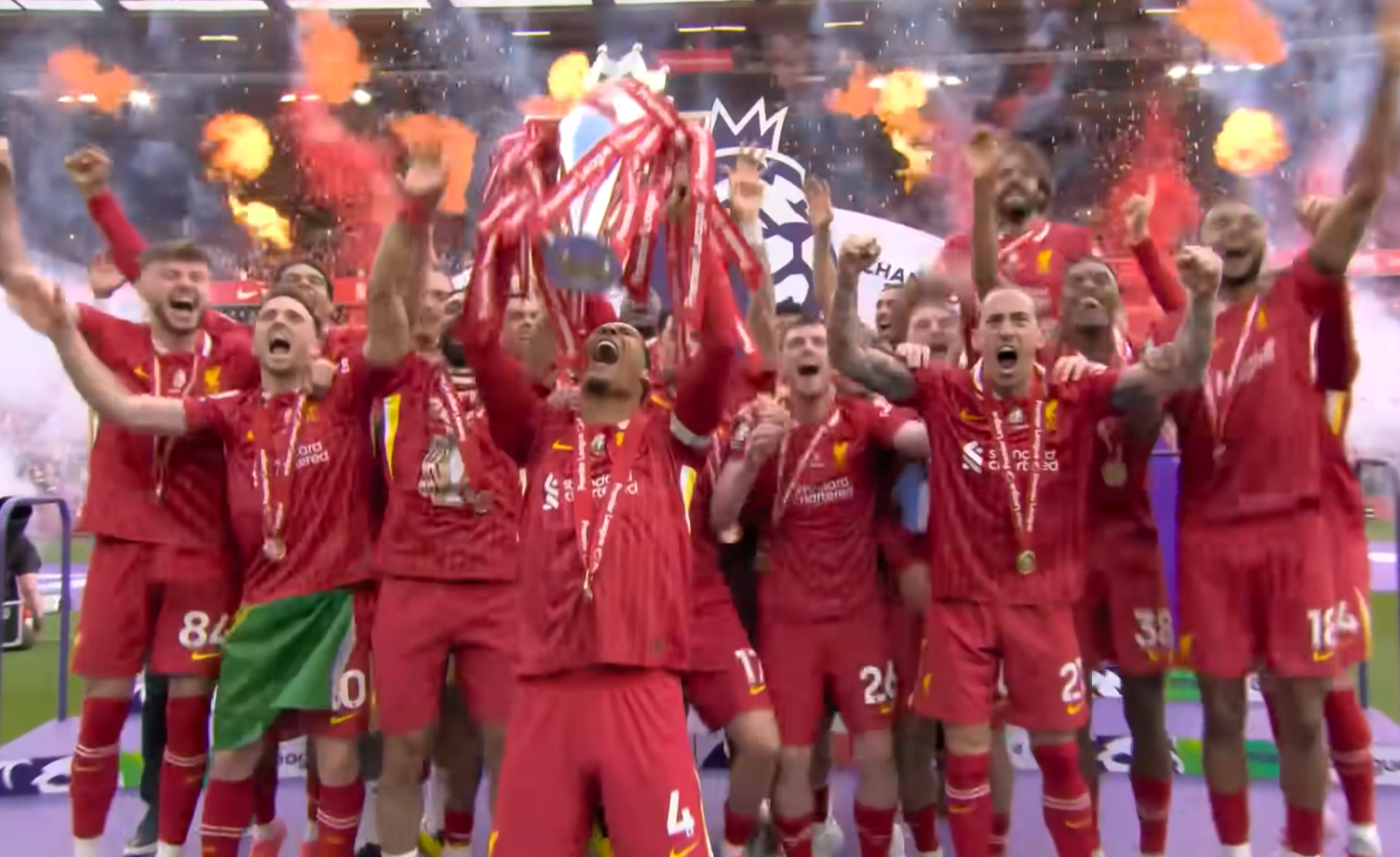

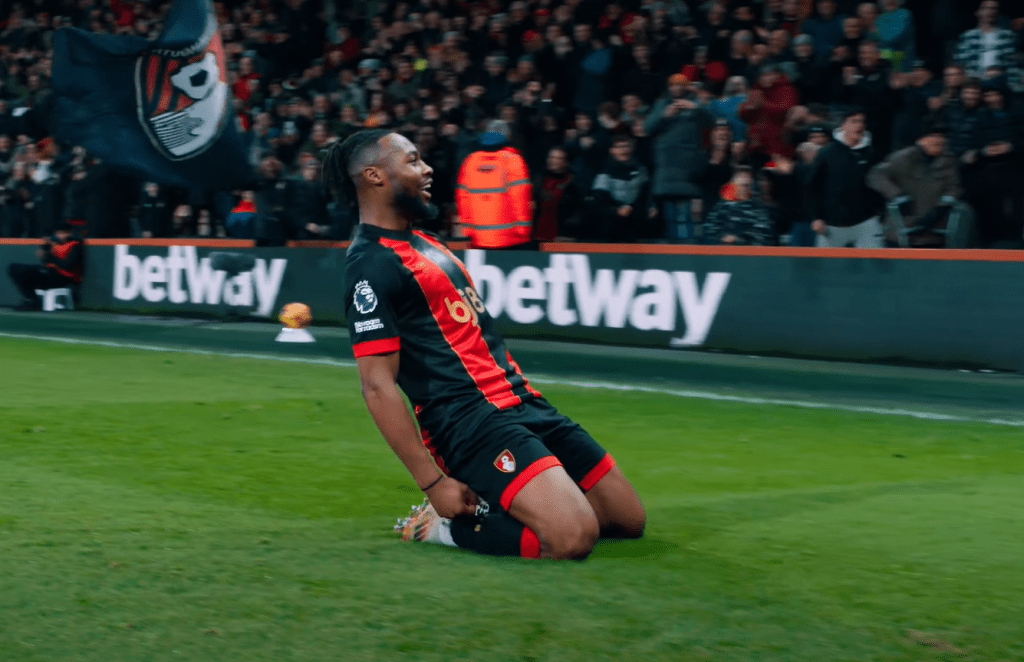
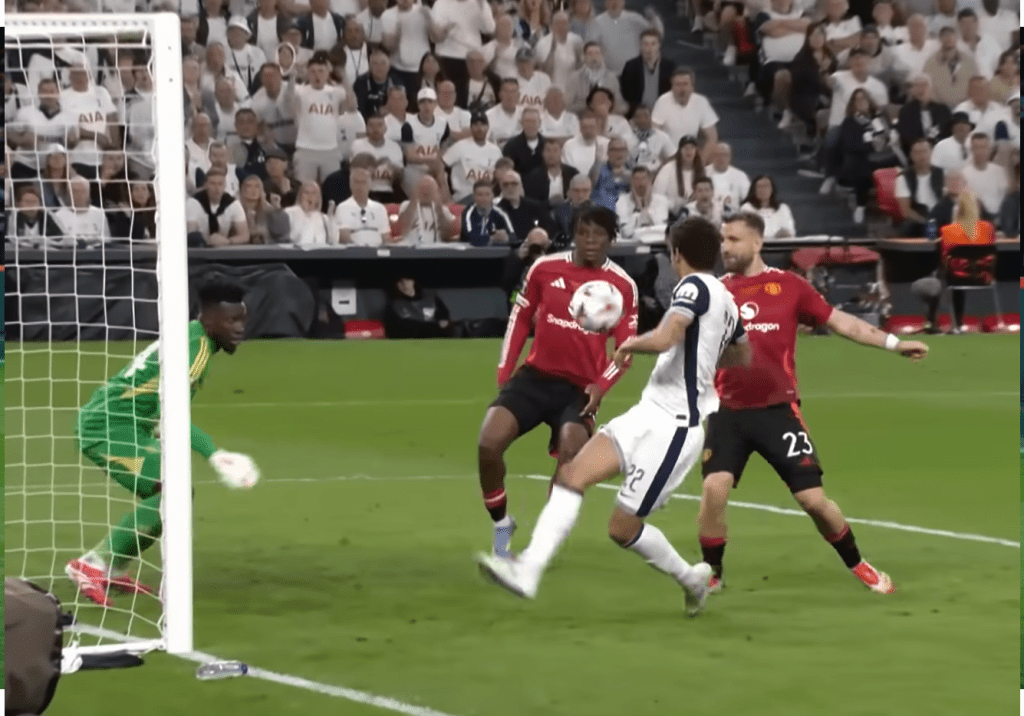
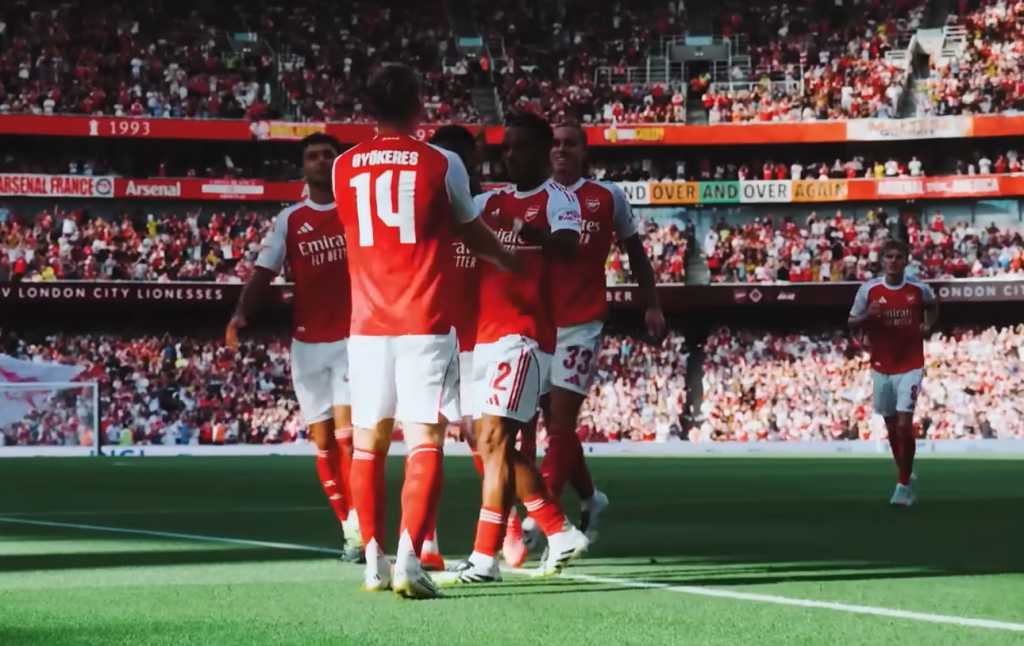
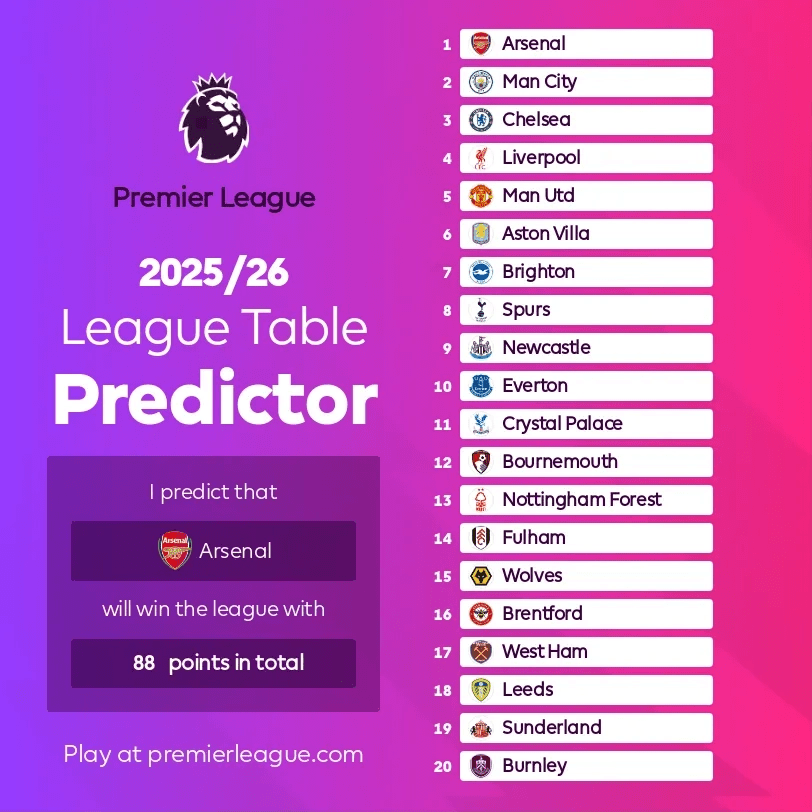

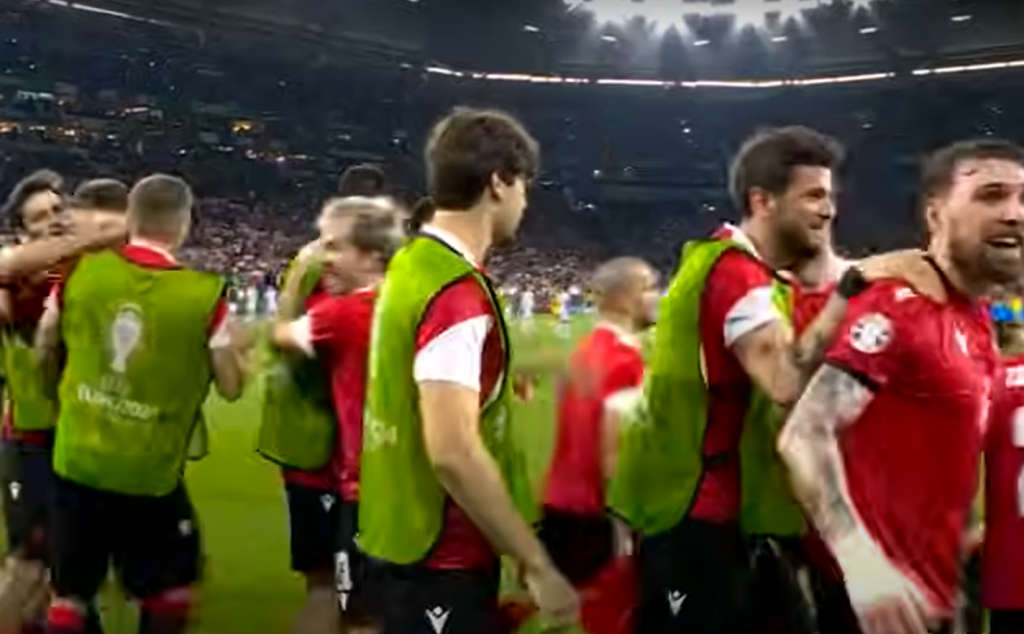
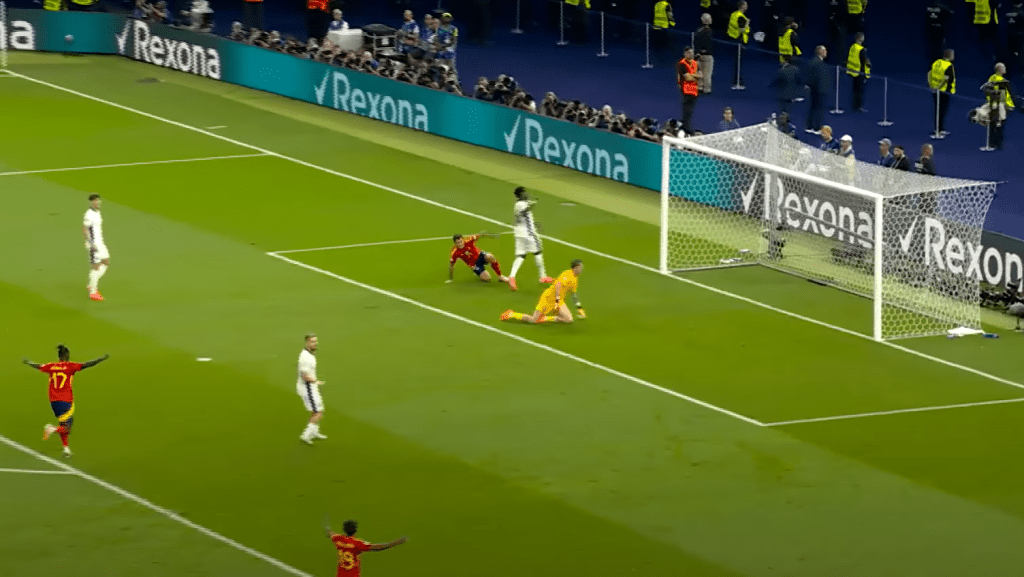
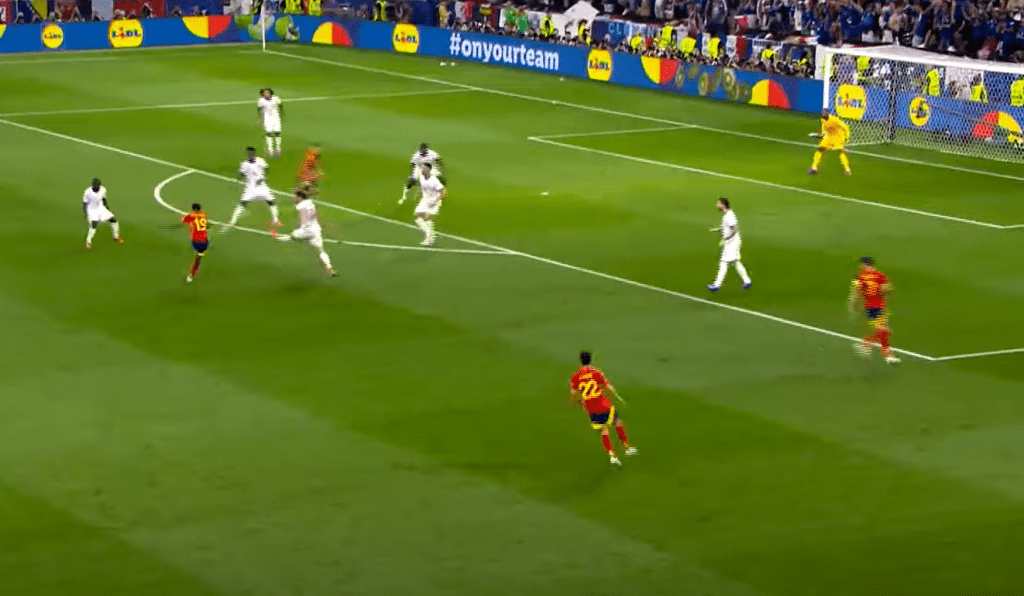



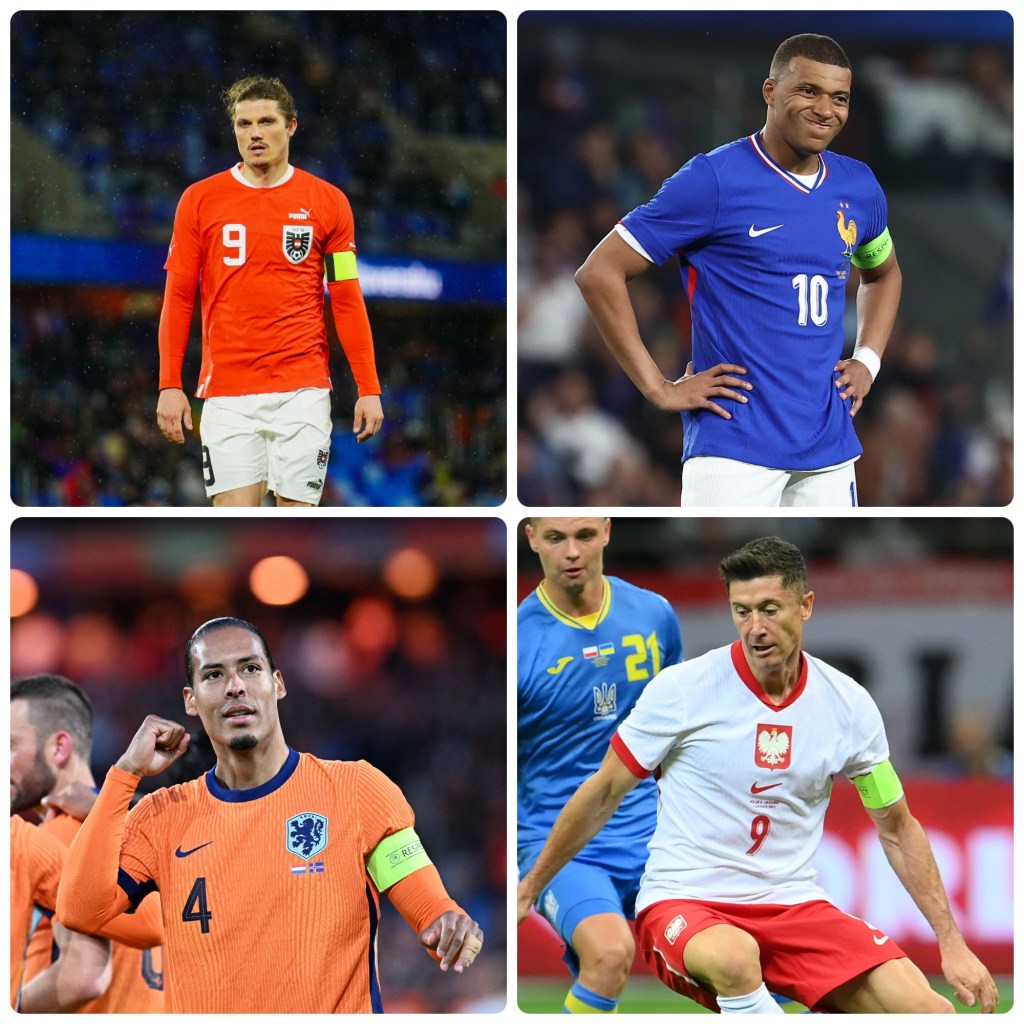




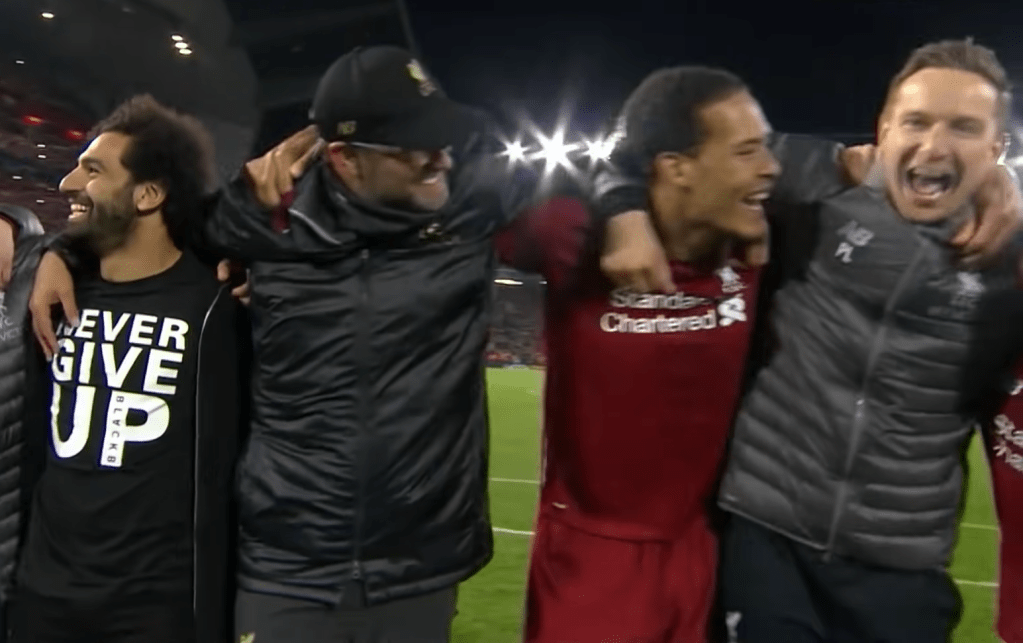
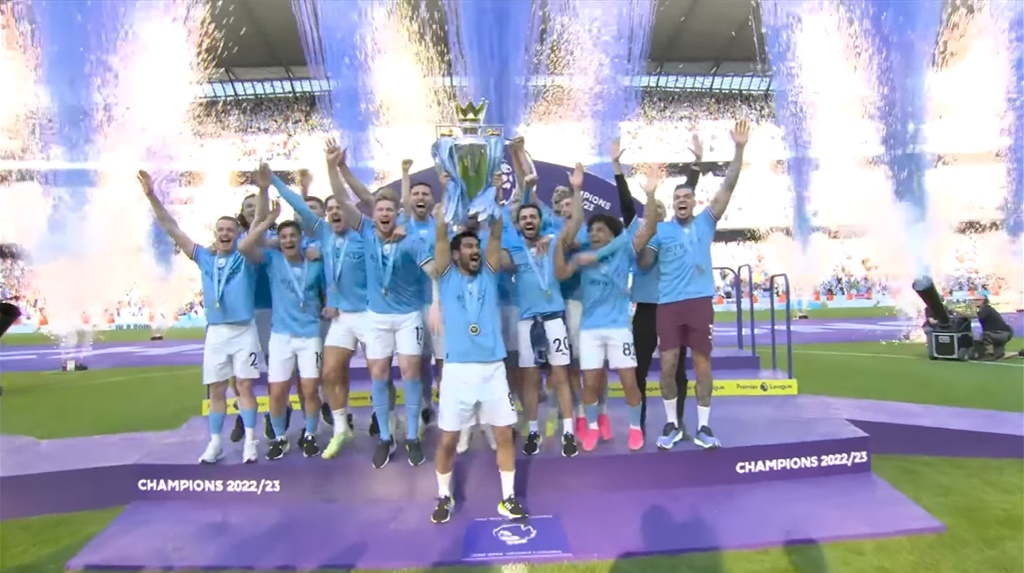

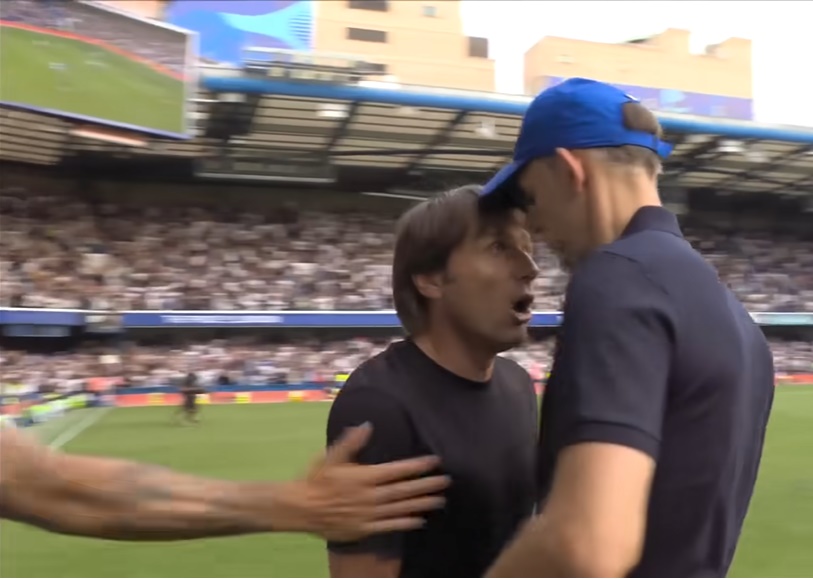

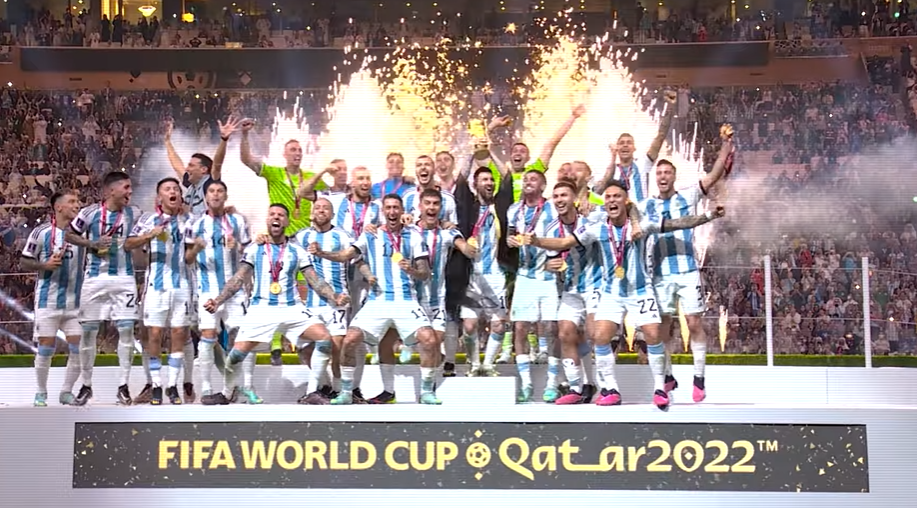
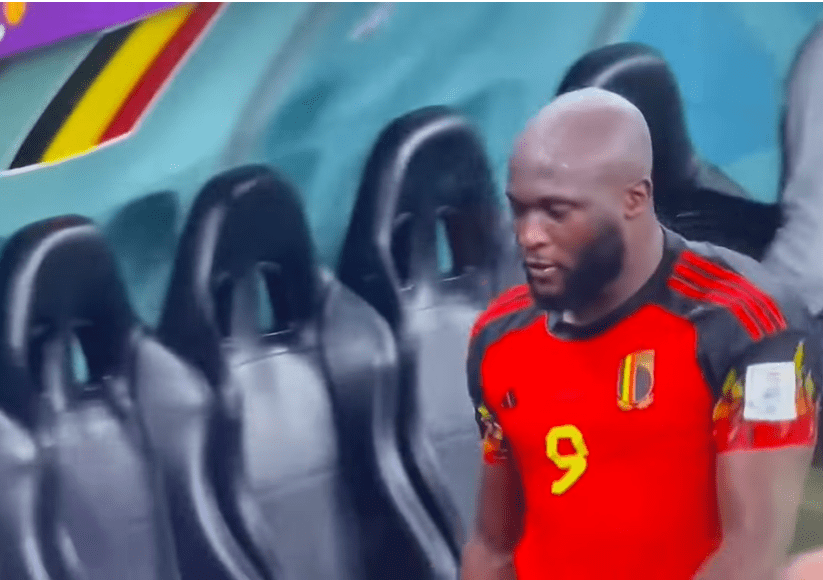
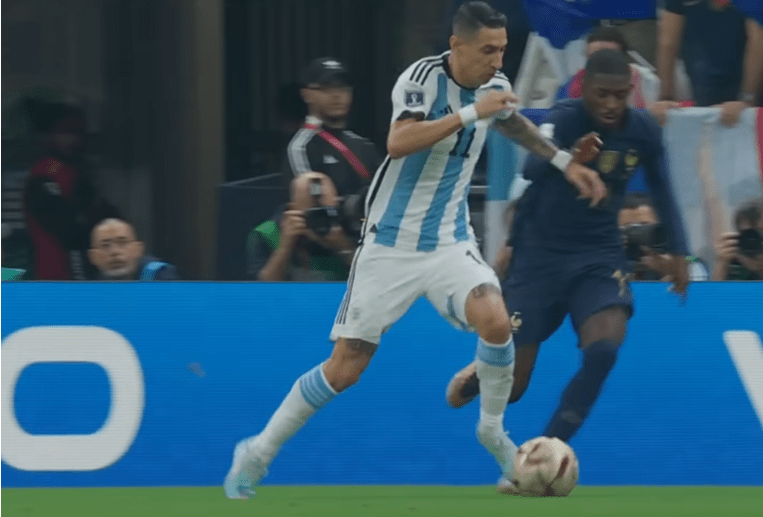

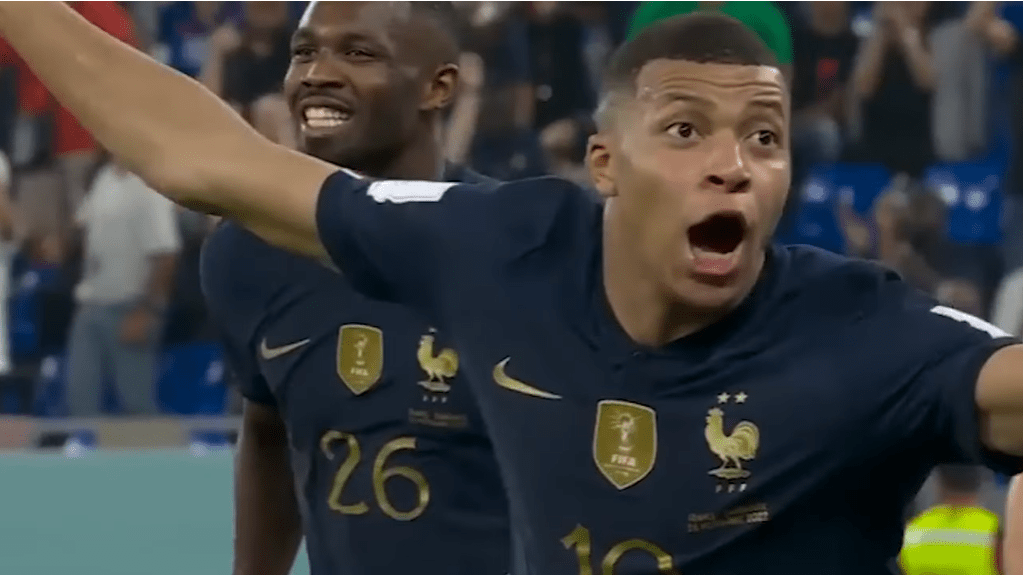



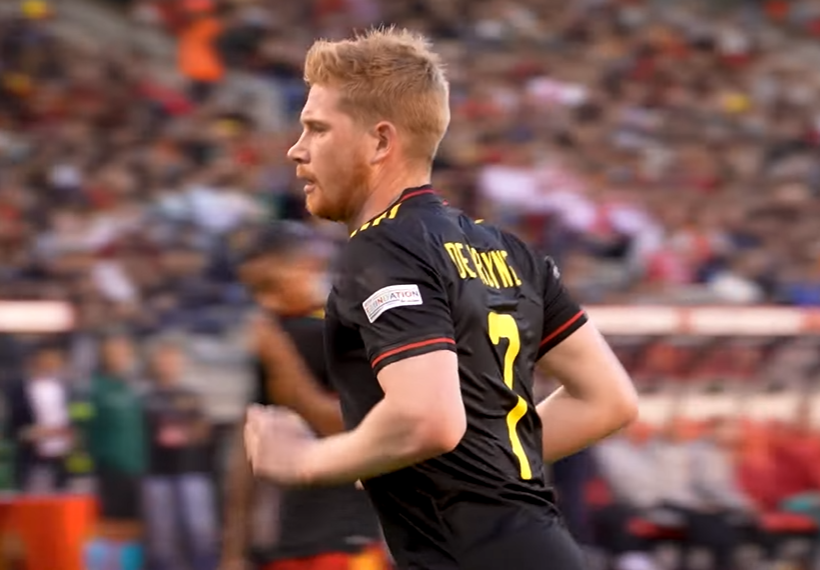

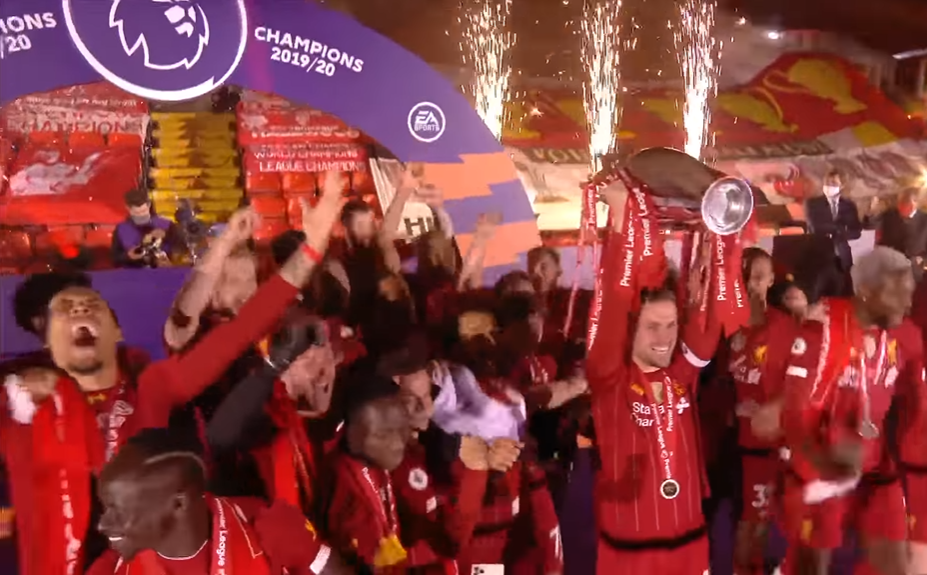

 Man, Ball and All