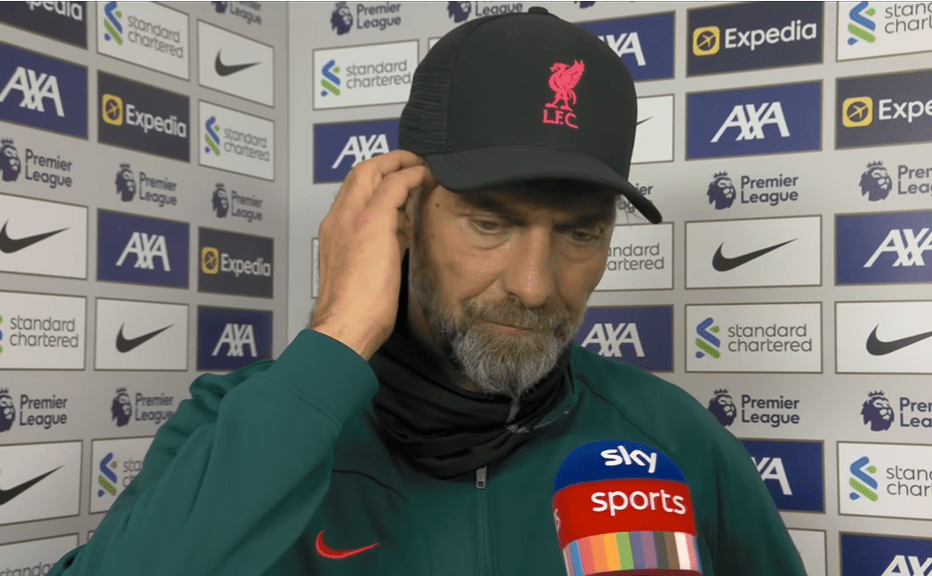
It was seven years ago this month that Liverpool FC announced Jurgen Klopp as the 21st permanent manager of the club. As the German wore a beaming smile during his official unveiling, his facial expression mirrored that of many of the club’s supporters, including this writer. Considering that the Reds were a lowly 10th in the Premier League at the time, and that they had finished outside the top five in all but one of the preceding six seasons, that a manager of Klopp’s calibre came to Anfield seemed too good to be true. For the record, my preferred seemingly attainable candidate at the time was Ronald Koeman, then of Southampton.
The Liverpool fan base was a disenchanted one in the autumn of 2015 following years of mediocrity and ill-advised transfer decisions, but Klopp nevertheless chirped that it was his mission to turn “doubters into believers”. The Reds’ league position didn’t improve much as they finished eighth in that campaign, but appearances in two cup finals at least offered morsels of tangible hope that something was brewing.
From thereon, progress was gradual yet visible and consistent. 2016/17 ended with Liverpool regaining their place in the top four and playing some exhilarating football along the way. Fourth place was maintained the following season, in tandem with a thrilling run to the Champions League final, where it all went cruelly wrong in Kiev.
It was in 2018/19 that Klopp’s impact was really beginning to take hold. A phenomenal Premier League campaign in which 97 points were accrued and only one defeat shipped, taking the title race to the final day, was eclipsed by the Reds going all the way in the Champions League this time, landing the manager his first trophy in charge of the club.
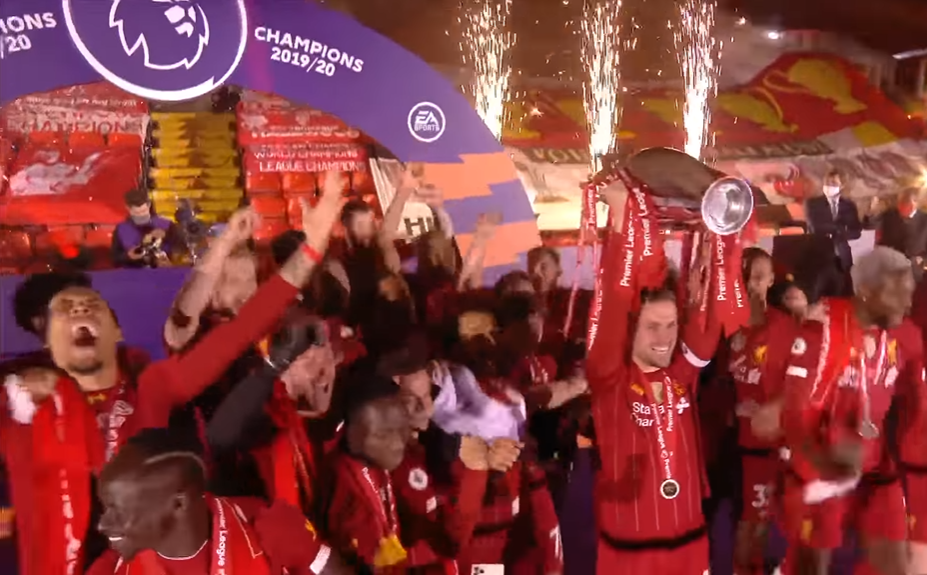
Our defence of that crown ended in the last 16 the following campaign, yet that is not what 2019/20 will be remembered for. That was the season in which Klopp’s special Liverpool team brought tears of joy to millions of Kopites worldwide when they finally delivered the Premier League title. It was done in some style, too – 99 points, clinched with seven games to spare, 26 wins from the first 27 games (the other was a draw). It was the best of times.
The first notable regression under Klopp came in 2020/21, although even in a horrendously injury-cursed season, Liverpool still managed to finish third and go one step further in Europe than the previous campaign. That preceded an extraordinary season in which Klopp’s team won both domestic cup competitions, came within a point of reclaiming the Premier League title (92 somehow wasn’t enough) and were a Thibaut Courtois masterclass away from lifting the Champions League yet again.
However, despite this team so often proving its class over the past four years and emphatically beating Manchester City in the Community Shield, there was a sense over the summer that something wasn’t quite right. The unrelenting pursuit of an unprecedented quadruple towards the back end of last season, and the continued accumulation of wins, disguised how jaded Liverpool looked as they laboured to wins against the likes of Newcastle, Villarreal, Aston Villa, Southampton and Wolves.
I feared that the mental and physical exertions of chasing down the clean sweep of trophies would manifest itself in reduced performances this season, particularly with the hangover of falling just short in the two big competitions to burden. A 4-0 shellacking by Manchester United in July hinted at glaring problems, which I highlighted on Twitter, only to be shot down by over-optimistic Kopites telling me to stop fretting because it was our first pre-season game.
It’s not often in life that I’m proven right, but unfortunately I have been in this instance. From the first few minutes of our opening league game against Fulham at the start of August, Liverpool have looked off it. Lucky to get a draw that day, held at home by Crystal Palace and a deserved defeat to Man United, this time in the Premier League where it truly counts…the alarm bells were ringing early on.
A freakish 9-0 hammering of Bournemouth and a last-gasp win over Newcastle offered hope that a corner had been turned, only for a VAR let-off to spare us defeat at Everton. There was no such escape route against Napoli in our first Champions League game, where a 4-1 defeat flattered us. The postponement of domestic duties in the wake of Queen Elizabeth II’s death left us with just one more game in September, a hard-earned win over Ajax which again hinted that things may have been changing for the better.
The Champions League has offered a source of comfort for the Reds, with double successes over Rangers (including a 7-1 Ibrox romp) and Ajax seeing them through to the last 16 with a game to spare. However, October has been a sobering month in the Premier League, aside from quickfire 1-0 wins over Man City and West Ham.
The month began with two massively worrying Premier League performances against Brighton and Arsenal. Six goals shipped, one point barely earned…and it got a whole lot worse towards Halloween. Neither Nottingham Forest nor Leeds had won since August – that was until both had the good fortune to come up against an insipid, passive Liverpool team who have lost as many league matches so far this season (4/12) as they did in all competitions in the entirety of 2021/22 (4/63).
To quote Argus Filch from Harry Potter and the Chamber of Secrets, “Oh dear, we are in trouble”.
Klopp himself has admitted that Liverpool won’t be a factor in the title race. Even a top four finish, the minimum we have achieved in each of his six full seasons at the club, is beginning to look a tall order. At best, 2022/23 is about salvaging a place in next season’s Europa League. Given our gap of just five points to the relegation zone and the abject failure to mount any consistency, it’s not unthinkable that our league position could have the suffix ‘-teen’ by the time the World Cup breaks comes around in mid-November.
In terms of personnel, this is largely the same group of players who came within two matches of ultimate football immortality as recently as May, aside from Sadio Mane, Divock Origi and Takumi Minamino leaving, with Darwin Nunez, Calvin Ramsay, Fabio Carvalho and Arthur Melo coming in. How, then, has it all gone so horribly wrong so quickly at Anfield?
There could be multiple legitimate reasons put forward, but the simplest explanation is that the “mentality monsters” of August 2018 to May 2022 are no more. After four years of operating at scarcely believable levels, there was always going to be a drop-off. As mentioned earlier, the effort which was poured into the pursuit of the quadruple, and the anti-climax of falling short in our final two matches of that campaign, has had a draining effect which has carried into the autumn.
That doesn’t quite fully explain why we’ve sagged from 2nd to 9th in such a short space of time, though. You only have to look at the diminishing levels of so many stalwarts to see that this Liverpool team ain’t what it used to be.
Virgil van Dijk, for so long an impenetrable colossus at the back, is making rash judgements in almost every match this season. For every sterling performance that Joe Gomez has (see the win over Man City), he drops multiple stinkers (such as his kamikaze backpass which gifted Leeds their first goal at Anfield).
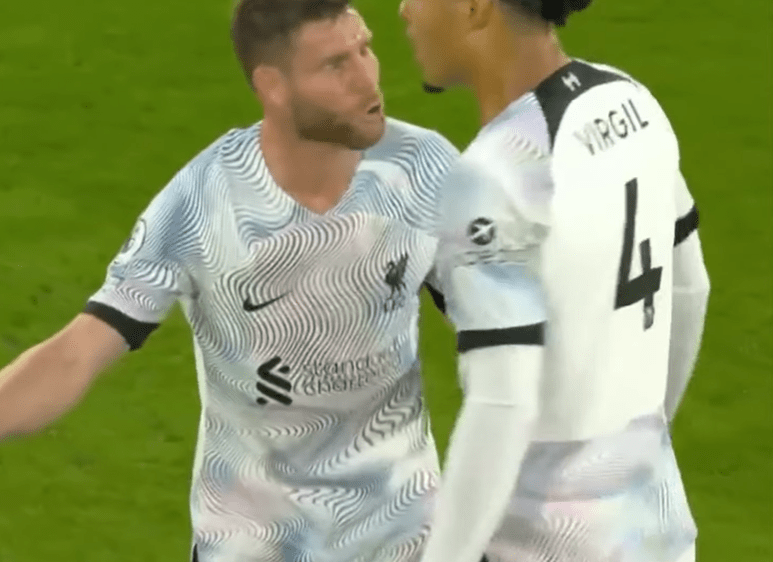
Jordan Henderson and James Milner have looked like the veterans that they are, in stark contrast to evergreen 30-somethings like Karim Benzema, Luka Modric and Robert Lewandowski. Fabinho, such a reliable shield in the peak Klopp years, is a jaded, hologram-esque presence in midfield who has drawn visible ire from his manager. As for Trent Alexander-Arnold, his defensive concerns have been ubiquitously documented, and just as worrying is his faltering attacking output.
In terms of standout performers this season, the list doesn’t stretch beyond Alisson, Luis Diaz, Roberto Firmino and (in flashes) Harvey Elliott. To compound the Reds’ misery, the livewire Colombian forward is now out until after the World Cup, depriving Klopp of his most vivacious attacker. That is just one of a plethora of injuries that the Reds have already shipped since the summer, with Diogo Jota also cruelly deprived of a trip to Qatar next month due to a long-term setback.
Mistakes are more frequent and inexplicable, positive results are few and far between, gaps in Liverpool’s half of the pitch are wide enough to accommodate the landing of a passenger aircraft. Perhaps most worryingly, though, the indefatigable, defiant belief of previous campaigns is missing.
In every Premier League match that Liverpool have conceded a goal this season (namely eight of their first 12 games), they have fallen behind. They recovered to draw in three of these and win once, retrieving six points from losing positions, while they also equalised twice against Arsenal before succumbing to a 3-2 defeat. This hints that the Reds’ powers of recovery haven’t completely gone away, but anyone watching the matches in question will realise that a truly statement-making comeback has never appeared on.
In the past, the equalisers against Fulham, Palace, Brighton and Leeds would have been the platform for this winning machine to crush the spirits of their opposition. Not anymore. If anything, against Fulham and Brighton in particular we ended up being grateful to come away with a point, and the latter of those was at Anfield.
Notably, Klopp has now been at Liverpool for seven years, equalling his two previous managerial stints at Mainz and Borussia Dortmund respectively. Towards the end of his time with the latter, the decline was steep, with the Champions League finalists of 2013 finding themselves bottom of the Bundesliga in February 2015 before managing to salvage a seventh-place finish.
It’s also no secret that the intense style of play that the 55-year-old has implemented at Anfield takes a lot out of players, particularly when the bulk of those have been playing under Klopp for the majority of his tenure. Parallels can be drawn with how Leeds were a joyous ball of energy for a couple of years under Marcelo Bielsa before a discernible fizzling out led to the Argentine’s dismissal last February, with the Whites in a relegation scrap which almost cost them their Premier League status.
Sir Alex Ferguson was a master at knowing how and when to rejig his greatest Manchester United teams so that they would continue to be a well-oiled, trophy-winning machine. Changes were gradual but constant, thus avoiding sterility setting in.
Loyalty to Klopp’s marquee names of his glorious time at Liverpool is understandable, but those chickens are seemingly coming home to roost. The bulk of this team has gone to the trenches time after time for about four to five years now – Alexander-Arnold, Joel Matip, Gomez, Van Dijk, Andrew Robertson, Milner, Henderson, Alex Oxlade-Chamberlain, Mohamed Salah and Firmino have all been at Anfield since the beginning of 2018 or earlier. Since that year’s Champions League final, only Alisson, Fabinho, Thiago, Jota and more latterly Diaz have come in as stalwarts of the team, and even Thiago has had a stop-start Liverpool career due to injuries and the odd ear infection.

While rival clubs gradually enhanced their squads with at least one statement signing each summer, Reds fans cried out for FSG to reward a hugely successful manager in Klopp by backing him in the transfer market. Instead, the club’s owners have alienated a large portion of the fan base due to their frugality. Although this is clearly preferable to a scattergun, Icarus-nearing-the-sun approach which would put the future of the club at risk, there is a real sense that FSG have been operating with the handbrake on to an excessive degree. That perfect balance that Manchester City have struck hasn’t been seen at Anfield. Talk of a possible £100m+ swoop for Jude Bellingham in 2023 is incessant yet fanciful.
Indeed, if Liverpool couldn’t draw players to the club when their stock was at a stratospheric high between 2018 and 2020, what hope do they have from next year when their absence from the Champions League now looks highly probable, never mind comprehensible? Also, unlike Manchester United, who despite their farcical 2021/22 campaign are still able to lure genuine class in Antony, Casemiro and Christian Eriksen to Old Trafford (and all three are instantly making a difference), the Merseysiders cannot afford to finish outside the top four this term. It’s alright for the likes of United; sheer financial muscle will ensure that their scales are re-balanced before long. For a club like Liverpool, one year out of the Champions League could easily lead to five, six, seven or more.
The core members of Klopp’s peak Liverpool vintage are clearly entering the decline in their careers and have been pale shadows of their former selves, but they deserve to be hailed as modern-day icons for what they have done for the club. They certainly don’t deserve to be mocked by Twitter buffoons as comedy figures, in the same way that Arsene Wenger had been towards the end of his Arsenal reign.
Unfortunately, the sands of time wait for no-one. Klopp’s great Liverpool team brought me and Reds fans everywhere the best years of our lives, but the party is over and the mess is beginning to accumulate. The longer it’s left to pile up, the harder it will be to clean. If we think things are bad now, brace yourselves for a prolonged period of agony where we go back to being the ultimate banter team not just in the Premier League, but in world sport.
Liverpool fans on social media have been laying the blame for our autumn decline on various parties, but this malaise is a collective one rather than laying at the feed or just one or two individuals. FSG have failed to take advantage of the club’s heavily boosted standing, allowing rival clubs to swoop for targets who should have been attainable for the Reds. Klopp, while undoubtedly a great manager, has been culpable of some daft team selections and substitutions, although he cannot legislate for some of the atrocious individual errors from the players that he selects. Those inside the white lines also need to ask themselves if their attitude, that defiant will to win, has disappeared as glumly as post-6pm daylight this week.
The 2020s began with Liverpool well clear at the top of the Premier League, boasting the tag of being European and world champions and appearing to have the world as their oyster. The worry now is that the decade will end with the Jurgen Klopp era being a wistful throwback to when the Reds reigned supreme, with the club’s long-suffering fan base still trying to fathom just how badly the rot was allowed to set in and pining for a return to European football of any kind, never mind competing for the major prizes of the Premier League and Champions League.
I’m just glad I drank in the glory days under Jurgen Klopp when they happened, because they’re already firmly in the past.
 Man, Ball and All